
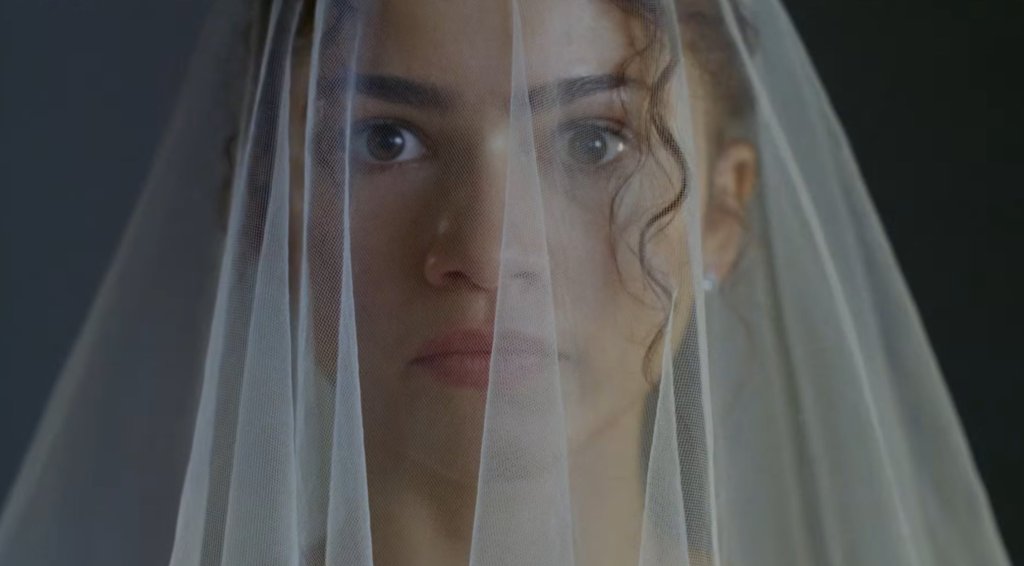
Eileen is a pulpy, sapphic noir that explores the corruption and evil lurking in the shadows of a quiet Massachusetts town. Set in the 1960s, this psychological thriller is an adaptation of Ottessa Moshfegh’s debut novel of the same name. Moshfegh worked alongside screenwriter, Luke Goebel and director, William Oldroyd to bring her 2015, award winning novel to the big screen. The film stars Thomasin McKenzie as the titular Eileen Dunlop, a mentally and sexually repressed young woman who works as an assistant at a juvenile detention facility and is the caretaker of her alcoholic father, a retired cop. The drudgery of Eileen’s everyday life is upended when a charming and mysterious new prison psychologist, Dr. Rebecca Saint John, played by Anne Hathaway, becomes an unlikely friend and mentor. Eileen, desperate to escape her hometown, becomes enamored by Rebecca’s elegance and cosmopolitan sensibilities.
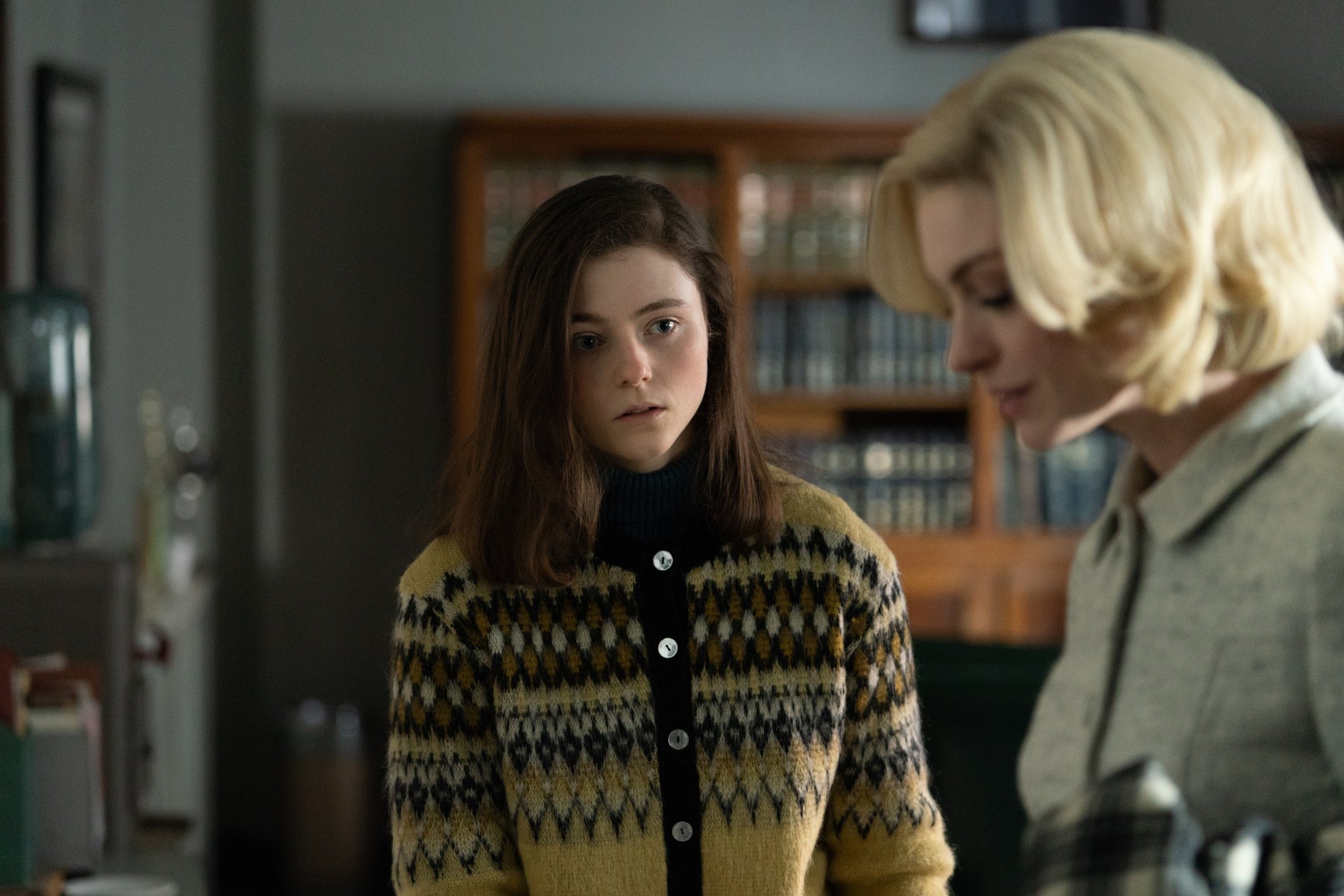
Hathaway gives a daring and layed performance in her role as Rebecca. She fully embodies the sensual and sinister characteristics of a Hitchcockian female lead, blonde hair in all. When we first meet Rebecca, it is through Eileen’s voyeuristic perspective. The camera lingers on her from Eileen’s point of view, a hallmark of Hitchcock’s films, most notably Rear Window. However, Hathaway is empowered in this role, not a helpless victim or a body to be objectified, in fact, Rebecca is the one holding all the cards for most of the story. Her capacity for cruelty comes from her sharp wit and ability to manipulate those around her, and not exclusively from her sexuality. In fact we never see Rebecca in a vulnerable position, despite the men in town expressing interest in her. During a scene where Rebecca takes Eileen out for a drink she is catcalled by a group of local men. At first she brushes off their comments with ease, but when one man doesn’t take no for an answer she is quick to knock him off his feet showing her capacity for violence. The softness and sensuality juxtaposed with her callous nature excite and intrigue Eileen who follows her around like an adoring puppy.

When Eileen is introduced to us, her life is bleak, painful, and perhaps worst of all: boring. She works in a dead end job as an office assistant at a boys prison, she has no friends or romantic prospects, her mother recently passed away, and she is responsible for controlling her increasingly unhinged alcoholic father. Throughout the first act, we see Eileen fantasize about everything from openly having sex with a prison guard to committing a murder suicide against her own dad. Not only is she not mentally well, she’s desperate for anything or anyone to shake up the mundanity of her quiet life. Eileen has an escape velocity that drives her towards Dr. Rebecca. There’s a combination of awe at Rebecca’s worldliness, comfort towards her maternal nature, and lust after Rebecca’s autonomy and control. It’s unclear if Eileen’s desire for Rebecca is purely sexual, but this is how it manifests over the course of the relationship. The two share just a single kiss during the entire runtime, with most of Eileen’s feelings being relegated to subtext. Despite the undeniable tension between the two leads, Eileen is not a lesbian romance film and Oldroyd goes through great lengths to shock the audience at the exact moment we settle into that belief.
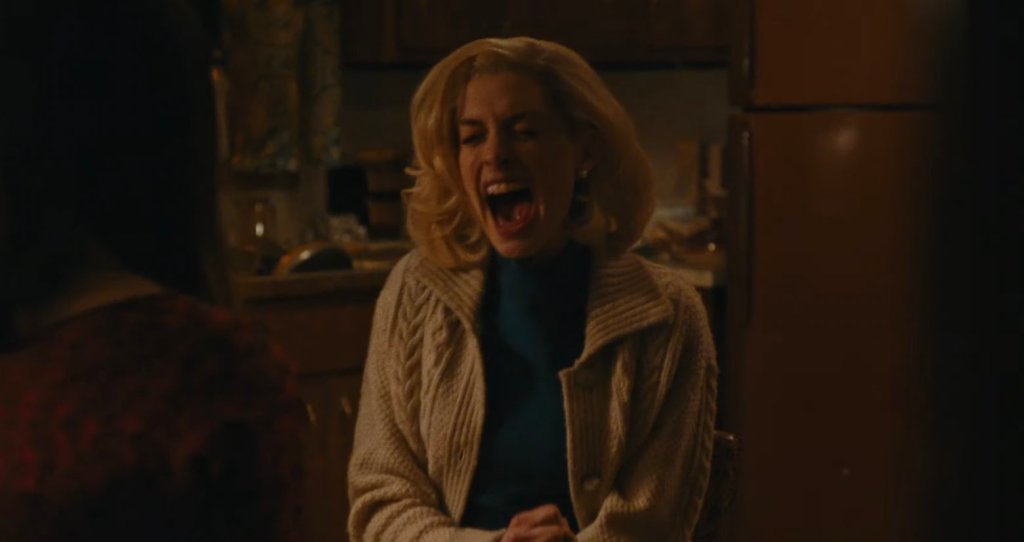
At about the halfway point of the film, Rebecca invites Eileen into her home for an intimate Christmas celebration between the two. Eileen, fully believing her feelings are mutual, doesn’t question the increasing amount of inconsistencies in Rebecca’s story. The tension slowly builds to the realization that they are not in Rebecca’s home. She has kidnapped the mother of Sam Polk, one of her patients at the prison, believing his mother enabled the sexual abuse that inspired Sam to murder his own father. Rebecca just needs Eileen to help prove it. This is the moment the whole film is building towards. Eileen, gun in hand, now has the opportunity to realize one of her dissociative fantasies, finally feeling empowered in her own story. The mother is played by Marin Ireland, who delivers one of the best, if not disturbing, monologues of the entire film, recounting her journey from ignorance to denial to complicity. This scene is unsettling and tense, speaking to the larger questions of corruption in our justice system. It is no mistake that the townsfolk are more outraged by the killing of a cop, than they are about that same cop sexually abusing his own son.
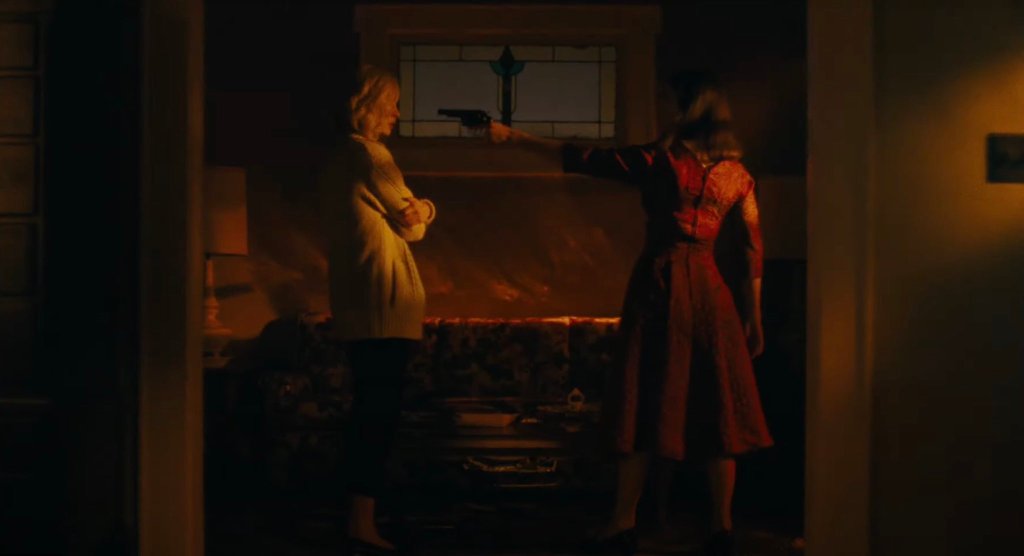
The exploration of justice, psychological unraveling, and the revelation of dark secrets makes Eileen an undeniably compelling thriller, worthy of the canon of film noir it is so clearly referencing. What sets it apart is the more modern sensibilities regarding gender and sexuality. Rebecca and Eileen are complicated individuals that, despite their wrongdoings, have agency in this story in a way that female leads of this genre are so rarely afforded. Where Eileen falls short is during its hasty final twenty minutes. By the time Eileen rides off into the proverbial sunset, I was left feeling a bit whiplashed. Eileen excels at luring the audience into the seedy underbelly of this sleepy seaside town, but it stalls out a bit after the film’s big reveal. If the audience was allowed more opportunity to understand our lead’s motivation, the final act’s sudden twist and swift ending would’ve landed on more solid ground.



 Reel Take
Leave a comment