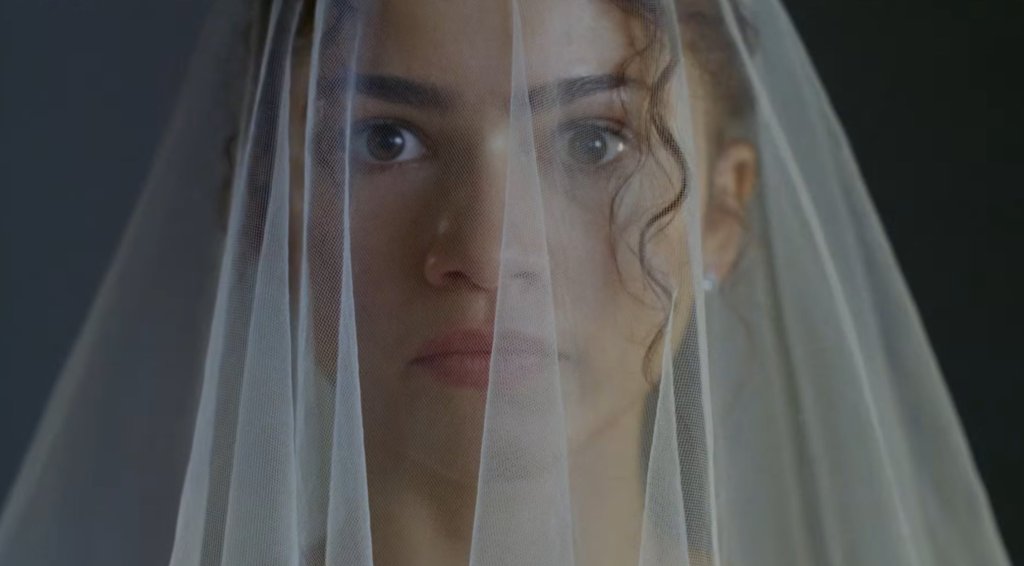
The Drama is a dark comedy romance about a couple who, on the eve of their wedding, reveal the worst thing they’ve ever done which threatens to derail their relationship, second guessing the person they thought they knew. The film is written and directed by Norwegian filmmaker Kristoffer Borgli and is his fourth feature film. Borgli is best known for 2022’s “Sick of Myself” and 2023’s “Dream Scenario” starring Nic Cage. Filming for The Drama began in 2024, shot all over the world, but the movie is set in Boston, with many notable landmarks like the Public Gardens making an appearance.
*I will have to spoil the secret at some point in this review, but I will let you know when that’s about to happen.*
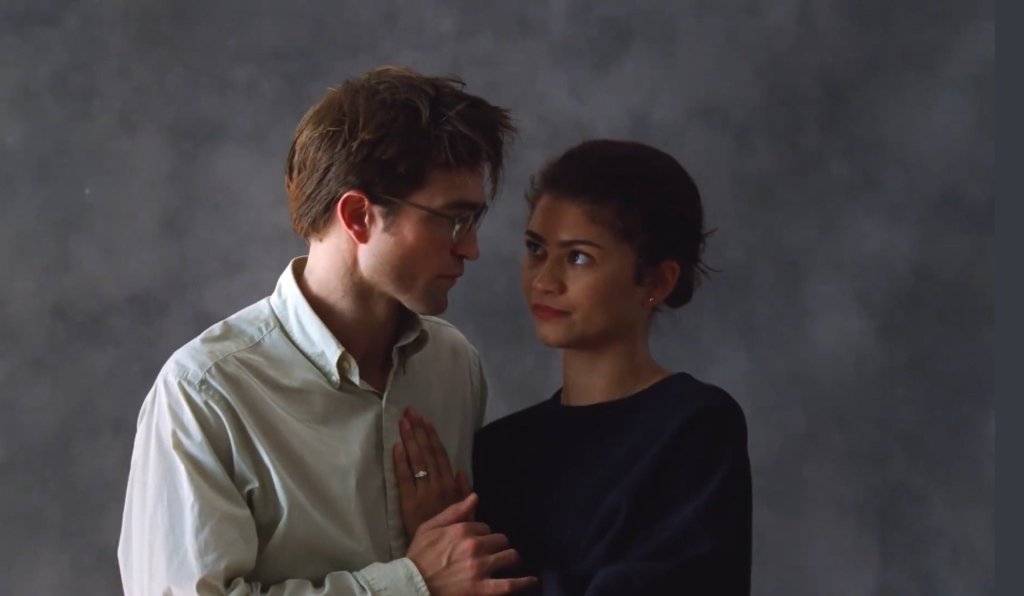
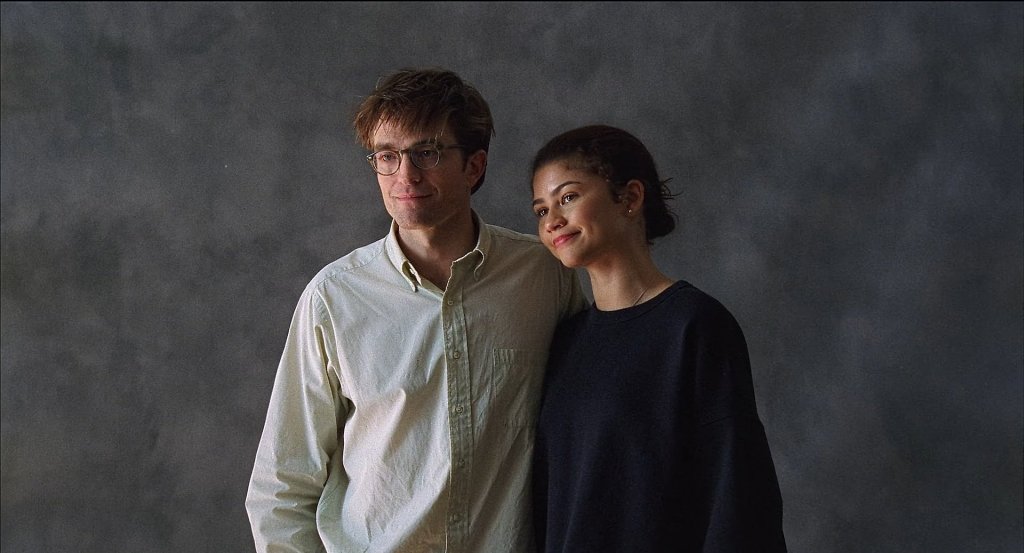
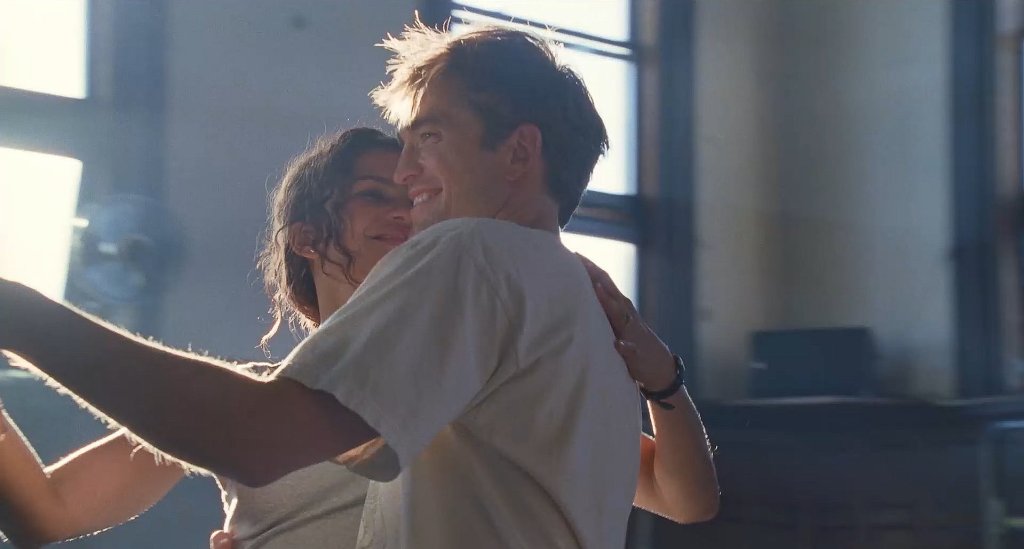
Two years after their romcom “meet cute,” Emma and Charlie are in the midst of planning the final pieces of their wedding. Charlie struggles to write a speech that is honest, but not embarrassing, seeking the help of his friend Mike. While Emma works through her nerves with maid of honor, and Mike’s wife, Rachel. Later, while walking past the park at night, Charlie and Emma see Pauline, their wedding DJ, smoking heroin on a street corner. Not fully convinced it is actually her, the couple debate firing Pauline ahead of the ceremony.
When they attend the final food tasting with Mike and Rachel, the couple seeks their advice on what they should do. Emma admits that it might be unfair to fire Pauline over one mistake or a bad day, but Rachel insists that it’s a red flag. Mike and Rachel then share that right before their wedding, they each admitted to the worst thing they have ever done as an exercise in trust. Mike once used an ex-girlfriend as a human shield against an attacking street dog, while Rachel admits that when she was a child she impulsively locked a neighborhood kid in a closet, leaving him in need of rescue. Both express some guilt over their actions, but justify it with the circumstances that lead to these decisions.
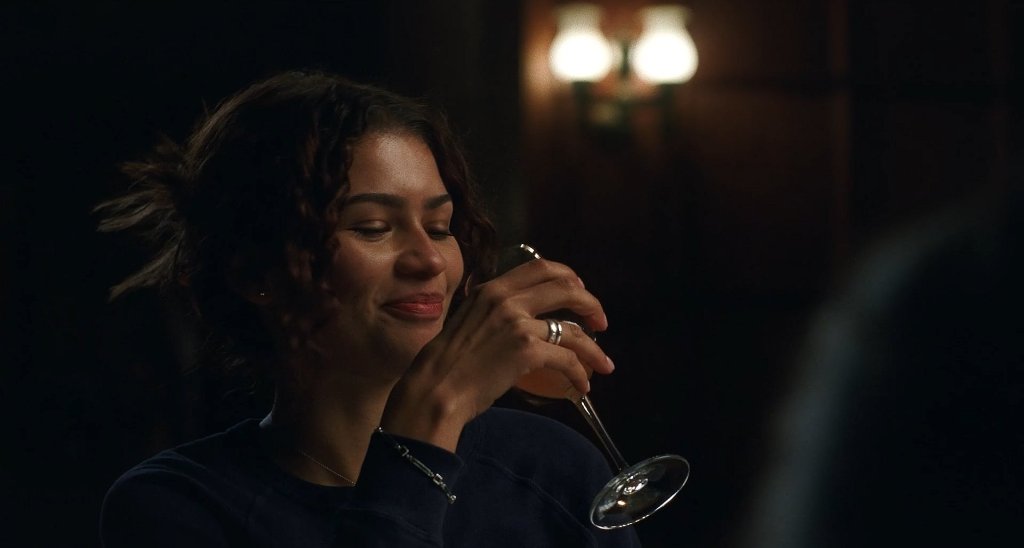
When the question is flipped on the happy couple, Charlie has difficulty coming up with an answer. He cops to some early high school cyberbullying that is unspecific and he cannot confirm whether or not his actions had consequences. Rachel and Mike are let down by such a lame response. The question is then turned to Emma who casually and drunkenly, rattles off the worst thing she has ever done. The room goes cold, Rachel is immediately outraged by the admission, and Charlie frantically and delusionally convinces himself that Emma is joking. She is not. Their wedding is rapidly approaching and Rachel drops out as maid of honor, threatening to expose Emma’s secret. Charlie must reconcile with this new information, suddenly unsure of who he has decided to marry.
I’m still sweaty and clawing at the walls of my apartment. Wow! I am stressed. Anxiety is the primary propulsive energy behind everything that happens in The Drama. As the “worst thing you’ve ever done” scene unravels, you can feel the clicking of an old wooden rollercoaster right before the first drop. Anyone who has seen the trailer or has a passing understanding of the premise is waiting patiently for this scene and when it finally arrives, the pacing is deliberate, almost teasing the audience. You’ll learn, it’s going to shock you, but you’re going to have to wait a bit longer. So when everyone around the table is hemming and hawing over whether or not to reveal their secret, it is excruciating. Let Emma speak!
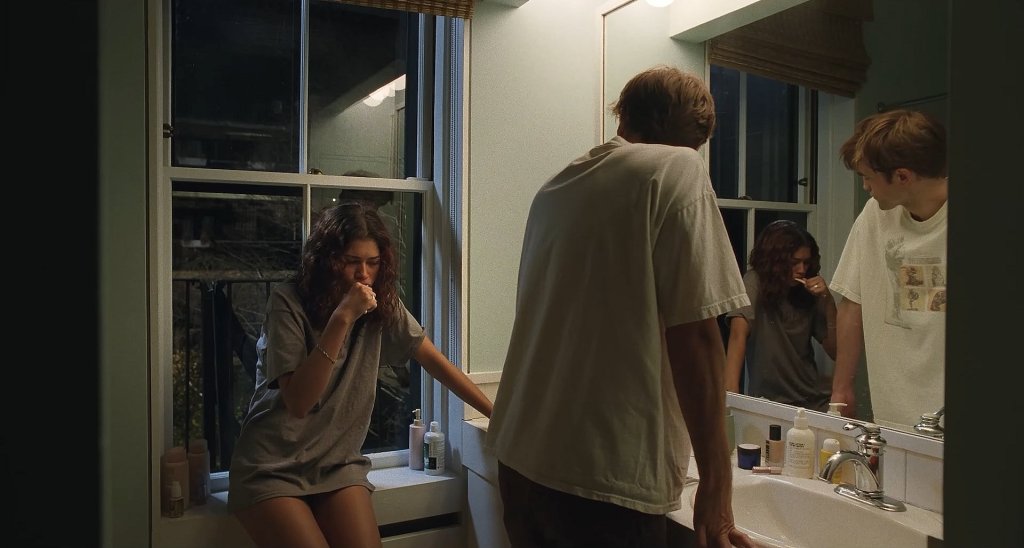
Then she does and you really wish she hadn’t. The answer she provides is so startling and unsettling that the other three characters struggle to even come up with a follow up question. And believe me, a follow up question, or two, or three, is certainly warranted. Charlie instinctively jumps to Emma’s defense, assuming (hoping) she is joking, while Mike is stunned silent, and Rachel is immediately red hot. In an instant, the relationship between these four people has been irrevocably changed. Worse, Emma and Charlie’s wedding is only a few days away and they just blew up their friendship with the Best Man and Maid of Honor.
Everything that happens next is a result of this admission. Charlie spirals out, unable to understand why Emma did what she did in the first place and how she was able to keep it from him until now. And if you thought the film was anxiety inducing before, the editing tricks used to depict Charlie’s breakdown and Emma’s paranoia expertly captures the feeling of ruminating thoughts and apocalyptic thinking. While Emma sits alone in their apartment, an imagined conversation plays out where Mike helps Charlie make his escape back to London.
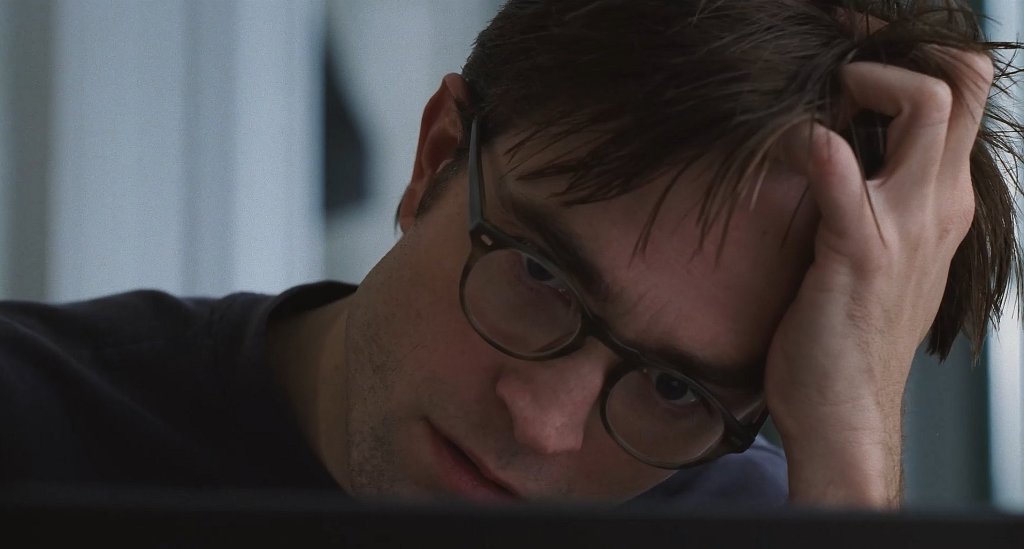
Two people, madly in love, become strangers overnight. That is the real heartbreak of The Drama. In Charlie’s defense, this is a hard pill to swallow and there’s bound to be some hurt in feeling like you’ve been deceived. But Emma is the same exact person she was before he knew. More importantly, while her admission is shocking she never actually did anything wrong, strictly speaking. You get the sense that had Emma brought this up to Charlie while the two were at home alone, there’d be questions and confusion sure, but she’d be able to explain herself fully. There also wouldn’t be the added pressure of Rachel and Mike’s reaction to this information. This is key.
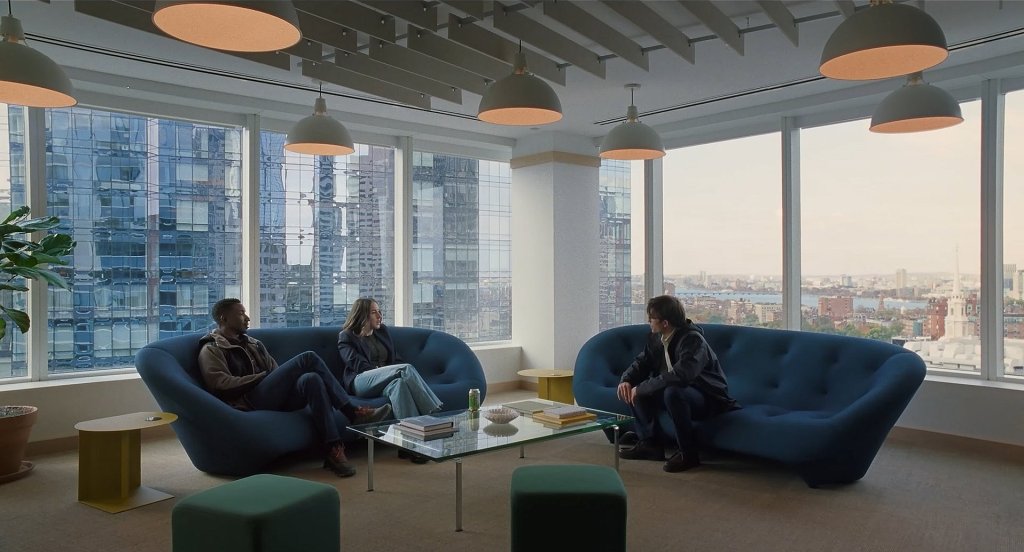
Rachel and Mike are Charlie’s friends, not Emma’s, so it is important to Charlie that they like her. Obviously as her partner, but also as a reflection on him. The social pressure and perceived judgment drives Charlie absolutely crazy, desperately trying to flip the narrative and get them to see Emma as a good person. Again, not for Emma’s sake, but so that he can feel better about himself. So that he can justify her actions and easily move on, like he so clearly wants to. As he becomes more manic and flailing, it becomes less about defending Emma’s honor and more about finding one single person to tell him that what she did is not that big of a deal. Because he loves her and that never stops for even a second.
So how unconditional is unconditional love? What exactly would it take for you to never be able to look at your partner the same way? The shallow and image obsessed world we all live in is in direct conflict with this level of empathy and compassion. To be able to view someone as the sum of all of their parts, not just their lowest moments, takes a level of emotional intelligence and tact that, let’s say, is supremely lacking in our day and age. Providing understanding to others, knowing someday our actions and thoughts might be misrepresented next. We could all afford to offer one another more grace, in hopes that one day it might be returned to us.
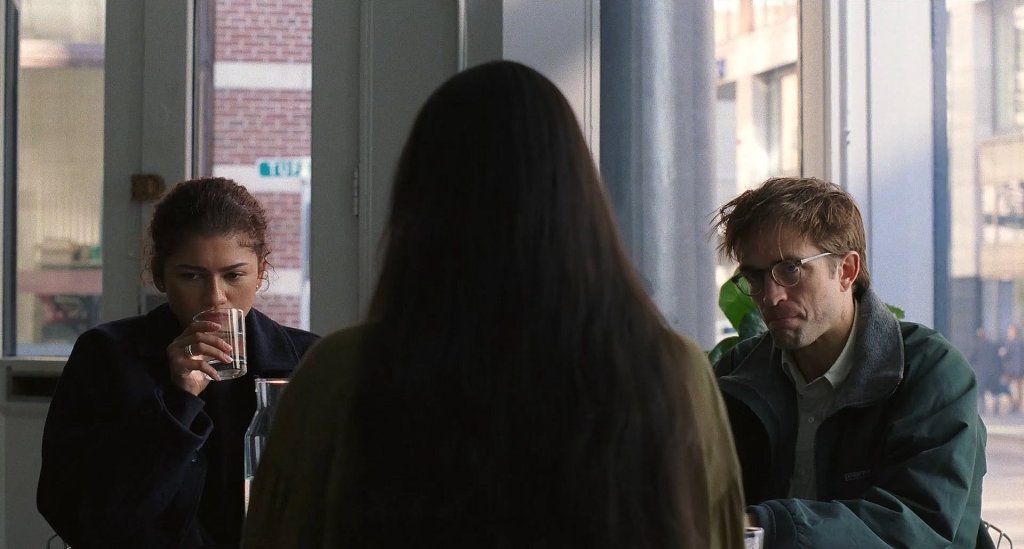
However, black and white morality has dominated social media and the politics of our outrage culture. This is best represented in the character of Rachel, played so aggravatingly and accurately by Alana Haim. Out of the three people who learn Emma’s “worst thing,” Rachel is the only one driven to anger. While Mike and Charlie are more threatened and confused, Rachel has finally found an ax to grind. Her reaction and the threat of her exposing Emma’s secret looms over the entire film and arguably is the reason for Charlie’s crash out. While Rachel has her reasons and her initial response was not entirely unwarranted, she relishes in the opportunities for cruelty that this newfound power has provided her. Suddenly she is the ultimate arbiter of what is good and right, casting judgment on Emma and Charlie by association.
Partially a symptom of Borgli being “too online,” this phenomenon is most prevalent in social media conversations, and thankfully less so in real life. Yet Rachels are all around us, waiting for you to slip up ever so slightly so she can use you as proof of her own moral superiority. The irony being that what Rachel did to her childhood neighbor was unnecessarily sadistic and the way she speaks about it now is callous and flip. So then the question becomes who gets held accountable? Who is forgiven? What are the terms of our collective empathy?
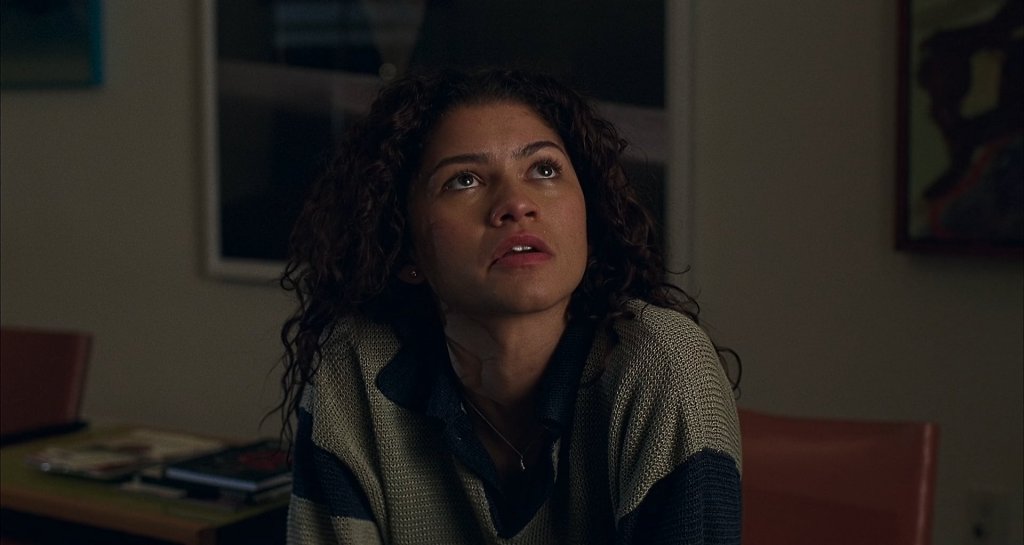
On a second watch, it became clearer to me that Rachel held animosity towards Emma from the jump. She suggests not crying during her wedding speech because Emma looks ugly when she cries. Moments later, she’s mocking the fact that Charlie is Emma’s first love at 30 and scoffing when Emma says she wasn’t pretty growing up. Rachel is obviously jealous, whether it’s because of Emma’s beauty, her professional success, or her healthy relationship with Charlie, who knows? There’s also Rachel’s racist microaggressions, which are equally telling.
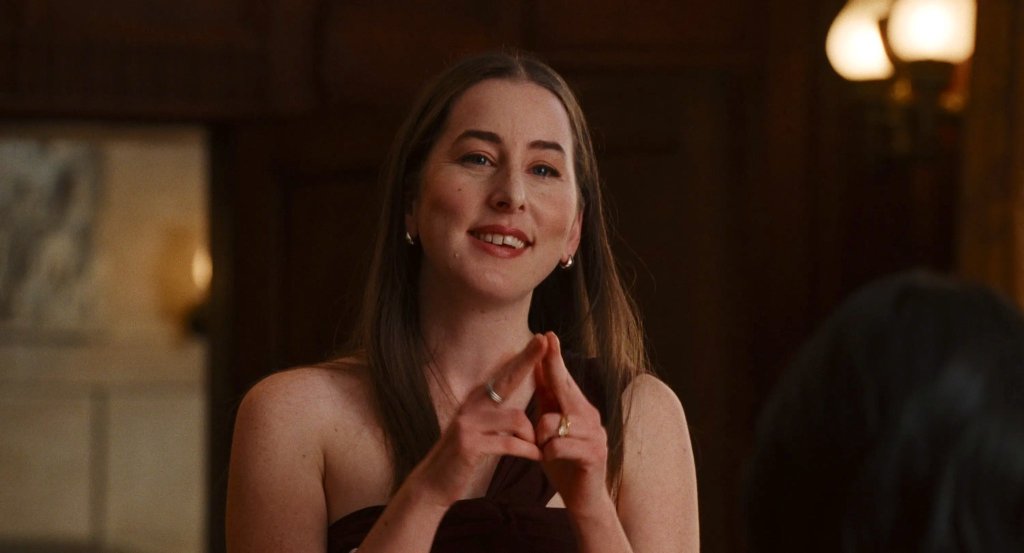
Yet, these are all petty and socially unacceptable reasons to dislike someone. If you voiced them out loud, you’d run the risk of isolating yourself, coming across as bitter and mean. So when given a chance to moralize her existing hatred, Rachel wastes no time. Having a “real reason,” emboldens her to freely use Emma as a punching bag without ever losing the higher ground. This behavior is rewarded and encouraged by an online cancel culture which has devolved far beyond its intended purpose of holding bad actors accountable.
SPOILERS FOR EMMA’S SECRET AHEAD – You’ve been warned!
Emma grew up as a military brat, moving around the country, and struggling to make friends as a kid. When her family settled in Louisiana, Emma spent most of her time alone in her room while her parents were out of the house. Since she’s a bit socially awkward, she’s teased and bullied by her classmates, retreating further into herself. One day, she decides to plan a mass shooting against her classmates, using her father’s rifle. She goes as far as bringing the weapon to school, but stops short of violence.
When she reveals this information to Charlie and his friends, she is not given a chance to provide context and is swiftly judged for even having the thought at all. Later, Charlie learns how depressed and lonely Emma was at this age and is relieved that nothing ever came of it then or since. Yet, he’s disturbed by the particular detail that Emma only didn’t go through with it because another mass shooting happened at a nearby mall the very same day. It would be so much easier for Charlie had it been some miraculous change of heart, rather than what seems like disappointment that someone else beat her to the punch. Yet, in the aftermath of that shooting, Emma’s classmates rallied around the death of a student, showing her the devastating consequences of mass violence, making it all the more real for the teenager who was mostly playing pretend online. Emma becomes a gun control activist, atoning for her impulses, and finds community and friendship at last.
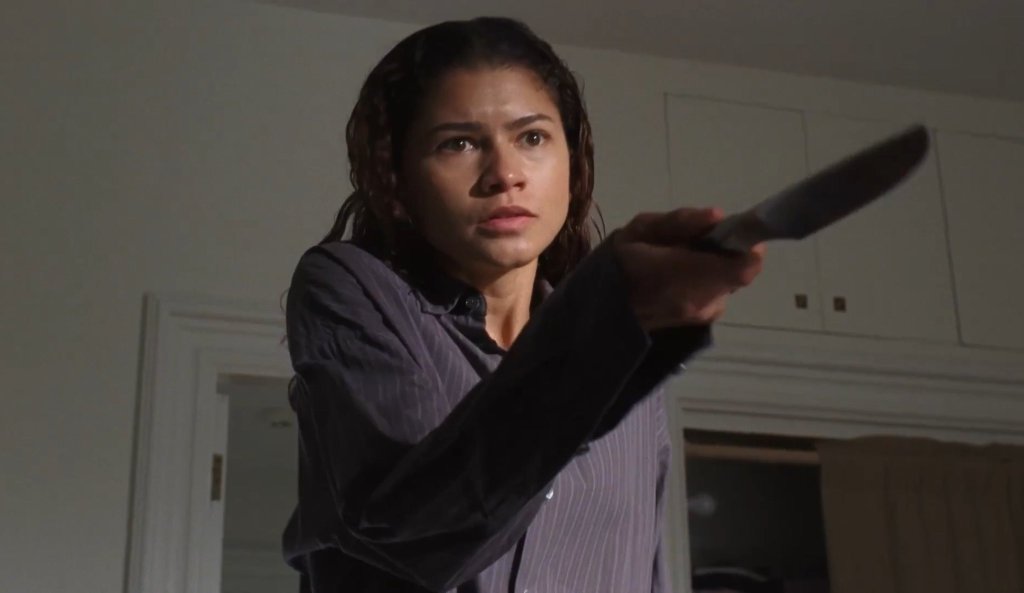
This is a feel good story that should be celebrated as an act of deradicalization but instead Emma is still made to suffer for something that, at least in my opinion, she has more than made up for. Again, at no point does Emma cause any tangible harm to anyone else. On that note, another key character detail is that Emma is deaf in one ear. We learn that this injury is a result of her practicing shooting in her backyard, which caused permanent damage. So for all the fears around Emma as a potentially dangerous person, she has only ever hurt herself.
Casting Zendaya in this role has been a major point of contention and confusion for some. The main hurdle is our cultural conception of the “school shooter.” Largely influenced by the Columbine High School massacre, we all have an image in our head of who this person is. They’re a loner, into violent video games and movies, they often traffic in nazis ideology, but most clearly they are a white, teenage boy. Simply put, this is not something that women, especially Black women are usually guilty of. Statistically speaking? Virtually non-existent.
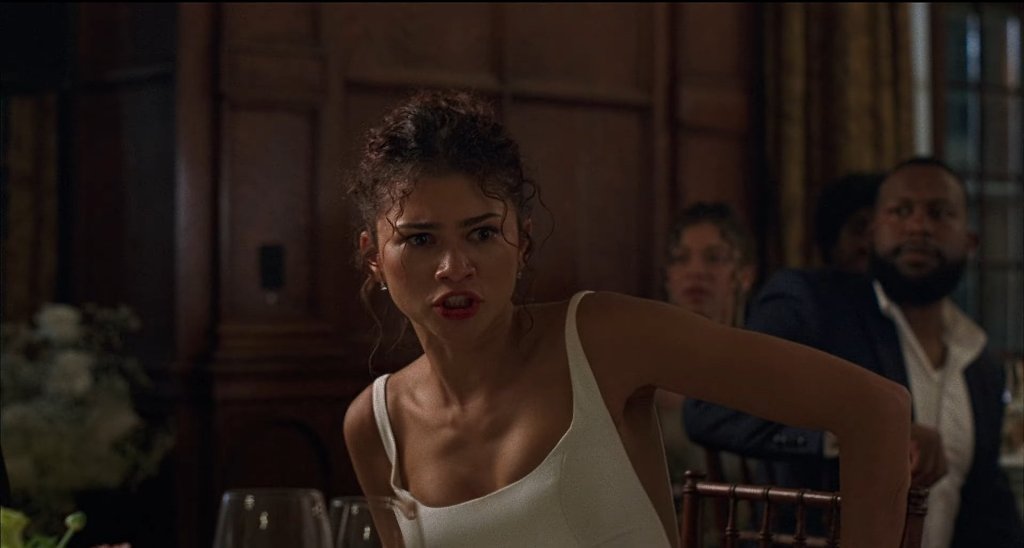
Zendaya was likely cast specifically because of her girl next door charm. The unbelievability of it feels intentional to create some distance between the film’s proposed thought experiment and the very real epidemic of gun violence. If the roles were reversed and it was Robert Pattinson’s admission, as handsome as he is, it would be much harder to find forgiveness or acceptance that he has truly gotten over his anti-social urges. Mostly because he more accurately fits the type. This distance gives the audience a bit more room to empathize with her character and to remove our own personal fears in order to truly laugh at the absurd culture we have made for ourselves.
As a dark comedy, The Drama is gleeful in how it pokes and prods at one of America’s only existing red lines. A deadly combination of low social trust, atomizing algorithms, and widespread access to firearms makes these tragedies not only inevitable but a daily occurrence. Now there’s nothing funny about mass casualties (of course!!) but there is an irony to the self righteous and moralizing thoughts and prayers while doing little, if anything, to prevent the next one. This is a perspective that is coming from Borgli, who as a Norwegian, is on the outside looking in. Similarly, The Drama works because Pattinson is British which allows Charlie to view gun violence not as the result of crazed individuals but of a culture that revels in gross spectacle.
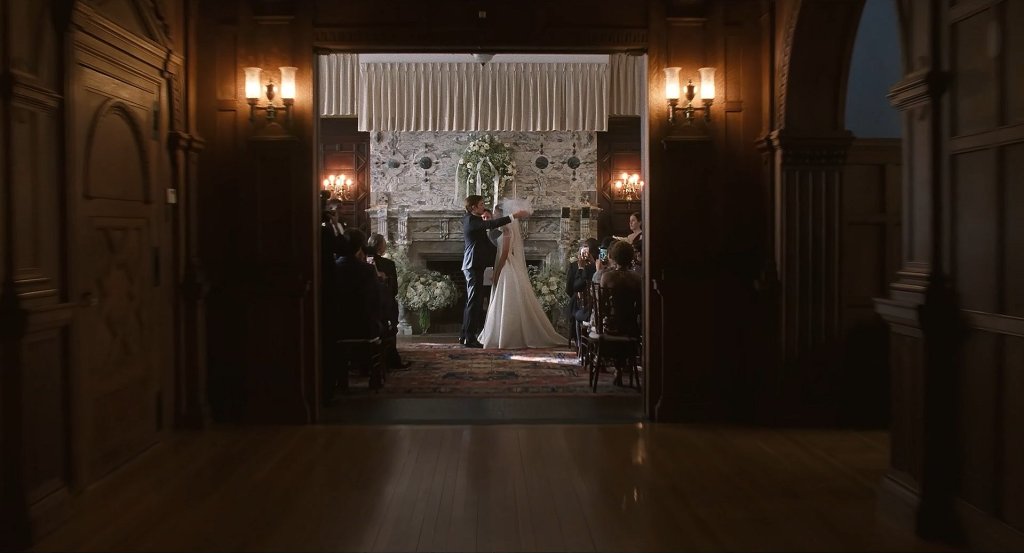
Out of all the thought provoking ideas and questions brought up by The Drama, there’s one detail in particular that has lingered with me. Throughout the film, Charlie searches for a reason for Emma’s ideations. Hoping that, if he can pinpoint the exact moment Emma lost her mind, he can find some peace in knowing she is no longer mentally in that place. But this was not the result of some undue trauma or unshakeable ideology, but rather out of boredom and a perverse fascination with the aesthetics of gun violence. That is horrifying. Barely a reason at all. Lives were very nearly lost over presumably black and white depression edits on Tumblr and 4Chan users falling over themselves to get the attention of the only girl in their gore thread.
It’s something that I have not thought about since I was probably Emma’s age, but I recall seeing what could only be described as “school shooter fandom.” A twisted take on stan and nerd culture, where the object of these, overwhelming teenage girl’s, obsession were various shooters and serial killers.
It’d be easy, once again, to cast judgment on these girls for their admiration and even attraction to these violent men, but considering the environment they grew up in, is it really all that surprising? Serial killers especially have become slasher-esque villains no different than Michael Myers or Jason Voorhees if the Netflix homepage is any indication. While shooters are now mostly unnamed, there was a time where killing your classmates could land you on the front page of newspapers and magazines. The 24 hour newscycle then happily dissects every piece of your life and motivations for the whole country to see, a fast track to being heard and validated.
So when we have the chance to intervene, to reach out, and to pull someone back from the brink, we should absolutely take it. Even if you must put aside your own disgust for that person’s thoughts, we’d all be better off for it. If nothing else, The Drama is about second chances and our capacity for forgiveness, which is in short supply these days. We need to find it in our hearts, lest we risk losing everything that keeps us connected and safe.
Divisive and provocative by design. But don’t let your initial discomfort drive you to a prejudiced, moralizing stance!
 Reel Take
Leave a comment