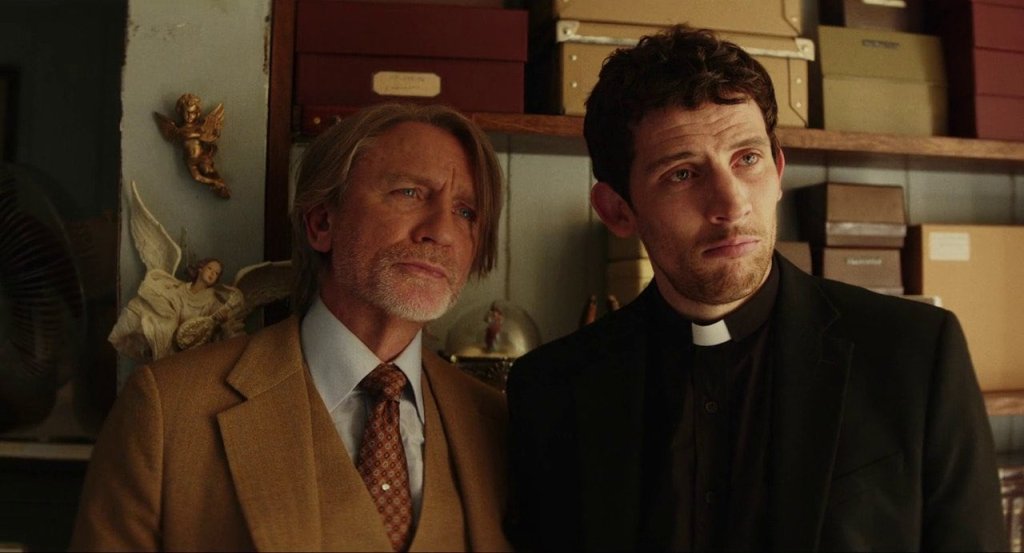
Wake Up Dead Man is a mystery film about a priest who dies under suspicious circumstances forcing detective Benoit Blanc to reconsider his faith in order to get to the bottom of this miraculous murder. It is a standalone sequel to 2022’s Glass Onion and the third film in the Knives Out series. After the success of the first movie, Netflix acquired the rights to two sequels with Rian Johnson given significant creative freedom in bringing them to life. Like the other two movies, Wake Up Dead Man is heavily influenced by the works of Agatha Christie and the many film adaptations of her novels. It premiered at Toronto International Film Festival earlier this year before getting a wide release on Netflix.
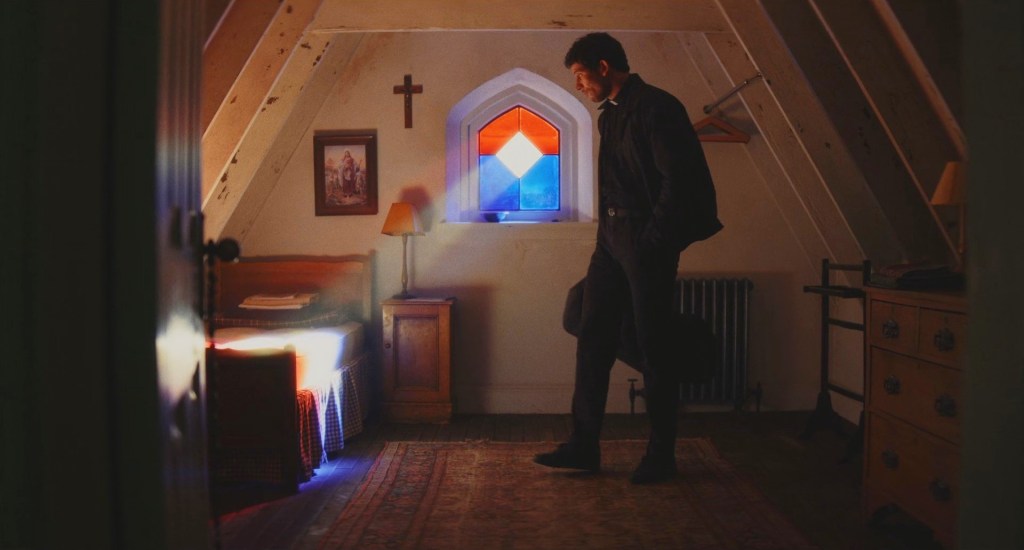
Former boxer turned Catholic priest, Jud Duplenticy, is forced to move to a new church after punching a disrespectful deacon. Father Jud is made assistant pastor at Our Lady of Perpetual Fortitude in upstate New York which is led by a crazed zealot, Monsignor Jefferson Wicks. When Jud arrives at his new parish, he learns about Wicks’ grandfather, Reverend Prentice Wicks who forced his daughter Grace to remain in the church under the promise of receiving his inheritance. However, after Prentice’s death, all of his bank accounts were emptied and Grace goes on a tear, ripping apart the church in hopes of finding his fortune, and is branded the “harlot whore” by the community.
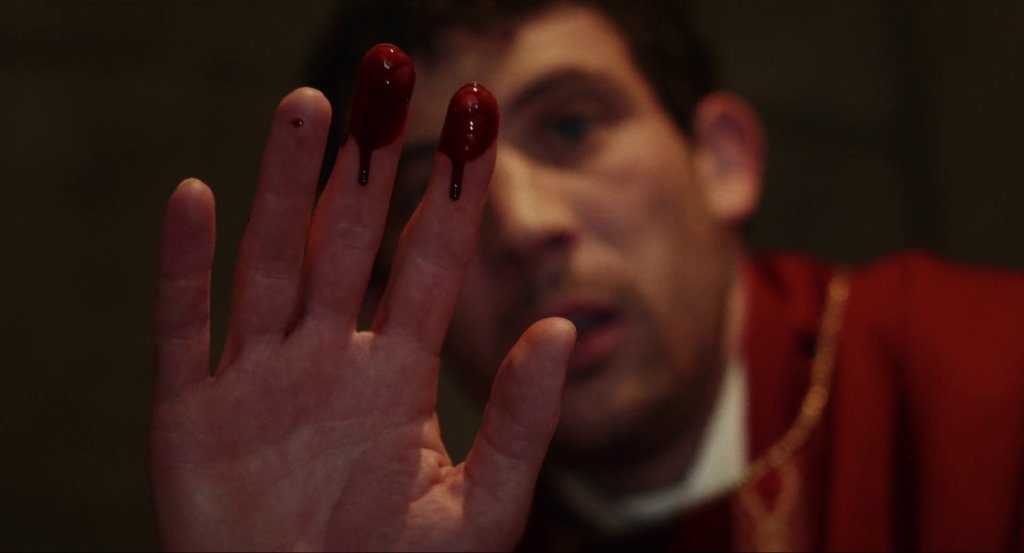
Years later, Jefferson Wicks leads hateful sermons, designed to alienate all but the most devoted of his flock. Jud pushes the Monsignor to lead with more grace and humility, but is shunned by the churchgoers. In the middle of a Good Friday service, Wicks suddenly collapses in a nearby storage closet. Jud rushes to his side and notices a knife has been stabbed through Wicks’s back with a devil head adornment attached. It is the very same piece that Judd had angrily thrown into the church window the previous night after stealing it from the bar. All the evidence begins to suggest that Judd is responsible for Wicks’ death. Detective Benoit Blanc arrives soon after and, certain of his innocence, works with Father Jud to solve this holy whodunit.
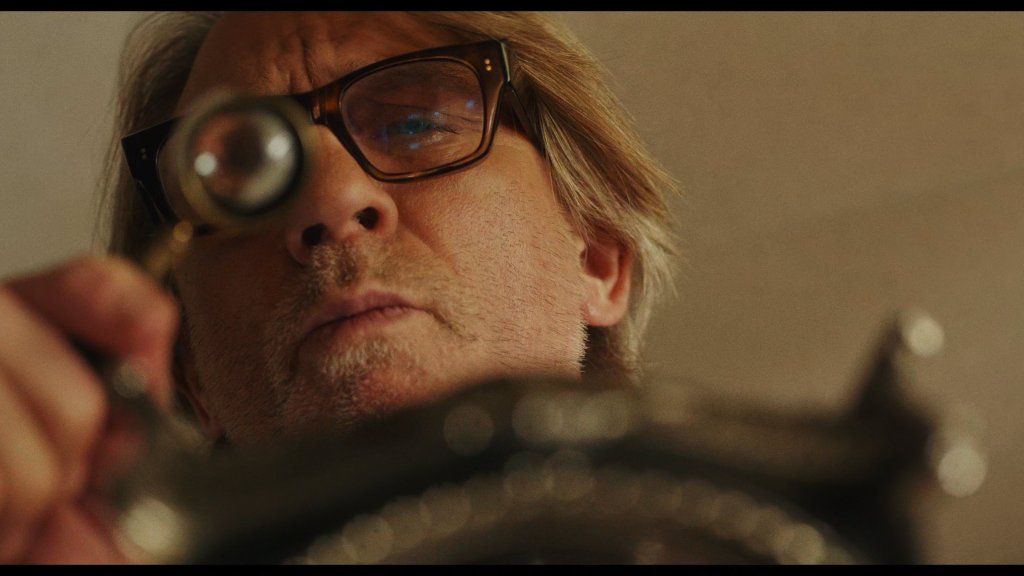
As the sole representative of this film genre, a genre that in the 21st century has found a new home in limited series streaming, I am grateful that Rian Johnson has dedicated himself to pioneering the modern mystery. These movies are popular for a reason. They’re rewarding for eagle eyed viewers and make rewatching worthwhile without being so overly complex and convoluted that the average audience member can’t follow it on the first go around. They are intellectually engaging without punishing the viewer with too many “blink and you’ll miss it” reveals. Johnson finds a nice middle road in his approach which has led to this series’ mass appeal.
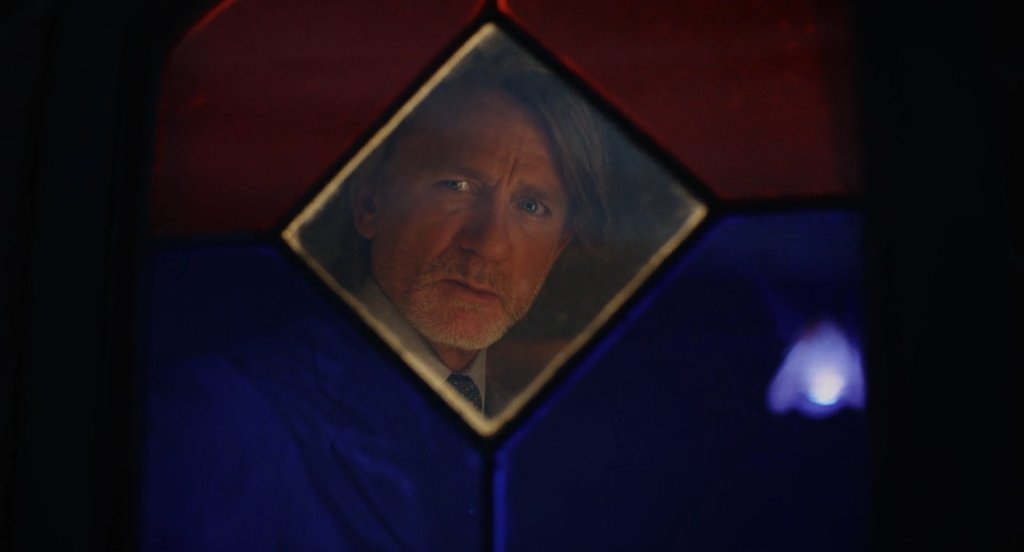
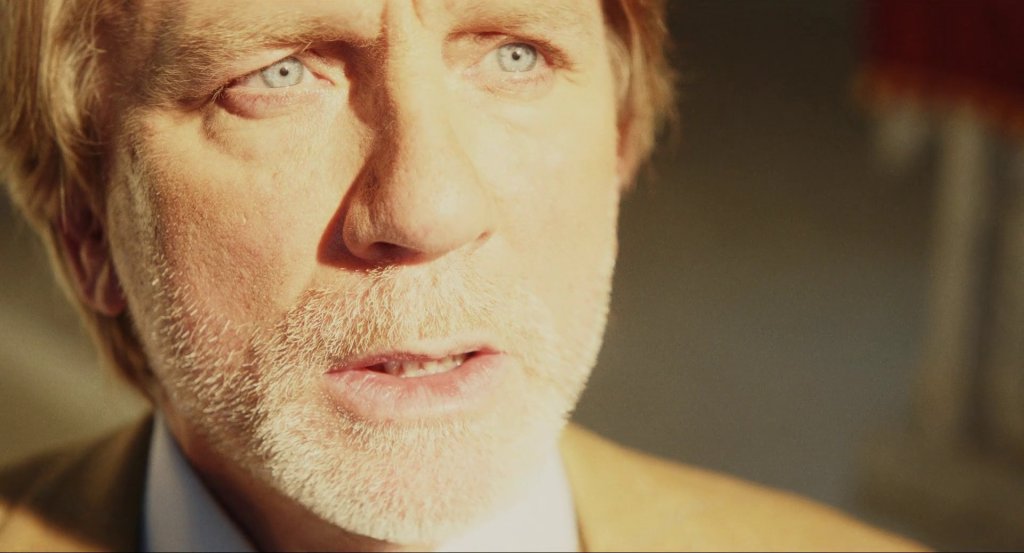
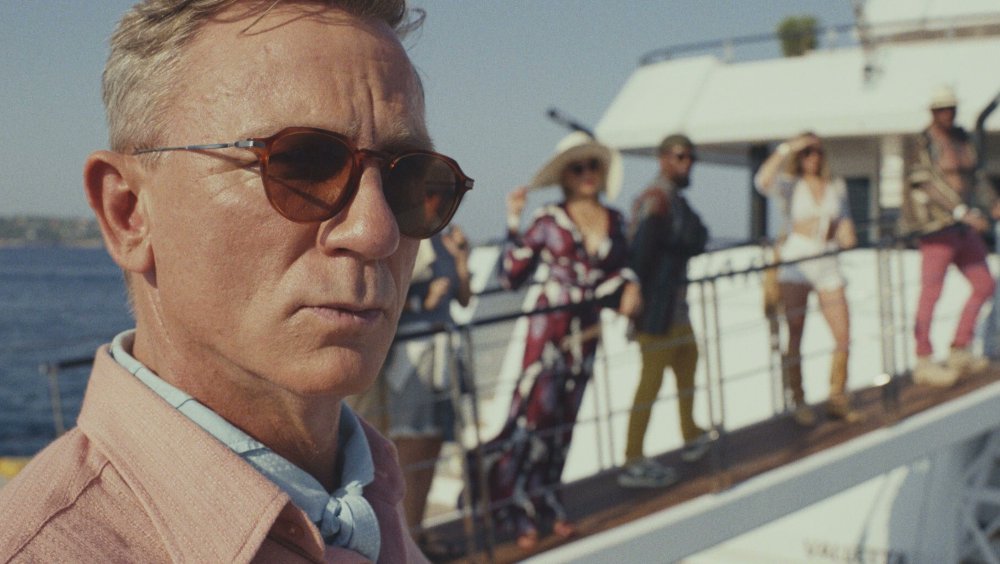
Then it’s anchored by a smooth talking performance from Daniel Craig. Benoit Blanc is a character that Johnson obviously loves writing for. So long as he can continue to come up with more fish out of water situations to stick him in, I expect many more movies starring our southern fried detective. Craig fully embodies this man, quirks and all, and seems to also get a kick out of how uncomfortable he can make this straight forward and rational mystery solver. Benoit is a relatively blank slate and exists somewhere outside of the pages of the story, written to feel like someone who has been dropped into the midst of a detective novel. Since he’s a little more flat and a lot more stylized than the rest of the ensemble, Craig has to work hard to make Benoit appear believable and capable while largely lacking an interiority.
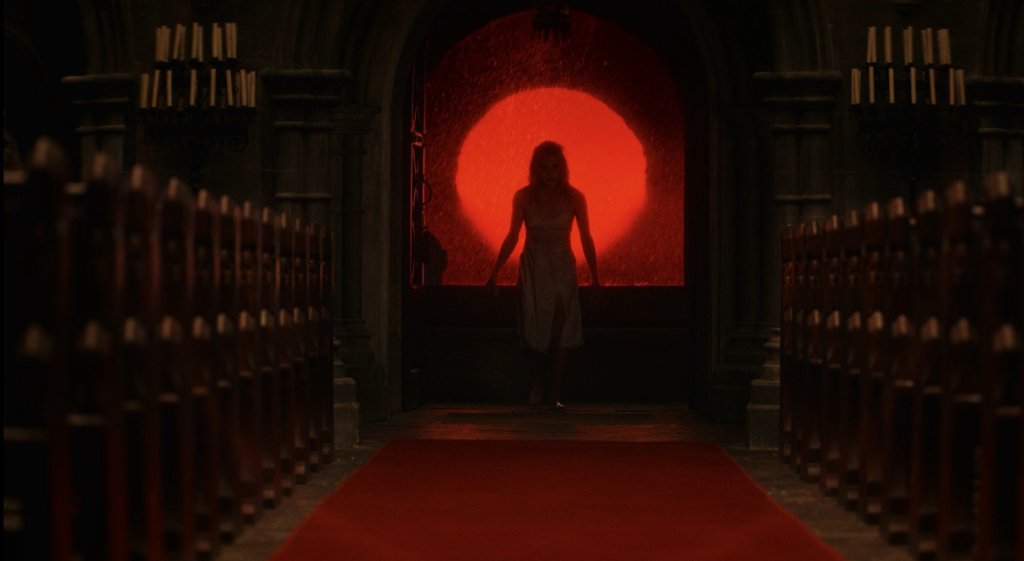
Aesthetically, this is the most visually pleasing of the current trilogy. This is primarily due to its Catholic church setting and religious themes. The imagery is sharp, specific, and haunting, reflecting the deterioration of this singular community in the hands of a corrupt Monsignor. Crumbling neo-gothic architecture, shadowy crypts, and medieval stained glass scenes of betrayal, guilt, and redemption punctuate Father Jud’s crisis of faith and Benoit’s agnostic frustrations.
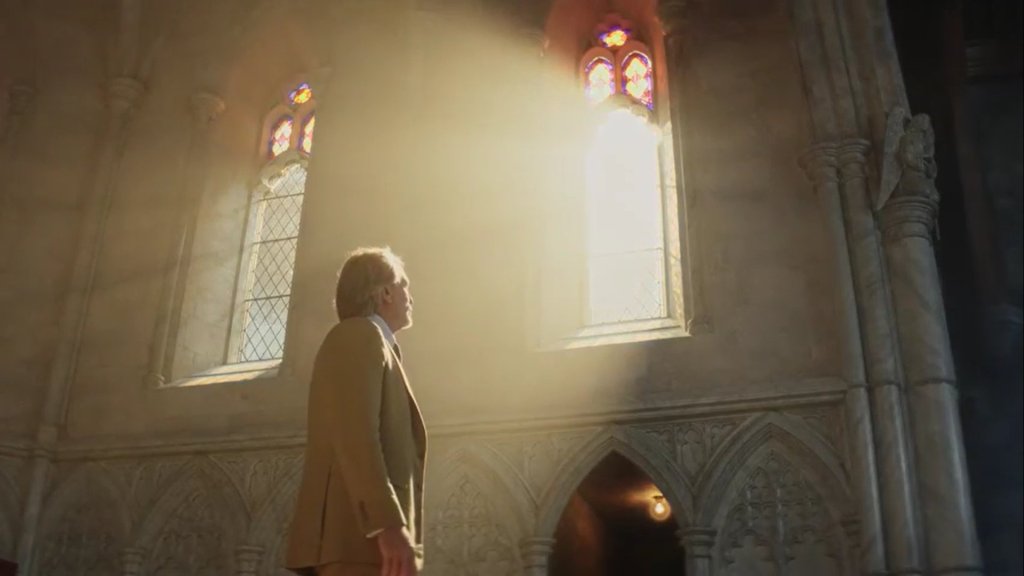
God is somewhat a character in this film too, represented by the unnatural lighting that shifts in moments of despair and revelation. Halos adorn Father Jud as he preaches the value of offering grace to the most wicked among us. While shadows block out the sun in near absolute darkness when Benoit admits he is at a loss in solving the case. Unsubtle, I suppose, but I thought this dynamic use of lighting helped steady the film’s mood, reigning in some of the more ridiculous, over the top moments and making the story feel like it is consequential on a spiritual level.
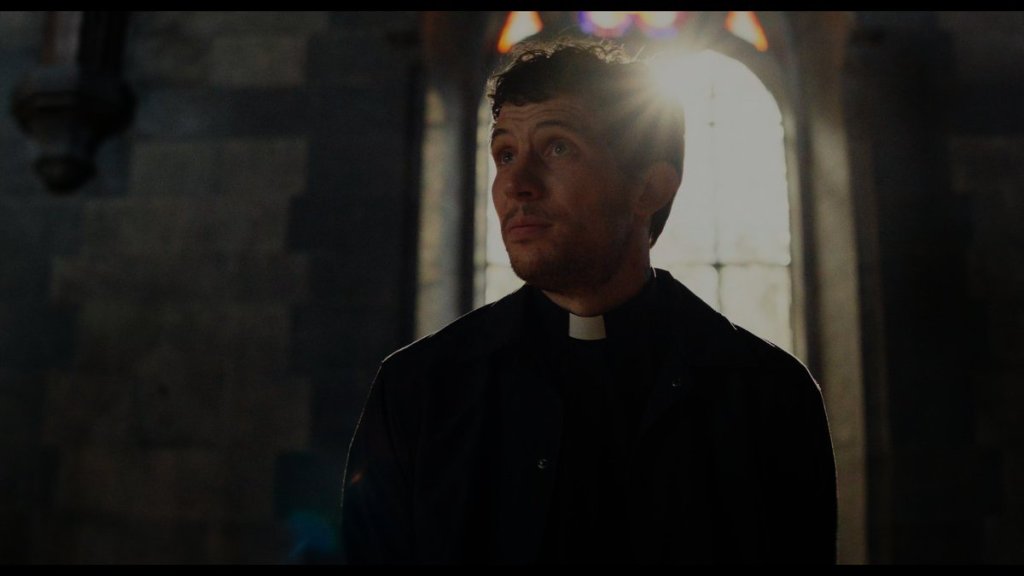
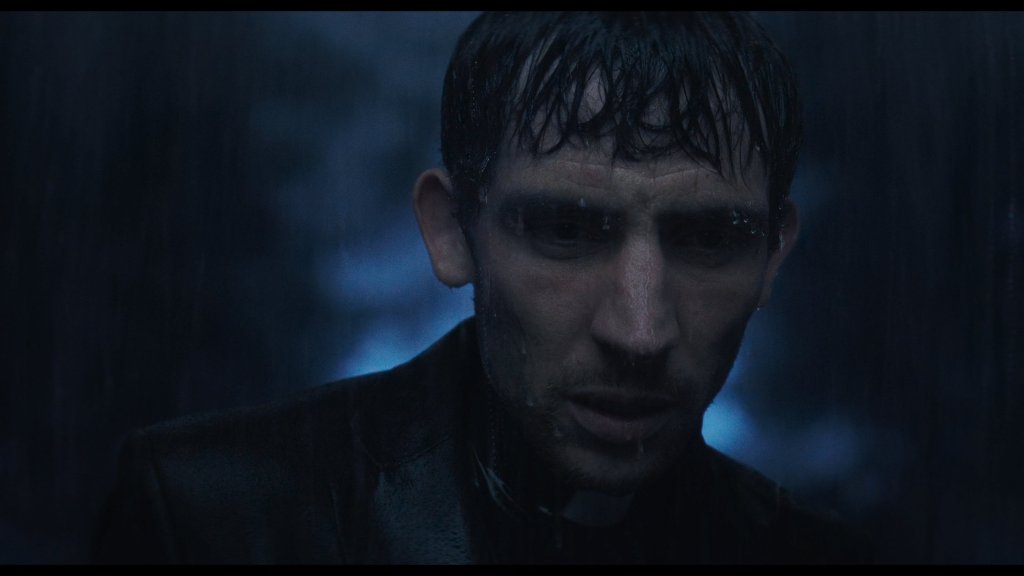
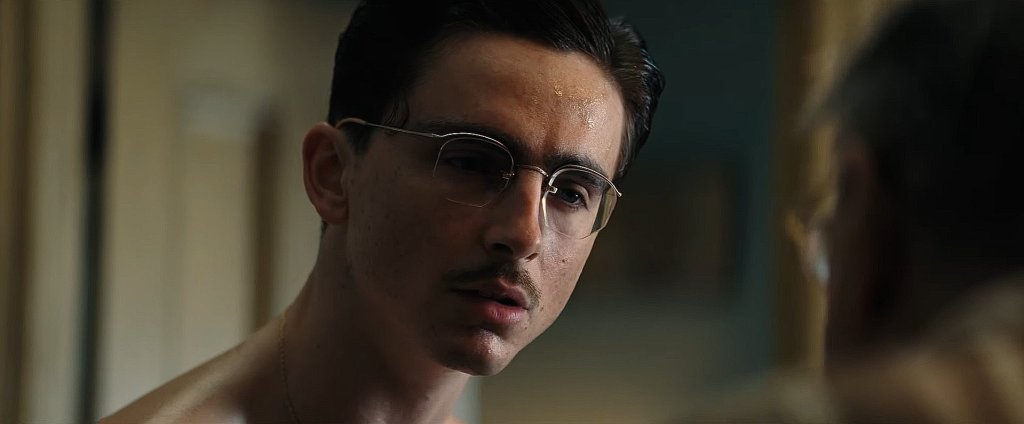
Josh O’Connor is one of the most versatile, young working actors today. Including him in this ensemble is a brilliant casting decision on its own, but making him the apprehensive priest at the center of this mess is a stroke of genius. O’Connor has his quips too, but otherwise the role is played completely straight, the only character in the movie who feels like a real person you could know. Even as the second half of the film began to lose me, O’Connor pulled me back in every time. The only reason I was able to take the film’s religious questions seriously is because it was so easy to believe Father Jud. Not just in what he says, but in his behavior. He leads without vanity or an ulterior agenda, in stark contrast to the deceased Monsignor. This is the first time in this series where I would like a character, not named Benoit Blanc, to return.
However, I’m starting to think that I may like Rian Johnson the director significantly more than I like Rian Johnson the writer. Even as this film moves away from his usual targets of the out of touch, ultra wealthy, Johnson can’t help himself in gleefully taking down his ensemble of religious nuts. All of the character introductions are overstuffed with Johnson’s personal and political grievances becoming boring and obnoxious caricatures in the process. Angry, dumb rightwingers with no depth, little more than a walking, talking social media comment. It is consistent throughout this series, most egregious in Glass Onion, so it is somewhat expected, but still as loud and in your face as ever here. Andrew Scott’s character, a famed writer with a reactionary pivot in his later years, even comments at one point how dumb they will all look in the Netflix adaptation of this story. Sigh. Fighting the urge to rip my skin off.
To be clear, I have no sympathy for the right wingers or religious bigots who may get their feelings hurt by Wake Up Dead Man. I’m sure that if Johnson and I sat down and talked about our beliefs, there would be significant overlap. Doesn’t mean I want to listen to the whiney cartoon versions of these people complaining about woke stuff for over two hours. I’d feel the same exact way if a cardboard cut out social justice warrior was included here too. I see enough of these strawmen depictions online, I don’t need it in the movies I watch too. It may be reflective of how annoying people are on the internet, but certainly does not feel true to life to me.
Wake Up Dead Man is like an adaptation of a mystery novel that doesn’t exist so I expect a little bit of artifice, but Johnson’s characters don’t even feel like they belong under those conditions. It doesn’t help that these suspects don’t get to do much besides spout off quips when they are briefly interrogated.
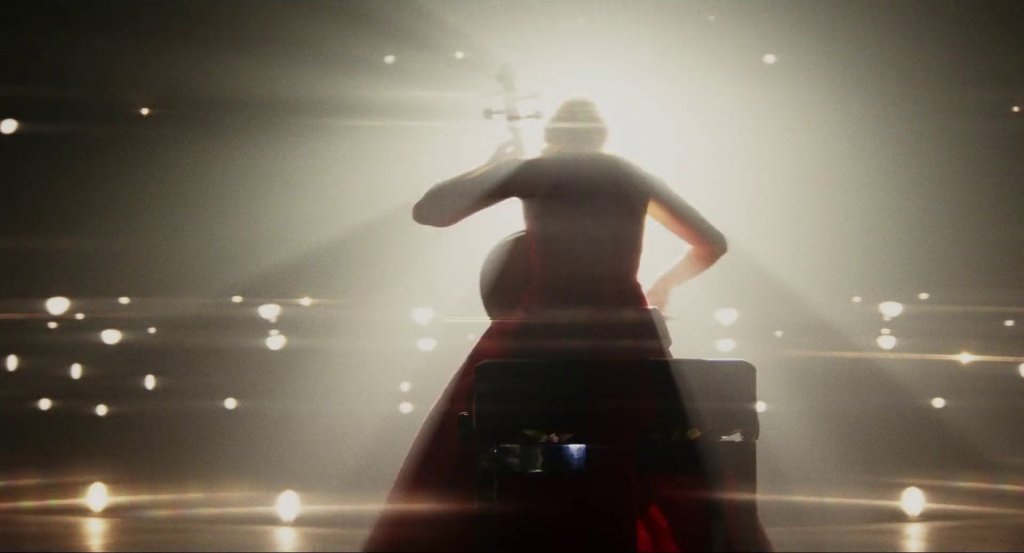
It’s a waste of a stacked ensemble cast that could do so much more with their characters than what was afforded. I am thinking specifically of Kerry Washington’s resentful lawyer who is the most personally impacted by the Monsignor’s death and Cailee Spaeny’s desperate cello prodigy who would do anything for a miracle cure to her disability. The lack of interest in the ensemble also telegraphed early on that none of them were going to be seriously considered as suspects. Takes out a significant amount of momentum when the suspect list gets whittled down that early on.
If I wasn’t already painfully aware of the film’s artifice, this likely wouldn’t have drawn as much attention, but the movie conflates Catholicism and Protestantism to confusing and mismatched results. Monsignor Wicks is an Evangelical, fire and brimstone type of preacher who uses the pulpit to spout off bigotry and condemnation of sinners, all while committing his own fair share of sins. Yet his title, outfits, and church are Catholic, allowing Johnson to pull from a deep well of Western art history and religious imagery in order to make his film more stylized. By Johnson’s own admission, he was inspired by his childhood growing up in the Evangelical church, but realized that most of those spaces “looked like Pottery Barn.”
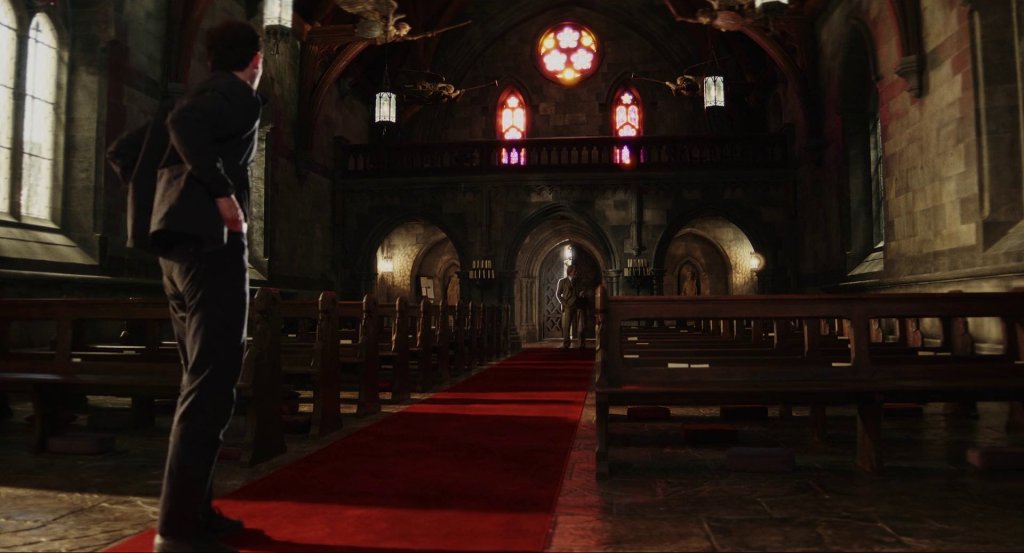
It’s a visual choice, one that contributed to this being the best looking film of the series, so it’s not that it is a bad choice in and of itself. There are also plenty of issues to take with the Catholic church as well. But since the story is so clearly inspired by the hostile takeover of the federal government by right wing Evangelicals with a cult of personality behind them, it makes no sense for Wicks or his flock to be Catholics. They do not preach like Catholics or speak like Catholics, save for maybe Glenn Close’s Martha Delacroix, which further contributes to the uncanny and exaggerated satire of Wake Up Dead Man. It’s actually laughable to think a reactionary, conspiracy-brained writer would ever turn to the Catholic Church too.
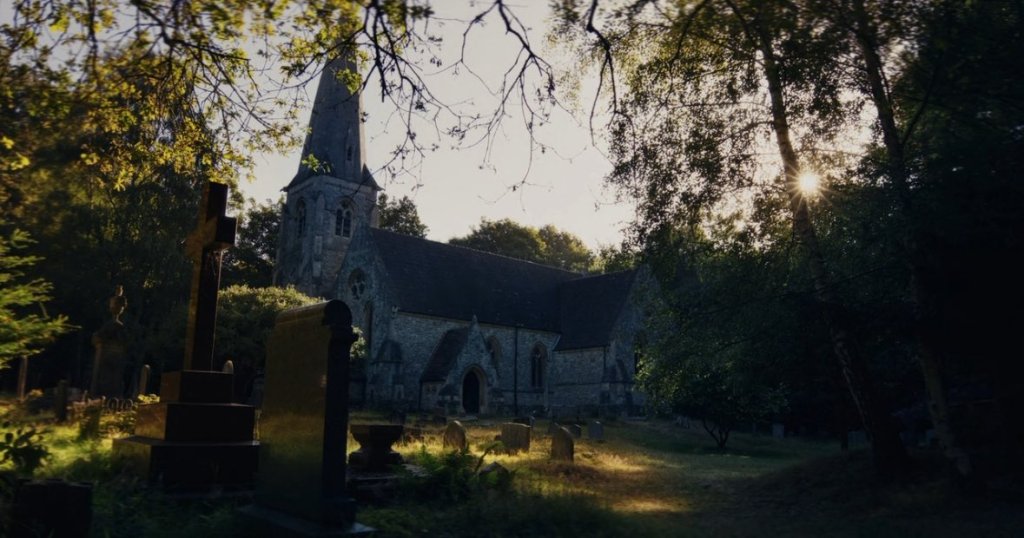
If Johnson did not intend to write a political story about how religion has been hijacked by those who seek to use the power of the pulpit for evil, none of this would matter all that much. However any attempt to say anything substantial about our current climate, dominated by Evangelical dogma, crumbles apart under the flimsy artifice of its political satire. Every one is dumb, evil, and ugly so there’s no attempt to understand them, why they turned to religion, or how these people ever gained a foothold in our national politics. Which hey, maybe they deserve the unsubtle jabs, but punching blindly, in all directions, is not satisfying to watch. Johnson’s latest sermon offers no solace or grace, just more ridicule and mockery.


 Reel Take
Leave a comment