
Hamnet is a historical drama about the relationship between Agnes and William Shakespeare, the tragic loss of their son Hamnet, and how both informed the creation of Shakespeare’s masterwork. The film is adapted from Maggie O’Farrell’s 2020 novel of the same name. O’Farrell co-wrote the screenplay alongside Academy Award winning director, Chloé Zhao. Actors Jesse Buckley and Paul Mescal were cast early last year and Steven Spielberg signed on as a producer. The film premiered over the summer at the 52nd Telluride Film Festival to near universal praise.

Agnes is the orphaned daughter of a woman accused of witchcraft. She grows up as an outcast in her father and stepmother’s home who have long counted her out when it comes to prospective marriages. A young William Shakespeare works as a tutor for her younger brothers. One day, he notices Agnes out in the woods and introduces himself. Agnes is resistant to his advances but is eventually charmed by the bard’s ability with words. To both of their families’ disappointment, they announce their plans to wed when Agnes becomes pregnant with their first child, Susanna.
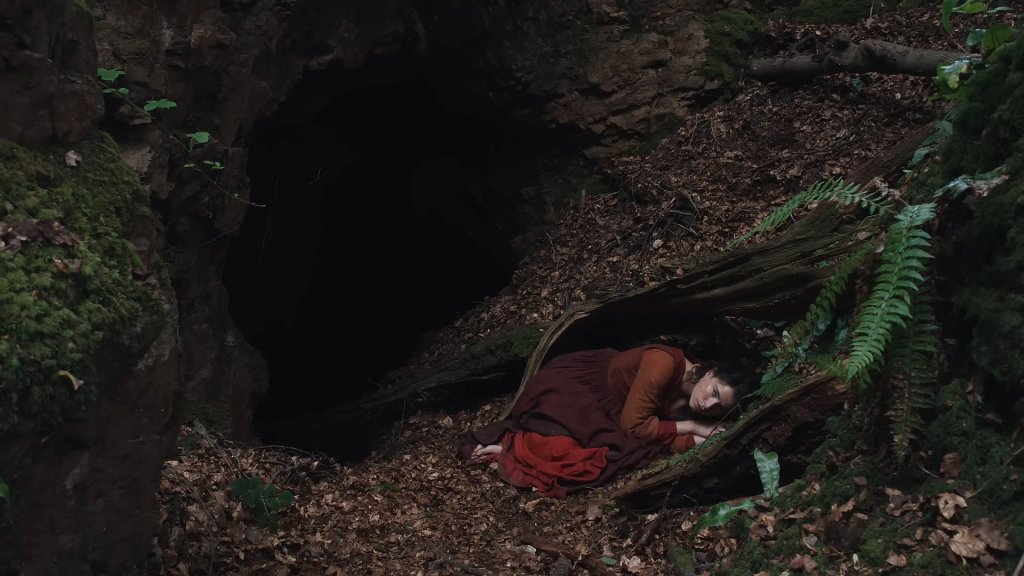
Domestic life is peaceful for Agnes, but William grows restless, suffering from writer’s block. Agnes pushes him to take up temporary residence in London, knowing he needs to work directly with a theater company if his plays are to ever see the light of day. He travels back and forth between his home and the city, making a name for himself at the Globe Theatre.
When Agnes becomes pregnant again, her brother Bartholomew questions William’s dedication to his family. This is further complicated when it turns out that Agnes is pregnant with twins, a boy named Hamnet and a girl named Judith. During birth, Judith nearly doesn’t survive. Agnes begs the spirits to save her daughter and by some miracle, she lives. But their good fortune does not last forever as a few years later Judith comes down with the bubonic plague. As death comes for his twin sister, Hamnet begs to be taken in her place.
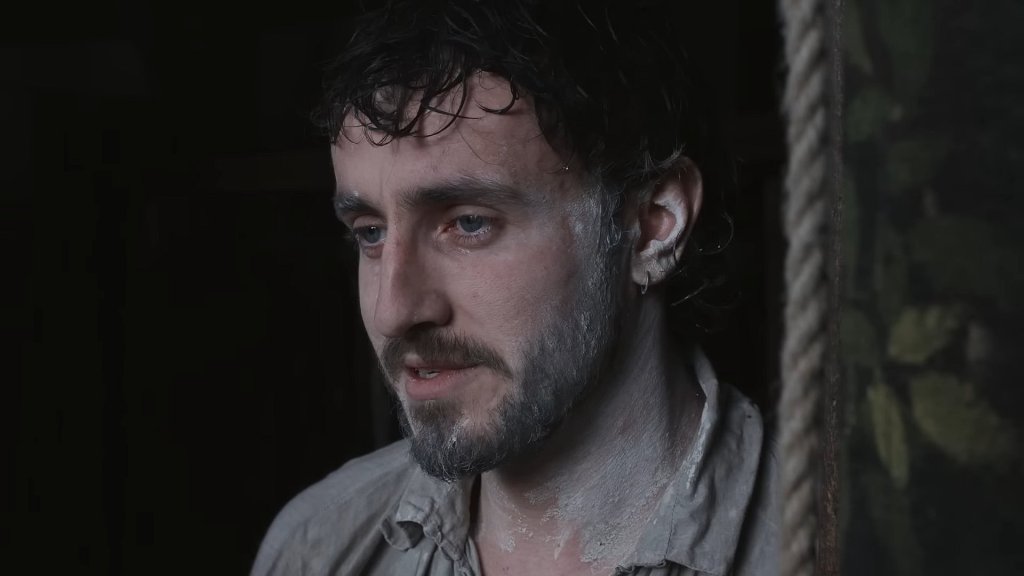
The few times I saw the trailer for this already made me weepy so the pump had been primed for weeks. Traditional costume dramas have dominated awards season for most of Hollywood’s existence so in contemporary, online film criticism they’re written off as the dreaded “Oscar bait.” Actors in stuffy outfits, trained by dialect coaches to recite monologues about our shared connection across time and place. Often they are biopics about specific historical figures, other times it is about a significant event. In either case, they are derided as a shortcut to prestige as if constructing a few old building facades is all it takes to win big at the Academy Awards.
Admittedly, Hamnet is likely one of three films in serious contention for the top prize next year. (Which could change the second other trophies are handed out) However, given the Academy’s increased awareness of its out of touch perception, Hamnet’s prestige pedigree could actually be a disadvantage to its prospects. I’ve even seen it directly pitted against the other two, more populist films, One Battle After Another and Sinners, as the likely spoiler with some trades calling it this year’s “Oscar villain.” I’m less interested in the culture war angle here, but it is telling that Hamnet is the film being targeted during this cycle. If it were to win Best Picture, Chloé Zhao would be the first woman, first Asian person, and first person of color to win the top prize twice. Yet, the attitude is overwhelmingly “she already got her’s.”
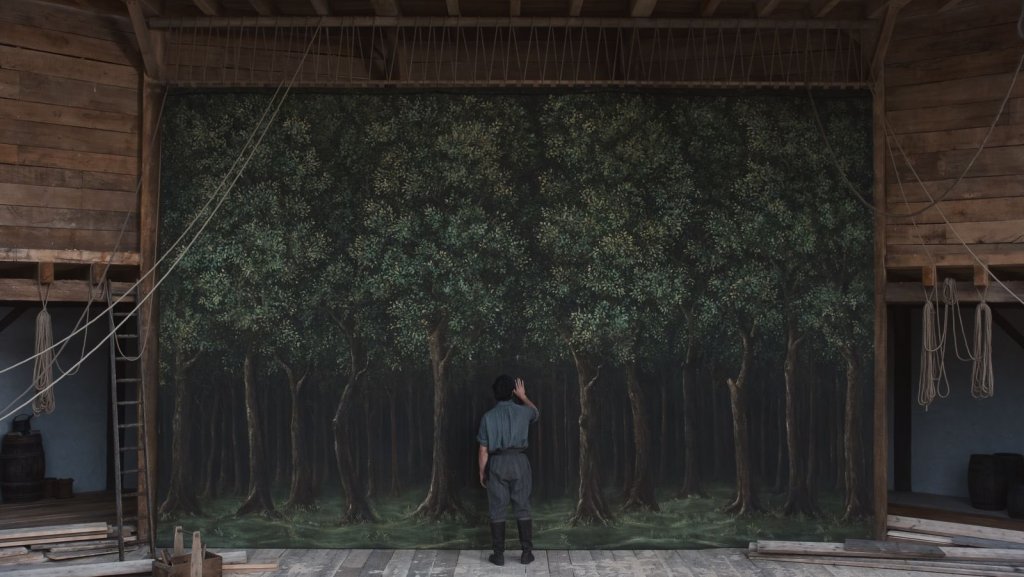
Leaving all that behind by the time the lights came down, I was able to forget about the baggage it’s carrying into next year and just enjoy the film for what it is. Which my god, what an elegant and masterful work of art it is. In defiance of traditional biopics, Hamnet is a story about William Shakespeare the person and father rather than Shakespeare the greatest contributor to the written, English language. His craft and the development of his world renowned works exists on the fringes of this story, adding color to the personal drama rather than the other way around. We don’t spend much time with him writing and even less directing his theatre troupe. For most of the movie he is absent, existing as the larger than life figure in our imaginations.
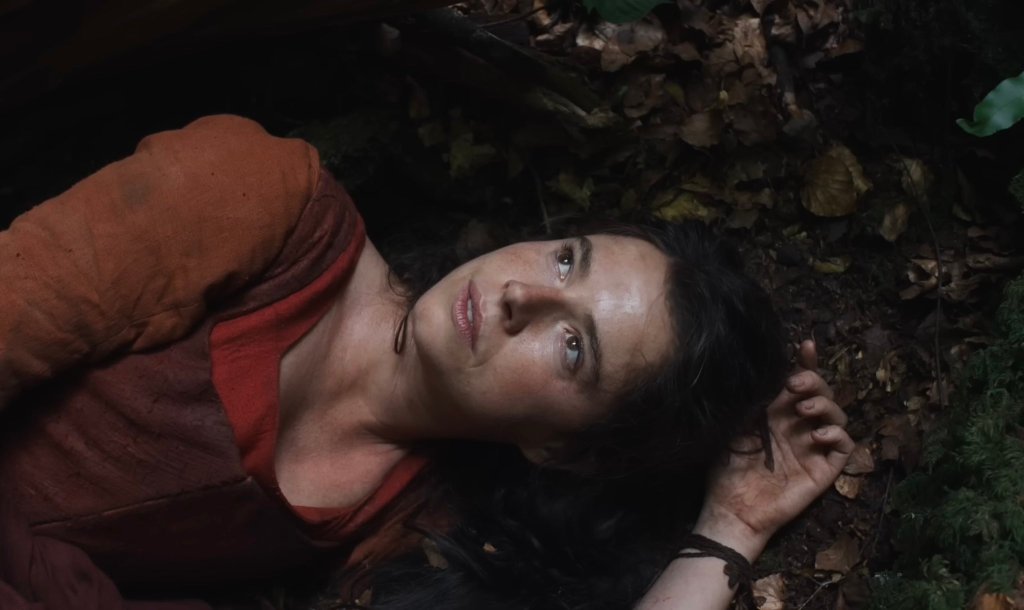
That’s primarily because this is the story of Agnes, Shakespeare’s wife. When the film opens, it is her we see first, living amongst the trees, and communing with the forest spirits. It’s genius because unlike Shakespeare, Agnes is much more of a blank slate for the audience. We don’t know her nearly as well as her husband so when Zhao elevates her as a person of significance, someone just as interesting as the fabled bard, it draws us in. Immediately, I want to know everything about her. Where did she come from? What’s her connection to the woods? Is she really a witch like they say she is? Over time I grew less interested in how she shaped her husband and his work and far more curious about the life she was leading at home as he went off to London to chase his dreams.
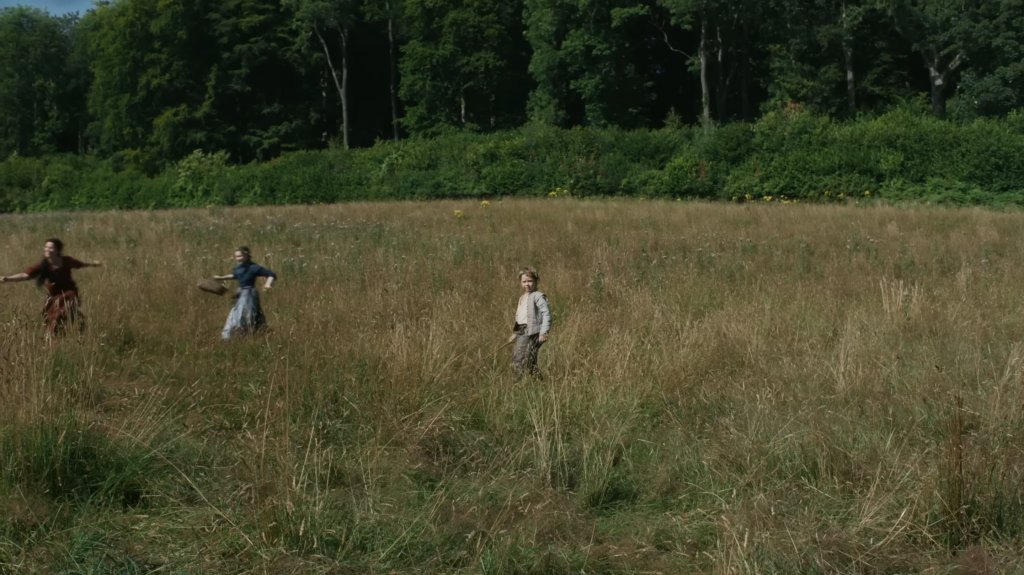
Zhao is not diminishing Shakespeare’s contribution to the Western canon by acknowledging that he was only able to do so because of Agnes. For raising his children without him and supporting his creative dreams every step of the way. However, this decision between the couple does not come without its sacrifices. William gives up family life for this pursuit and Agnes in turn must raise their family without him. They are able to continue on like this, but the resentment undoubtedly grows within Agnes who struggles to understand what William gets from his work that he cannot get from his own children. The first half of the film features both characters working in bleak isolation with brief moments of reprieve when the whole family is together once more. It could all be so simple. But Agnes and William are not simple people.

Their domestic drama comes to a screeching halt once Judith falls ill. Born into this world as a sickly child, there is little hope for her recovery. This is the day Agnes has dreaded since she gave birth. The doom she foresaw has finally come home to roost. There’s an anxious feeling that permeates this entire sequence because we as the audience know that Hamnet is going to die. Judith is simply a misdirection. But Agnes doesn’t know that. For a minute, I even thought, well maybe Judith dies too. After all during this time, a third of all children in England did not make it to ten years old. The whole series of events tore me up and tied my stomach in knots. Never knowing exactly how it was going to play out and foolishly hoping that someway, somehow the whole family would survive this.
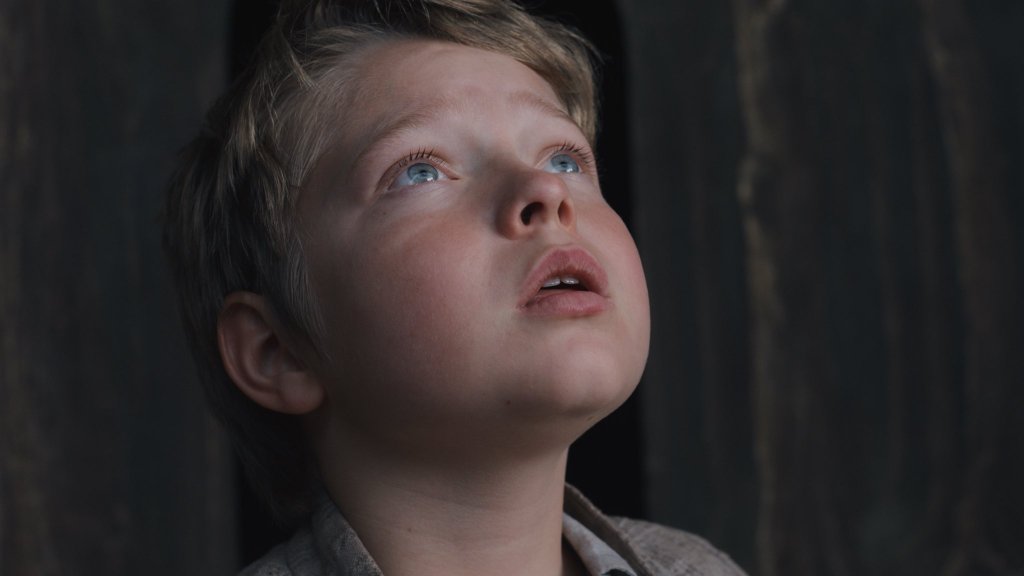
We see William witness the horrors that the plague has unleashed in London, before he is alerted of Judith’s conditions and races home. Hamnet, heeding his father’s advice to be brave and the man of the house in his absence, offers himself up to die in her place. Death or the manifestation of Agnes’ fears accepts his offer and Hamnet tragically dies at just eleven years old. Agnes wakes the next morning to Judith who has made a miraculous recovery. She is overjoyed and relieved to see her daughter conscious and breathing.
But as the audience, we know that that means Hamnet’s plea worked. Even if it is just for a split second, knowing that he is dead before Agnes made me sick with nerves. It felt like I was about to break terrible news to one of my closest friends and they are oblivious to the fact that their life has already changed forever. A specific kind of dread that I’ve never felt from a film before. Lump in my throat, pit in my stomach, and “sorry” on the tip of my tongue.
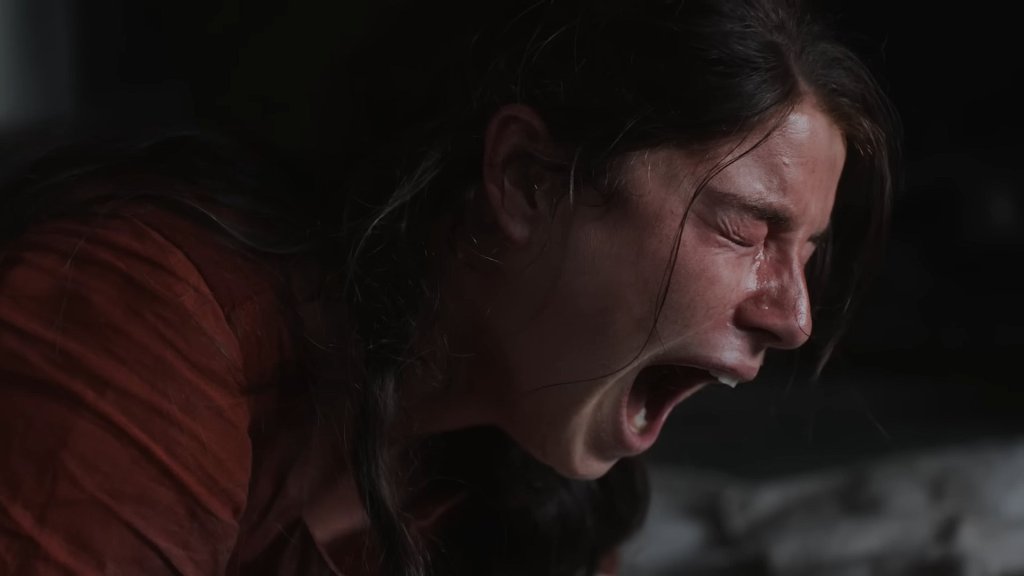
Now is as good of a time as any to say they better start engraving Jesse Buckley’s trophies. I have no doubt in my mind, she is responsible for eliciting that strong reaction out of me. Buckley spends the first hour of this making sure you fall so deeply in love with Agnes that when this loss hits, you feel every crack of her heartbreak. That one singular scream she releases upon discovering his body rattled me to the core. The hairs on the back of my neck are standing up just thinking about it. The performance is night and day on either side of this scene. Morose, distant, and filled with rage. The light has left Agnes and in search of someone to blame, she finds William a suitable target. She wails out in anger at him, saying he should’ve been there to say his final goodbyes to Hamnet when he sets off for London.

When Agnes learns that his latest play is titled Hamlet, she hopes for a brief moment that it’s a comedy, a celebration of their son’s life. She is disheartened to hear that it in fact is a tragedy, frustrated once more by William’s commitment to the stage over their family. Reluctantly, she and her brother attend a performance. During the opening scene, Agnes rejects the play, not understanding what it has to do with her son. But then William appears as the apparition, warning Hamlet of the tragedy to come. It becomes clear in that moment that William needs the theatre to process his grief. While the play is not an autobiographical story of their son, it is about overcoming loss and questioning the futility of continuing on in the face of endless tragedies.

The actor playing Hamlet delivers his soliloquy and Agnes is so moved that she reaches out to touch him. It’s as if a part of her son lives on through the performance. She can suddenly see him once more, in the flesh. Agnes looks around to the other audience members who weep as Hamlet perishes before them. Suddenly, she is not alone in her grief. It’s shared by the collective, easing the burden of Hamnet’s loss. I watched this moment through tears of my own. As Buckley and the ensemble stared me down, I became aware of the sniffles and tears on either side of me as well. In a moment of pure cinematic transcendence, I am crying with an audience at a tragic and allegorical depiction of Shakespeare’s real loss just like Agnes and the audience in the Globe Theatre.

I was at a loss for words when the credits rolled. Hamnet Shakespeare died in 1596. It’s been over 400 years and Zhao got a room full of a hundred people sobbing and choked up over a family they’ve most certainly heard of, but likely know little of. That’s what it’s all about.
One of the very best of 2025.
But bring the tissues.



 Reel Take
Leave a comment