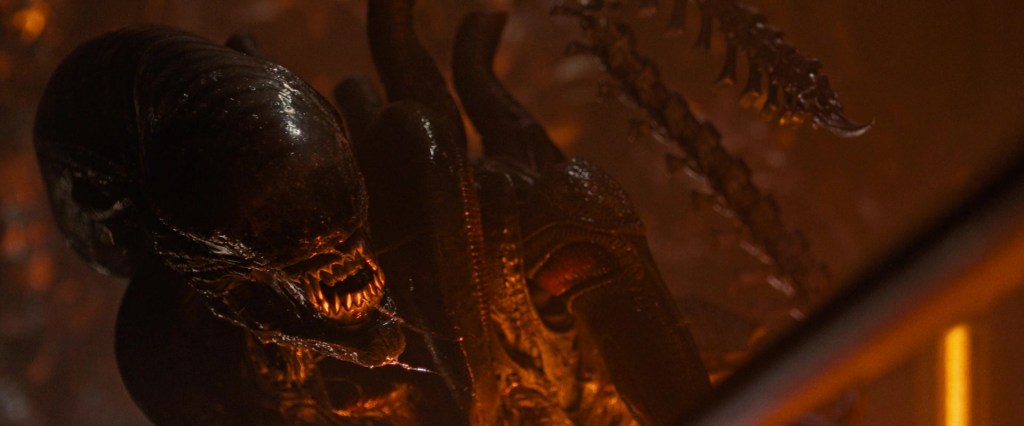
Alien: Romulus is a sci-fi horror film about a group of destitute young people desperate to flee the brutal working conditions on their smog filled, mining colony. It is a legacy sequel to the Alien franchise, born from Ridley Scott’s 1979 masterpiece which revolutionized the subgenre. The film is directed by Fede Álvarez who gained notoriety for his 2013 reimagining of Evil Dead, his original horror film, Don’t Breathe, and his story contributions to 2022’s Texas Chainsaw Massacre. Given his horror experience, especially within established franchises, he was chosen to direct the latest installment in the Alien series.

Álvarez is a longtime fan of Alien which is evident in the finished product. He consulted both Ridley Scott and Aliens director, James Cameron throughout production in order to ensure his movie aligned with the design sensibilities of their films. This was crucial because the events of Romulus occur between these two movies within the franchise’s timeline. Álvarez is also an avid gamer, taking plenty of inspiration from the 2014 survival horror video game, Alien: Isolation. Romulus possesses similar qualities to video games, with some scenes feeling like levels that have clear objectives, save points, and collaborative, “multiplayer” elements. The end result is a love letter to one of the most influential sci-fi films of all time, playing out like an Alien’s greatest hits, highlight reel to varying degrees of success.
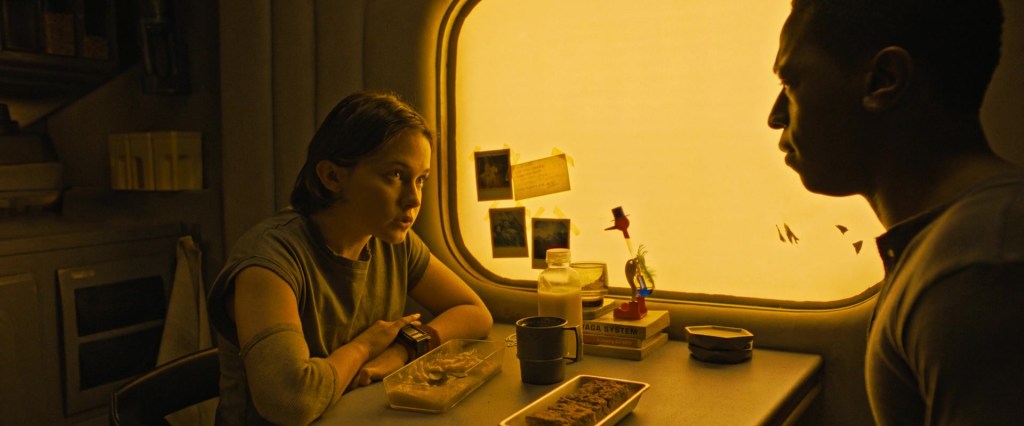
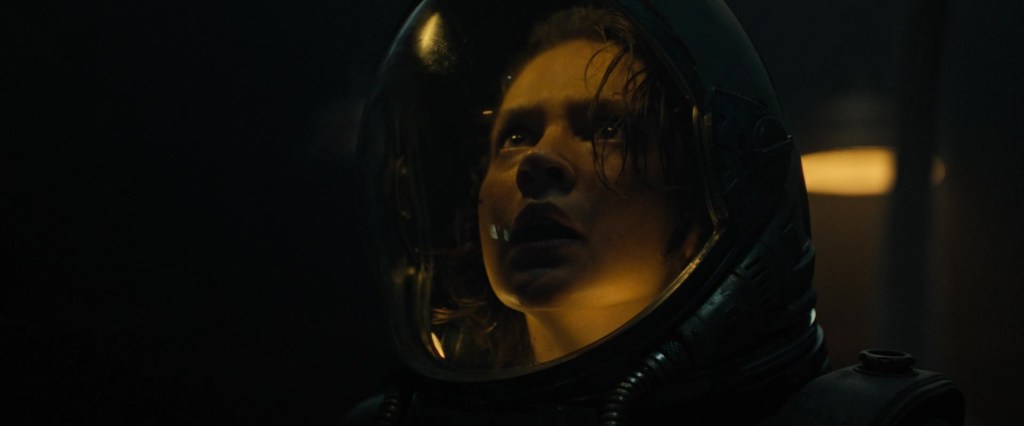
Cailee Spaeny stars as Rain Carradine, a worker stationed at Jackson’s Star colony, a desolate mining planet operated by the Weyland-Yutani corporation. Having lost her parents to lung disease, Rain’s only family member is a malfunctioning android named Andy, played by David Jonsson, who was programmed by her late father to act as a brother and companion. Rain dreams of a life in the Yvaga system, a free colony outside of the corporation’s control where the skies are clear enough to actually see the sun. Her day of freedom is delayed, when Weyland-Yutani extends her work contract without notice. There’s no reason to believe they won’t continue to do this until she dies and the situation appears hopeless.
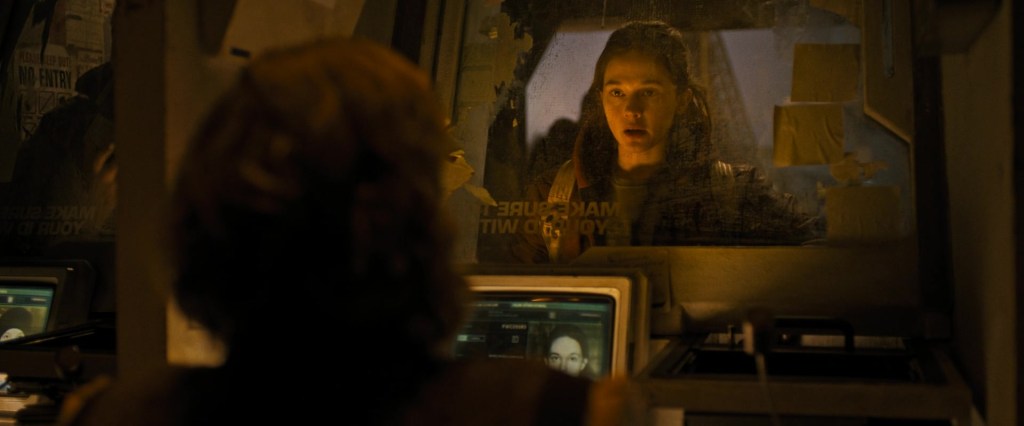
Rain’s ex-boyfriend, Tyler, hatches a plan to escape Jackon’s Star and the company’s control. He is joined by his pregnant sister Kay, their cousin Bjorn, and Bjorn’s adopted sister Navarro. After Navarro detects a defunct Weyland-Yutani ship passing through their planet’s orbit, they decide to pilot their mining hauler, the Corbelan, to gather any remaining equipment. Mainly, they’re after a set of cryostasis pods necessary for completing the nine year journey to Yvaga. Tyler recruits Rain, but she’s skeptical of their decision to include her. He reveals they need Andy to gain access to the abandoned spaceship’s various firewalls and locked wings. Since he is a piece of Weyland-Yutani technology, he can interface with the ship in ways they cannot. With the alternative being dying in the mines, Rain reluctantly agrees to join their mission.
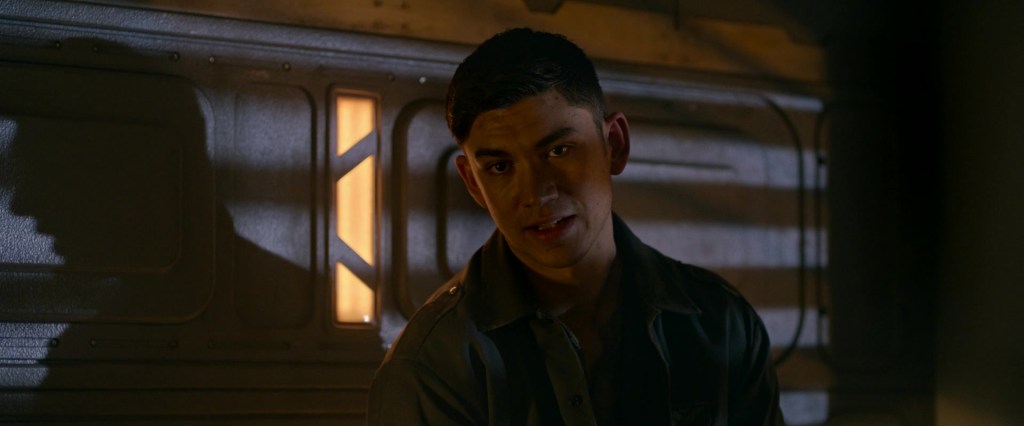
After launching out of the atmosphere, it becomes clear that the object in orbit is not a simple spaceship. It is an enormous space station called the Renaissance, larger than anything the crew has ever come in contact with before. Rain questions why the corporation would abandon such a crucial piece of infrastructure, leaving it to drift in the vacuum of space, vulnerable to destruction. The others are too excited by the prospect of freedom to take this concern seriously. They dock their ship alongside the Renaissance and Navarro reports that the station has around 36 hours to impact with a nearby asteroid belt.
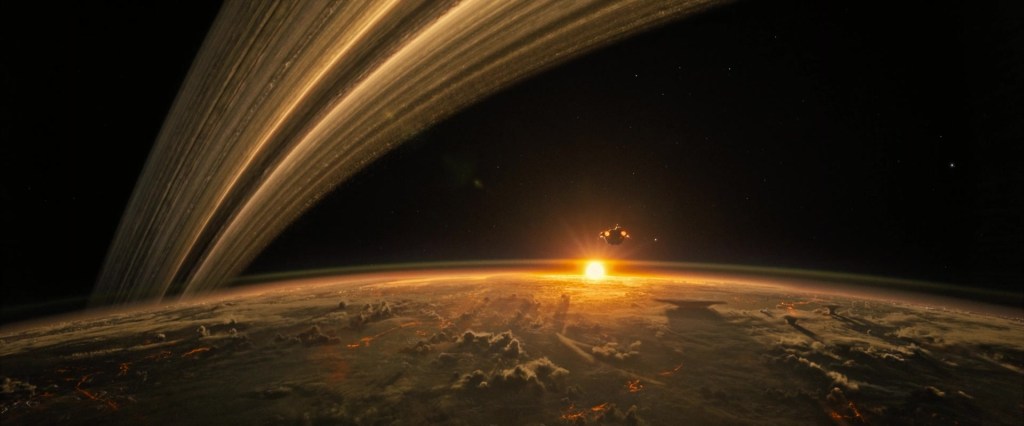
Tyler, Bjorn, and Andy enter the spacecraft in search of the cryopods believing it will be a quick in and out mission. Of course when they get to the pods, Tyler discovers that they only have enough fuel left for a three year journey, a fraction of the nine years needed to get to Yvaga.

The crew seeks out a nearby cryo depot to retrieve the necessary fuel. Unbeknownst to them, removing the fuel cells triggers an emergency alert system, locking them within the depot. To make matters worse, the energy was being used to keep dozens of facehugger parasites frozen unconscious. The rapid warming of their containers causes them to awaken and wreak havoc on the gang. Rain and Navarro act quickly to free the boys from certain death, but just as they think they’re in the clear, a facehugger leaps at Navarro, attaching firmly to her face.
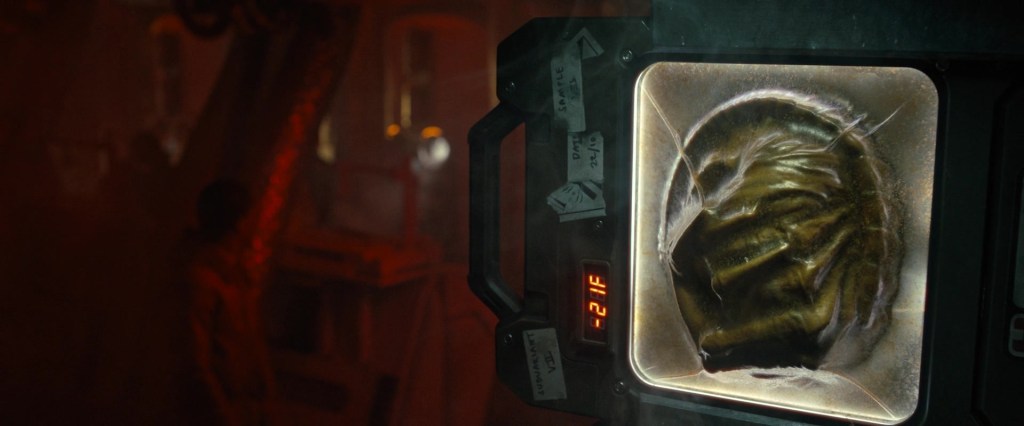

Unsure how to overcome this new danger, they reboot a damaged android in the ship’s research center who provides the necessary background information on the xenomorph threat. The android, Rook, recounts how the scientists at Renaissance retrieved a cocoon containing the xenomorph that killed every Nostromo crew member, except for Sigourney Weaver’s Ellen Ripley. They used DNA from the specimen to reverse engineer the facehuggers in order to research its mutagenic properties. However, the xenomorph was still alive and slaughtered every living member of station Renaissance. The crew manage to remove the facehugger from Navarro safely, but not before an infant xenomorph is implanted within her. Typical alien madness ensues.

What sets Romulus apart from its predecessor’s is the unique perspective offered by focusing on a much younger group of prospective victims. They aren’t the grizzled cargo crew of the Nostromo who were mere pawns in the corporation’s game or the highly trained Colonial Marines who knew what they were up against. No, instead it is a gang of college aged kids, who despite their horrid living conditions still have a sliver of hope that one day they will be free. This hope is a dangerous thing to have as it blinds the crew to the seemingly obvious danger they freely walk into.
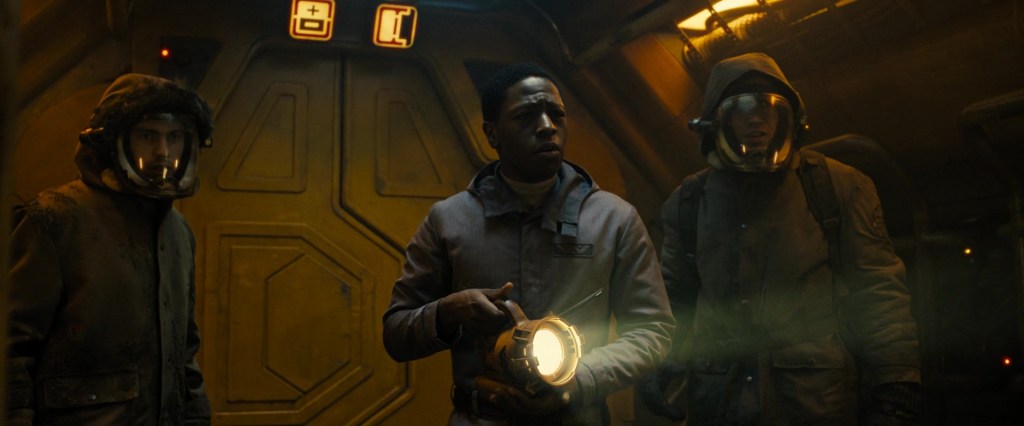
Despite Rain’s caution, they enter the Renaissance research station because what other choice do they have? There’s no guarantee that they will be relinquished from their work permits any time soon and it is likely that they will die in the mines just as their parents have. So they’re willing to take the risk, unaware that Weyland-Yutani’s labor rights violations are surprisingly the least of the corporation’s evils.
Romulus takes place just twenty years after the events of the first film where the company (allegedly) first became aware of the xenomorph’s existence. In the time since, they have relentlessly studied the creature’s capabilities and its scientific and military applications. However all of this was done with the utmost secrecy so there’s no way Rain and company would have known the extent of the horrors being conducted on the Renaissance. Her friends lack the formal training needed to fight off such a threat and react far more emotionally than the previous film’s characters.
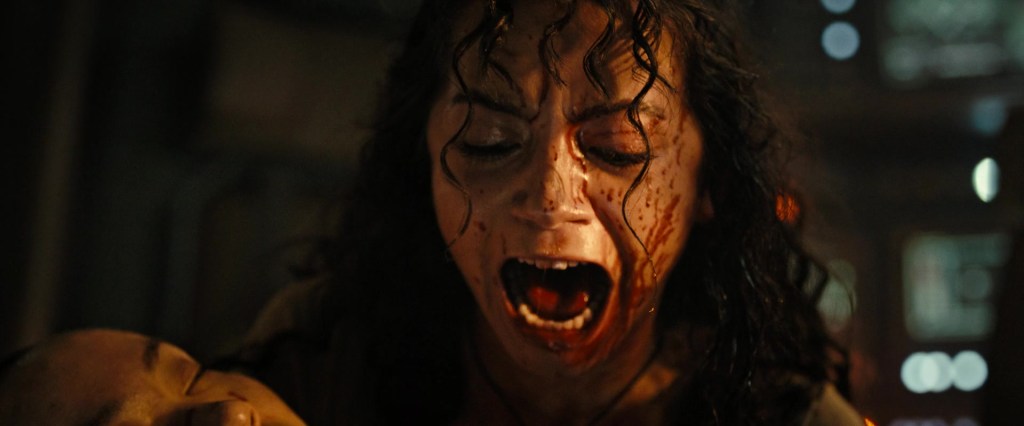
Tyler ignores all the flashing red signs of danger, partially out of his own desire to escape Weyland-Yutani and partially from his need to impress Rain and reignite their romance. Both of which directly lead to his death as he sacrifices himself in order to spare her. Navarro panics after removing the facehugger, convinced that Andy is going to kill her in an effort to stop the xenomorph’s birth. Her selfish action here causes the Corbelan to spin out and crash into the Romulus portion of the station. The impact of the crash changes the current orbit of the Renaissance, decreasing the amount of time it has before colliding into the asteroid field. Her decision also leaves a pregnant Kay to fend off the newly hatched xenomorph mostly on her own.
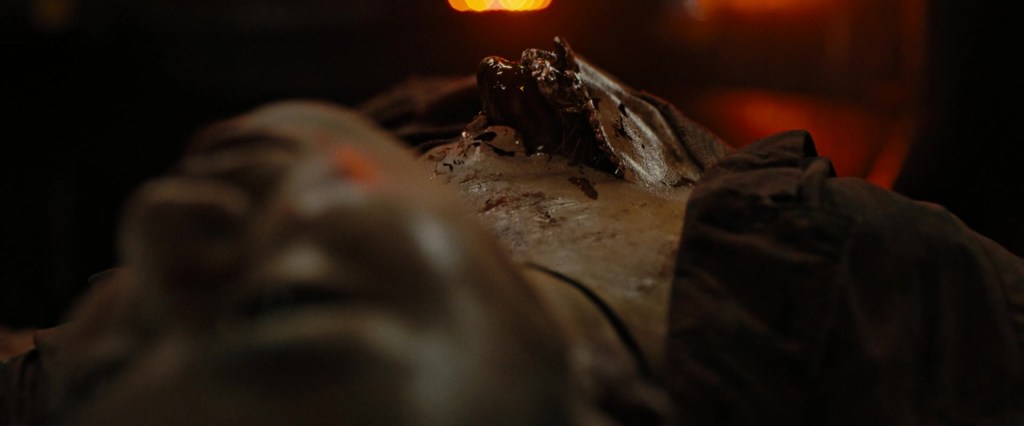
Bjorn’s anger is exemplified early on with his harsh treatment towards Andy. Once Navarro is killed by the chestburster however, he loses all rationale. He takes this rage out on the xenomorph cocoon, using a shock baton in an attempt to kill the incubating alien. The creature’s acidic blood drips out of its resting place, disintegrating Bjorn’s body in minutes. Finally, Kay makes the desperate decision to inject herself with the experimental healing compound, Z-01, out of concern for her own safety and the survival of her unborn child. As she is near death at the time of injection, her choice is fueled entirely by emotions. She ignores all the evidence of Weyland-Yutani’s crimes against nature and humanity out of a primal instinct to keep her child alive. This, of course, ushers in her undoing.
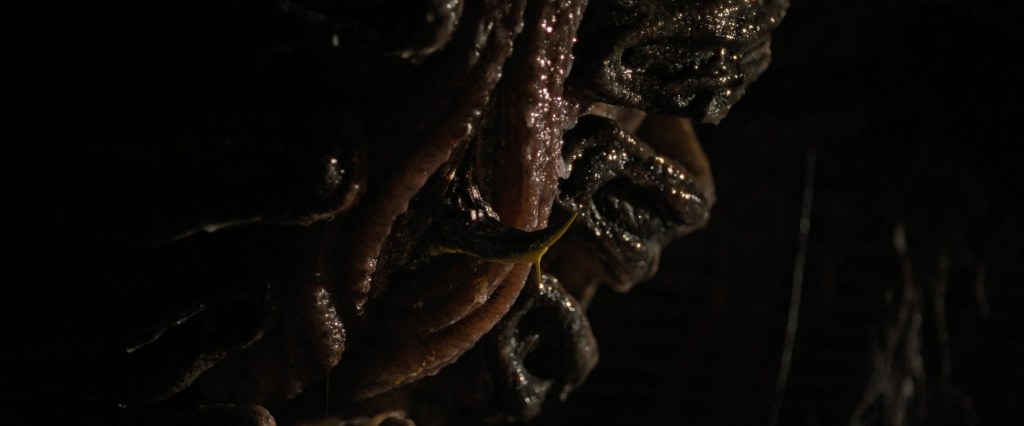
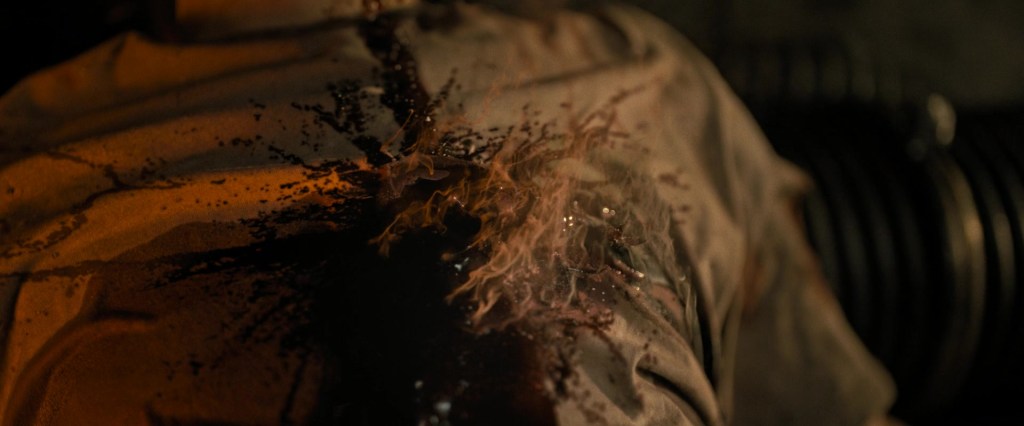
Rain is the only one who is able to remain relatively level headed, even when face to face with the xenomorph. She takes risks too, but they’re far more calculated and based on logic rather than emotional impulse. With the help of Andy, she quickly figures out how the xenomorph hunts and learns about all the weapons in its arsenal. Ending up using that knowledge against the aliens and ridding them of the research station once and for all.

Cailee Spaeny is no Sigourney Weaver when it comes to screen presence, but her character Rain is made in the mold of the iconic Ellen Ripley. In the script for Alien, Ripley was initially a male character, falling in line with a long tradition in action and horror films. Weaver readily embodied the character with a rational, no nonsense perspective, yet she has an abundance of empathy for her fellow crew members. In Romulus, Spaeny does little to separate herself from Weaver’s shadow. She possesses Ripley’s cautious concern throughout the first two acts, but has less of a drive to stop her friends from making fatal mistakes. It is only once Rain must face the xenomorphs alone that Spaeny really shines. An unlikely action hero, takes up arms in the final moments, delivering one the most exhilarating 35 minutes of film this year. By the final (and arguably fourth) act, she has completely transformed. However, it still never feels like more than an echo of Weaver’s performance.
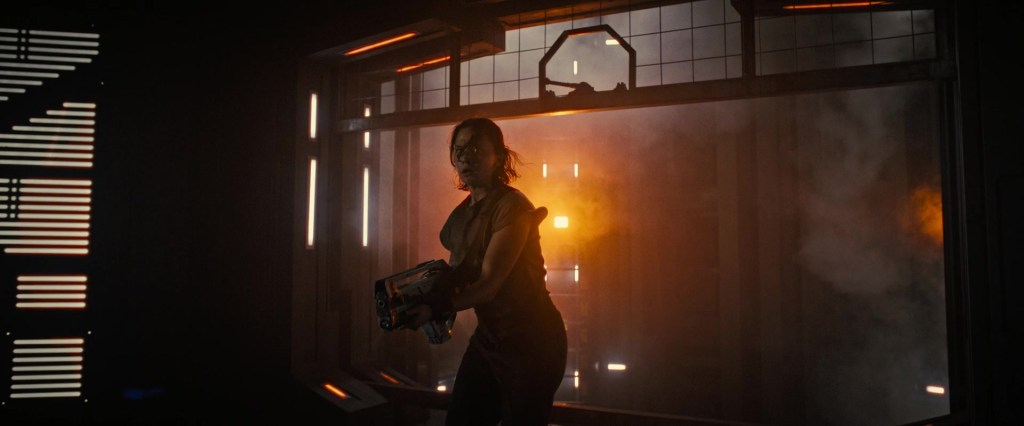
Every Alien movie is a bleak bloodbath which ends in a sole survivor (or two). However, Romulus takes this core concept to a new level of despair. These are kids. Kids who wanted a life better than what was offered to them. They’re not mad scientists, colonizers, pirates, prisoners, or marines. The main cast lack the same moral ambiguity that the characters in the previous films possessed. They’re reactive, emotional, and sometimes short sighted, but none of them deserve their fates. The cruelty with which Álvarez dispatches each of them, emphasizes the unforgiving world of this franchise.
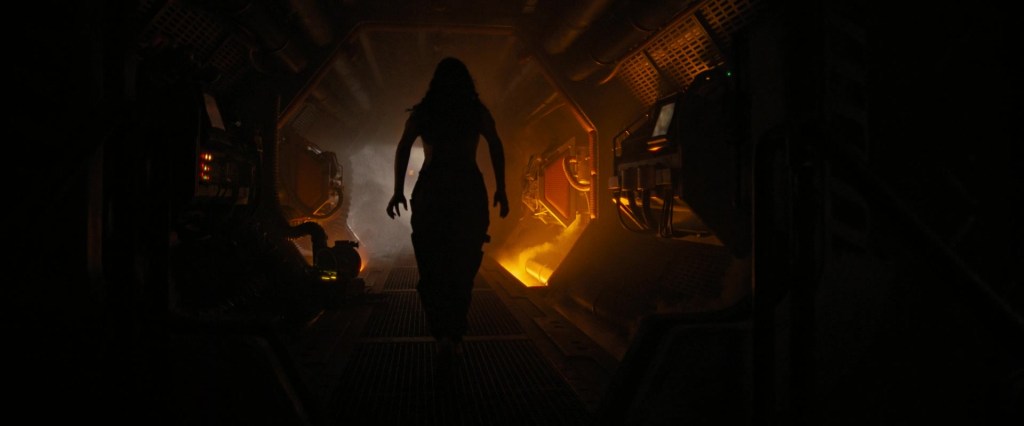
In place of a god, is a soulless mega corporation that struggles to control its own creation. The most disposal people under its rule are sentenced to miserable existences performing hard labor on behalf of the company. The people with value also do not fare much better. Their intelligence and curiosity is exploited to produce the most dangerous living creature in the universe. They lose their lives in pursuit of research that will never be used to benefit them. Everybody dies in service of Weyland-Yutani’s agenda and bottom line.
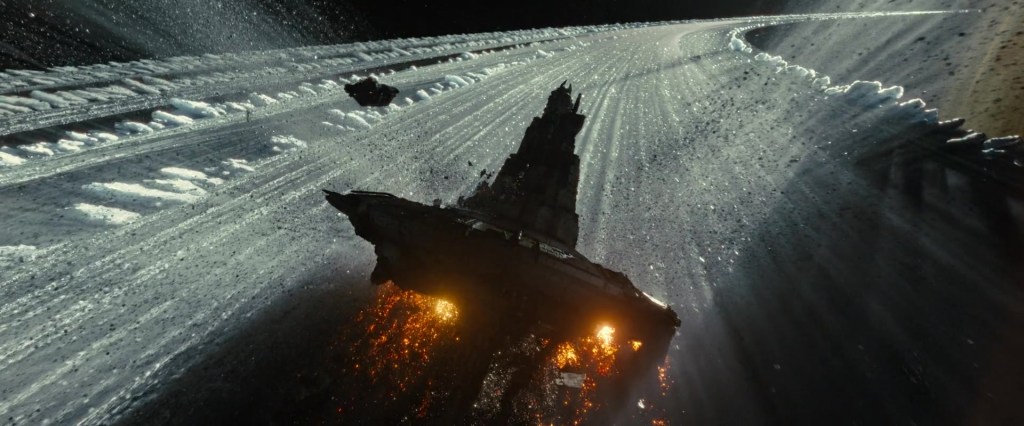
In the prequel film Prometheus, CEO Peter Weyland spends his last days alive searching for the alien race he believes responsible for seeding life on Earth. He eventually encounters the Engineers, a species of humanoids who made us in their image. The alien race uses a mysterious black substance which is capable of mutating living beings, creating an organism better fit for life in space. This “gift from the gods” is a destructive force that the Romulus research team were actively trying to harness. The very same Z-01 compound that Rook tasks Andy with recovering for further development and Kay takes against better judgment.

Playing god in an effort to speed up human evolution has resulted in disastrous consequences for Weyland-Yutani and its people. While “upgrading” humanity to be better suited for space travel might appear like a noble goal on its face, helping our species is the least of the corporation’s concerns. They need people who can survive the environmental hazards present on their colonized planets. Workers dying young impacts their efficiency, after all. There’s also a clear interest in weaponizing the compound to create super soldiers who cannot be easily killed. No matter how many times the company fails to control this mutagen, they continue regardless of the loss of life. A truly uncaring god.

Romulus continues the tradition of utilizing practical effects and sets in order to breathe life into the world of Alien. It is so refreshing to watch a special effects heavy, summer blockbuster that cares enough about the aesthetic sensibilities of the franchise to not limit the actors to wandering around on a green screen. Isabela Merced, who plays Kay, commented in an interview that Romulus was the first set she’s worked on where everything was in the same space as her. An indictment of the current state of Hollywood for sure, but the positive spin is that the film proved there’s still a demand for this kind of craftsmanship which you can achieve on a middle budget for a big studio. Both the xenomorph and the final act’s offspring were played by real actors in costumes. Their performances are so uncanny that it is hard to imagine there’s an actual person beneath the mask, but it adds so much physicality to their presence. Making them feel like legitimate threats.

The star of Romulus is undeniably the facehugger. This early stage in the alien’s evolution has always been an essential piece of the franchise, but here it takes center stage. Each facehugger is designed to be able to move around the space, swim through water, and launch themselves with ease. Some of which were even piloted remotely, giving the creature life of its own. Having something tangible to act off of inherently leads to better performances from the actors. The fear feels genuine and the danger actually takes up space within the scene. Álvarez’s commitment to using as many practical effects as feasible is part of why this movie stands out among other horror movies and legacy sequels of this year. The care and effort is felt in every facet of the film.

Which is why it is so disappointing that the android Rook is modeled after Ian Holm’s nefarious android, Ash, from the first film. Holm passed away in 2020, before production for Romulus began. Álvarez and team decided early on to have Rook be based on the same type of android as Ash. After receiving permission from Holm’s estate, they used a head scan which was taken from the set of The Lord of the Rings to recreate his face digitally. That scan was applied to the animatronic to take on Holm’s likeness. Voice actor Daniel Betts recorded lines for Rook which were altered using an AI software to more closely match the original actor’s speech patterns. Finally the physical model was enhanced with artificial intelligence to better sync the model’s lip and eye movements with the recorded dialogue.

It is a relief to learn that Holm’s widow was consulted before this decision was realized, with her expressing that he would have loved to continue being a part of the franchise that helped shape his career. However, it is yet another ethically questionable use of artificial intelligence. What are the moral implications of puppeting a non living actor, putting words into their mouth that they never said, and casting them in a movie they will never see? And for what? An empty reference? I don’t know the answers here, but it is a dangerous precedent in an industry that is eagerly awaiting technology to advance so they can remove actors, writers, and visual artists entirely from filmmaking.
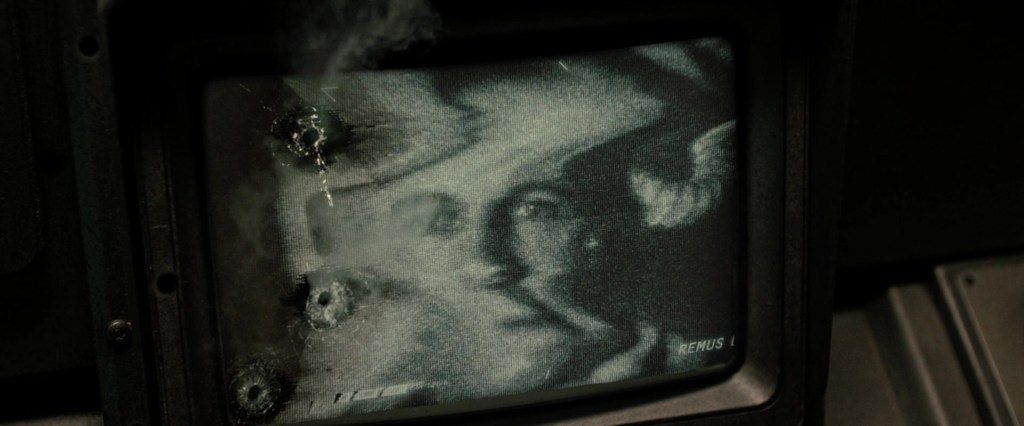
Another point of contention in the response to Romulus is centered around the film’s overwhelming amount of references, callbacks, and easter eggs to the rest of the franchise. As someone who only watched the first Alien a few years ago and binged the rest of the series leading up to Romulus, this did not bother me nearly as much as it did other fans who have been with the series since the start. It comes across as pointless pandering by reminding the audience of their other favorite Alien movies. This is a curse that is plaguing legacy sequels, but I think we should all be grateful that Disney didn’t figure out a way to shoehorn Sigourney Weaver into this film (anymore than they already had). Cynically it feels like a strategy in brand recognition, whose purpose is to sell more merchandise, Disney+ subscriptions, and lock in a fanbase for more sequels. If it wasn’t readily apparent that some of these choices are due to Álvarez being a massive fan himself, I would judge this aspect of the film far more harshly. Still didn’t need to have Andy parrot Ripley’s iconic line though.

Alien: Romulus overperformed at the box office for a film that was initially slated to drop as a Hulu original with little fanfare. It reinvigorated interest in a series that Disney has struggled to capture since its acquisition of Fox. Álvarez is a skillful horror director who revels in chaos and dread leading to one of the most brutal entries in the Alien franchise. The exuberance he has for this world is clear in every aspect of the finished film. It’s hard not to appreciate Álvarez’s commitment to realizing his vision for the series. For better or worse, this fan love letter retreads many familiar elements from arguably superior films. However, Romulus forms its own identity as a relentless, white knuckle thrill ride that I’m eager to hop on again and again.



 Reel Take
Leave a comment