
Twisters is a disaster movie tailor made for this century’s string of unprecedented weather events that threaten the very existence of our species. The film is a follow up to the seminal 1996 movie, Twister, which redefined the disaster subgenre and revolutionized the world of computer generated effects. However, it is a legacy sequel in name only. None of the original film’s characters make an appearance, nor are they the mothers, brothers, sisters, or cousins to any of Twisters’ core cast. The setting and storm chasing are the only connective tissue between the movies, aside from a reverence to the first film’s “Dorothy,” a device used to record data from inside a tornado.
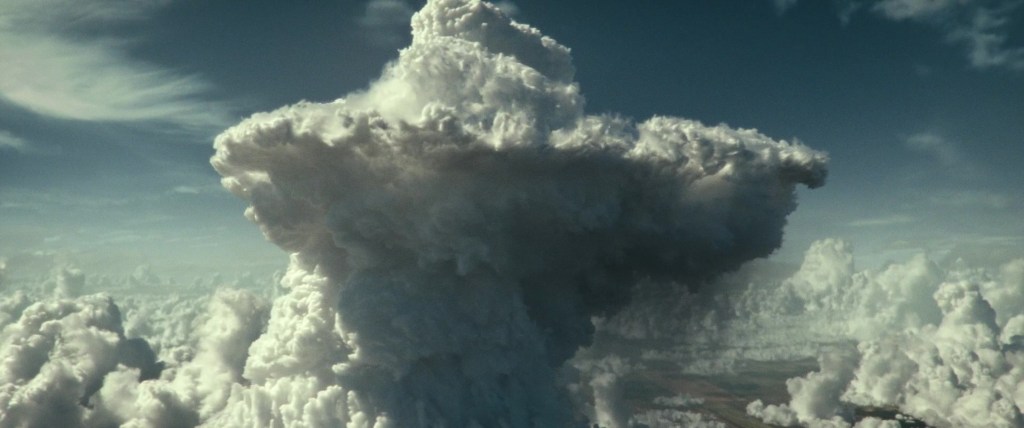
Lee Isaac Chung was a surprising choice to helm a summer blockbuster. Most known for his autobiographical indie darling, Minari, the leap to a high concept, special effects heavy, legacy sequel doesn’t quite make sense. At least on the surface. Chung credits his experience directing an episode of The Mandalorian as his entry into this style of directing. Additionally, both Minari and Twisters are set in tornado alley, with Chung spending most of his childhood growing up in Arkansas. In his pitch to Steven Spielberg and the other executive producers, Chung edited a supercut of footage from the 1996 film and Minari as a proof of concept for the kind of story he wanted to tell in the sequel. His admiration and respect for this part of the country is felt in every aspect of the finished film, capturing the rolling beauty of Oklahoma’s great plains.
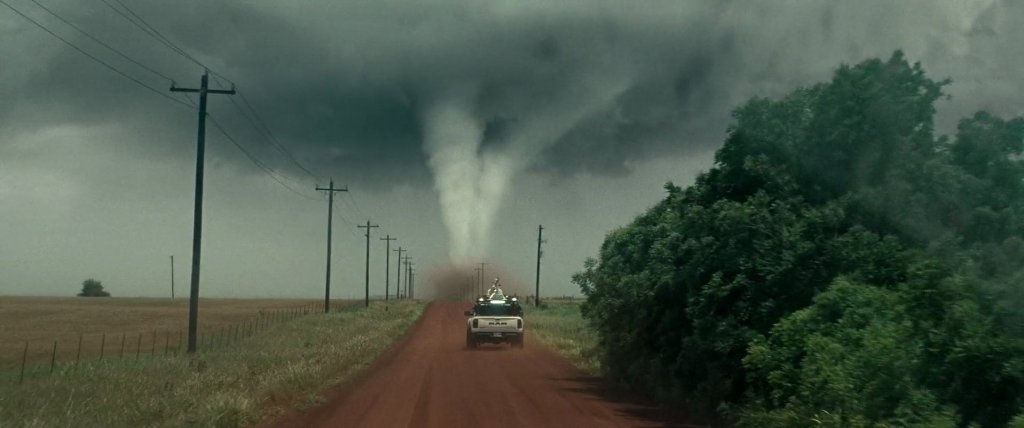
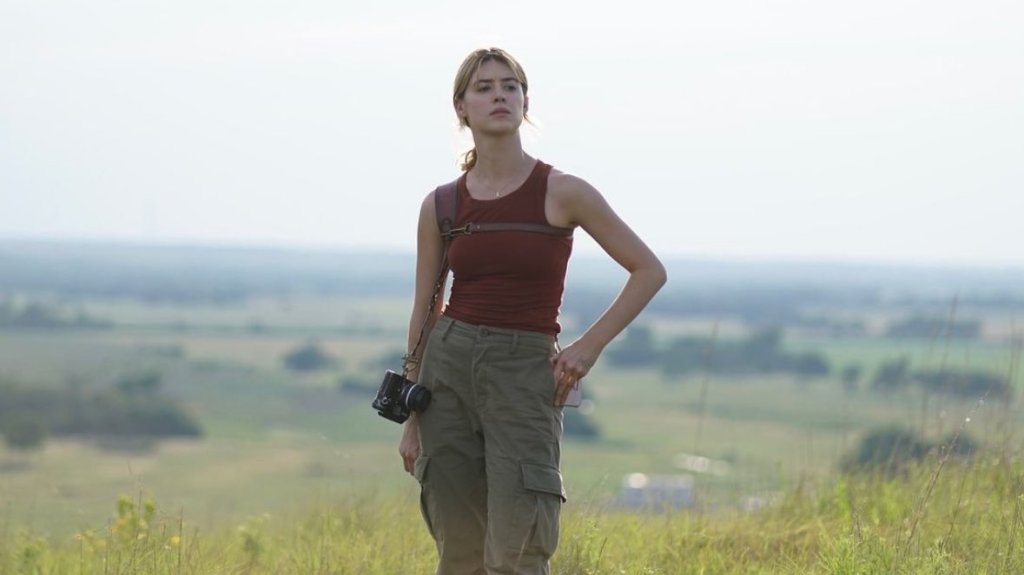
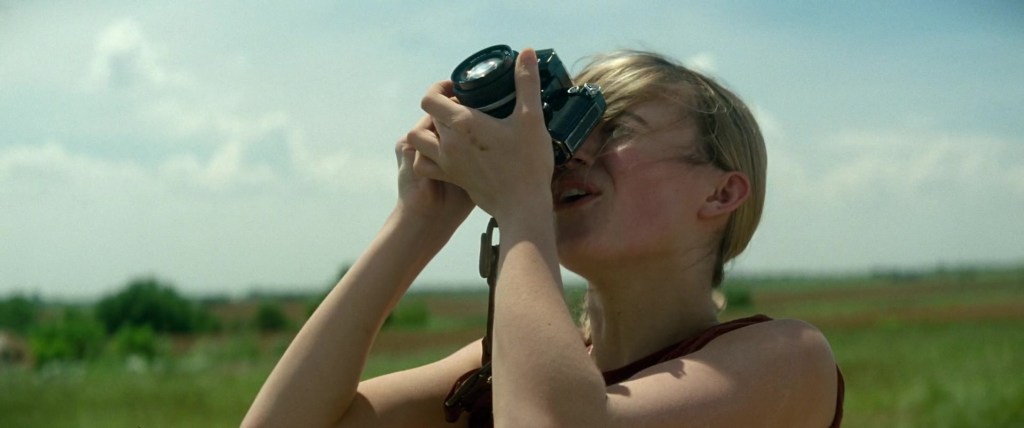
The film stars Daisy Edgar-Jones as Kate, an enigmatic storm chaser whose natural born instincts guide her to understanding the true nature of these devastating weather events. With just the slightest change in the breeze, she can calculate the direction, intensity, and how quickly the storm will die down. Kate is made in the mold of Helen Hunt’s character from the original, but is a bit softer and more altruistic than the brash and fearless storm chaser, Jo Harding. The character takes cues from several leading ladies, but most notably is inspired by Dorothy from The Wizard of Oz, with her wide eyed, girl next door innocence and curiosity.
Kate is joined by Javi, a tech savvy chaser played by Anothony Ramos. When we meet Javi, he’s a carefree slacker who’s less interested than Kate when it comes to their scientific pursuits. For him, it’s all about the thrill of the hunt.

When we meet them both, they’re on a mission with fellow chasers Praveen and Addy, and Kate’s boyfriend Jeb. Kate is eager to test out her latest experiment which if successful will guarantee the crew receives grant money to continue their research. They plan on launching sodium polyacrylate material directly in the path of the tornado, believing that the chemical compound will absorb the water from the storm, deflating it in the process. She puts her chasing skills to the test, and the gang find a nearby storm that’s rapidly gaining momentum.
They drop the trailer full of chemical barrels and the Dorothy device in the middle of the road, before making a break for it. But they are not quick enough. The twister encroaches on the crew at a pace they can’t escape. In a last ditch effort, they abandon their vehicle and dash towards a nearby overpass. As they race through the open field, Praveen is sucked into the sky. Addy, Kate, and Jeb take shelter under the bridge, with Javi far away, helpless, and unable to rescue them. A piece of debris knocks Addy out of Kate’s arms and she too is swallowed by the storm. Finally, Jeb lays on top of Kate, covering her from the worst of it before getting dragged out from under the overpass. Kate yells out in horror as her boyfriend and closest friends are unceremoniously killed in front of her, while still hanging on for life. She limps out of wreckage scarred physically and emotionally, abandoning storm chasing once and for all.

It is one of the most harrowing opening scenes of the year, starting off the film strong, and showing the extent of the tornado’s power. While the chase is exhilarating, it is a gruesome reminder of the danger and destruction these storms can unleash. They’re an unrelenting force of nature, indifferent to the lives of humans that cross its path. We are at the mercy of cold fronts and wind patterns, with technology that has gotten better at predicting since 1996, but still has a long way to go in terms of prevention. If that is even scientifically possible.
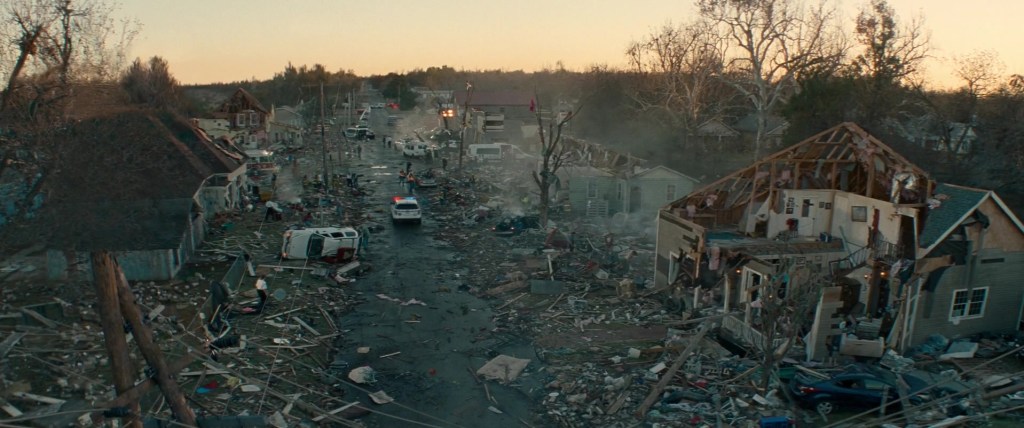
We don’t spend much time with the crew, prior to their deaths, so while this tragedy has a limited emotional impact on the audience, it clearly weighs on Kate, our main point of view. This incident is the driving force in her arc as she is reluctant to reconnect with her passion for storm chasing even five years later. When we see Kate again, she’s working at an NOAA office in New York City, monitoring storm alerts across the country, but from a safe distance. The tragic event clearly did not diminish her interest in meteorology, but the trauma has kept her from ever returning to the field.

That is until Javi reaches out to her, now working for a mobile tornado radar company, Storm Par. He explains that their military grade gear will allow them to capture data like never before. Data that can be used to better understand storm systems, and for Kate’s sake it can be used to continue her research into tornado disruption. She agrees to return to Oklahoma, but for one week only.

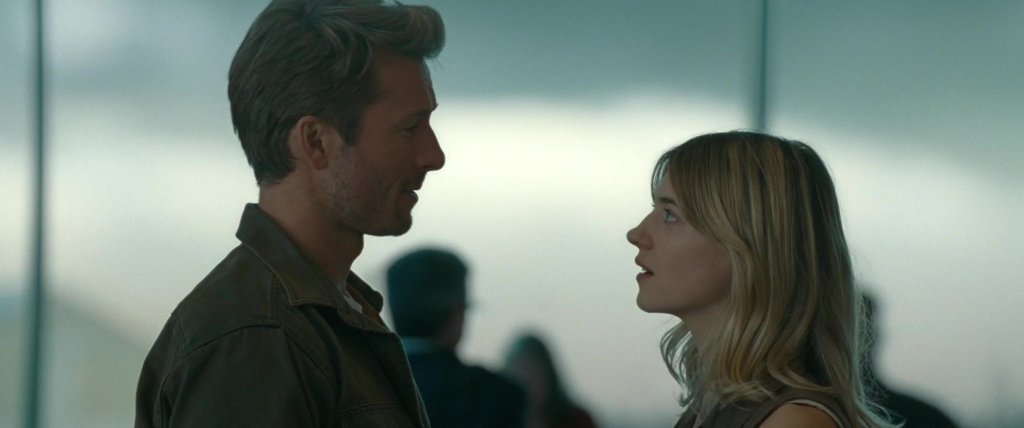
After a rather somber first act, the film takes a hard pivot with the introduction to Storm Par’s rival crew. Glen Powell stars as Tyler Owens, the “Tornado Wrangler,” a showboating YouTube star who leads a gang of ragtag misfits. With his souped up 4×4, kitted out to the max with chasing gear, and his ten gallon hat, Tyler injects the story with the shot of adrenaline it needs. In interviews, Chung describes the difficulty of balancing the serious nature of natural disasters with the joy the characters experience because of them. Tyler embodies the rush of the chase better than no other. He’s flashy and bold, unafraid to literally drive directly into the eye of the storm. At first glance, the Wranglers appear to be an unserious group only in it for the clicks and views. As Kate spends more time with them, she sees the genuine passion they possess and their concern for the survivors in the wake of disaster. Something absent from the Storm Par team.
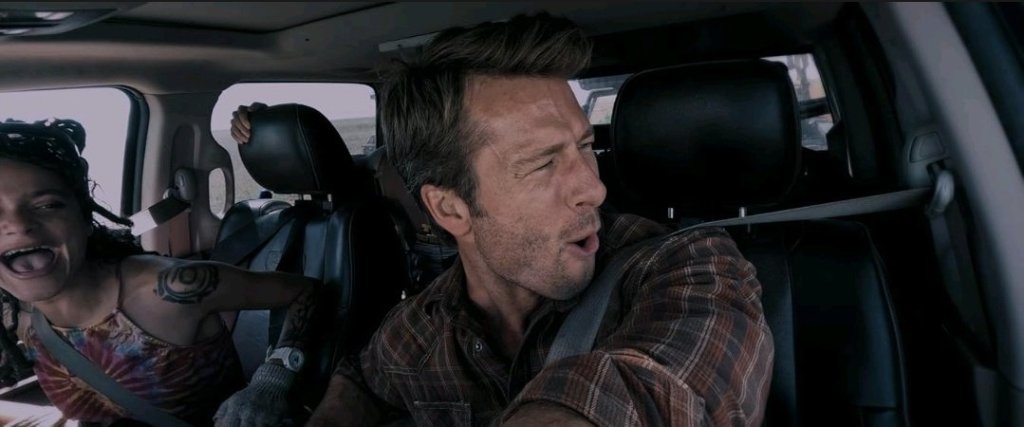
Similarly, as she gets to know Tyler, Kate begins to see past his blowhard facade. While he’s not a complex character, there’s definitely more to him than our first impression. He’s smart, empathetic, and surprisingly principled for someone who sells T-shirts with his face on it. He’s a man of the people who cares about his neighbors. Willing to do what he can to help them pick up the pieces of their lives in the aftermath of tragedy.

He’s immediately attracted to Kate as an outsider, someone mysterious and new who hasn’t grown numb to his antics. Her disinterest in Tyler only motivates him further, a rare individual who isn’t swept off their feet by his mere presence. Kate throws him a bone, agreeing to spend a night at the rodeo with him. When a tornado strikes, the two use their combined skills to save each other, along with a mother and child. Bonded through the experience, with a newfound respect for one another, a romance blossoms. They flirt and tease, but ultimately the partnership is grounded in a shared love of storms and goal of mitigating their damage. Through Tyler’s encouragement, Kate resumes her experiments.
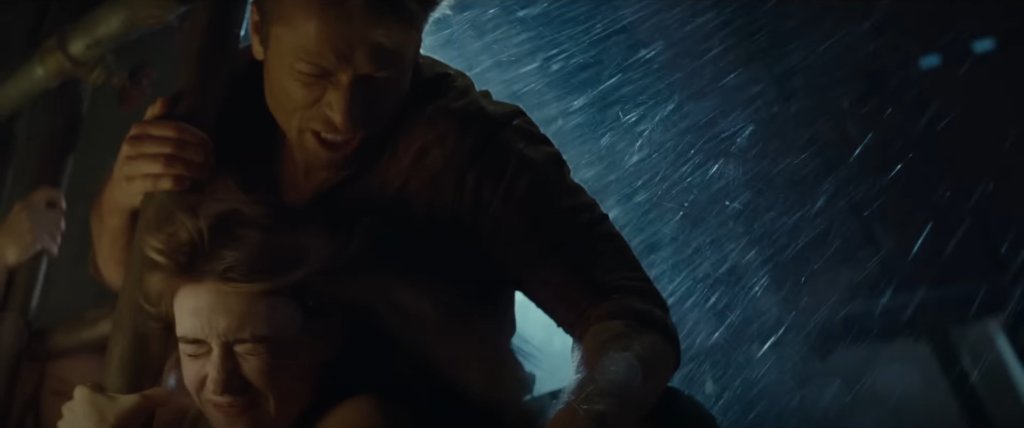
Powell is a bonafide movie star, charisma just radiates off of him. I can’t imagine any other leading actor who could’ve pulled off this role. Powell brings depth to a character that a lesser actor wouldn’t take as seriously. He doesn’t play Tyler as a parody of a YouTuber, which would’ve been far easier. While silly, Powell doesn’t mock Tyler. He’s a rare breed that knows “fun” is not mutually exclusive with being sincere. He’s bursting with energy in every scene, a one man hype crew. Jumping from comedic beats to vulnerable confessions with ease. It’s captivating to watch, commanding the audience’s attention. He’s an action star of a bygone era and would be the lead in every studio rom com (if they still made those). Endlessly charming. There’s a reason every director is itching to work with him and Tom Cruise has personally taken him under his wing.
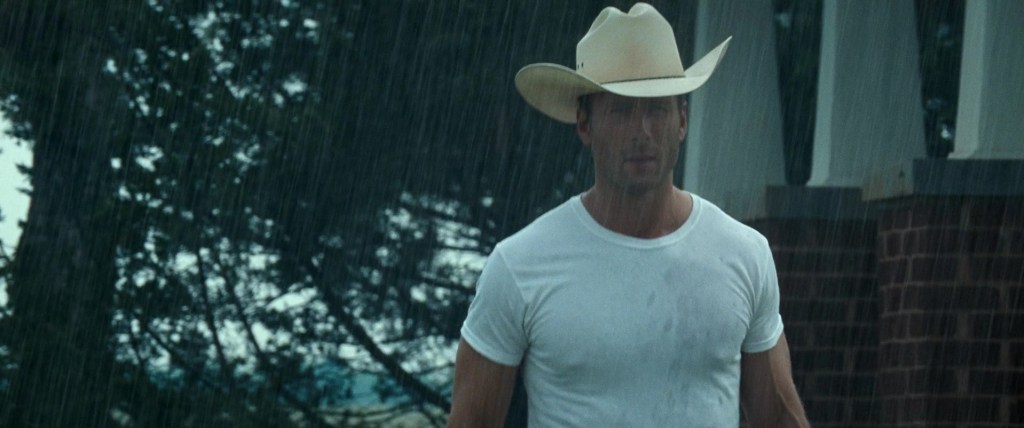
Twisters is not a romance, but if it came out even just ten years ago, it definitely would be. Kate and Tyler’s relationship is the B plot of the film, whose purpose is to drive the main emotional thrust of each character’s growth. Tyler matures and takes life more seriously, while Kate grows to move past her trauma, reinvigorating her life’s passion in the process. They achieve their goals by learning from one another, forming a strong connection along the way. That is what’s important to the film. However, the movie ends with a classic romantic comedy trope, “chase her before she gets back on that plane.” Which Tyler does! But the pair do not kiss as the credits roll. This has been discussed at length online, as it was revealed that a take of Tyler and Kate kissing exists and was considered in the final cut. It was at Spielberg’s recommendation that the kiss was removed. He reasoned that by focusing on the romance, it would detract from Kate’s arc about falling back in love with storm chasing. Okay, fine. Who am I to argue with Spielberg?
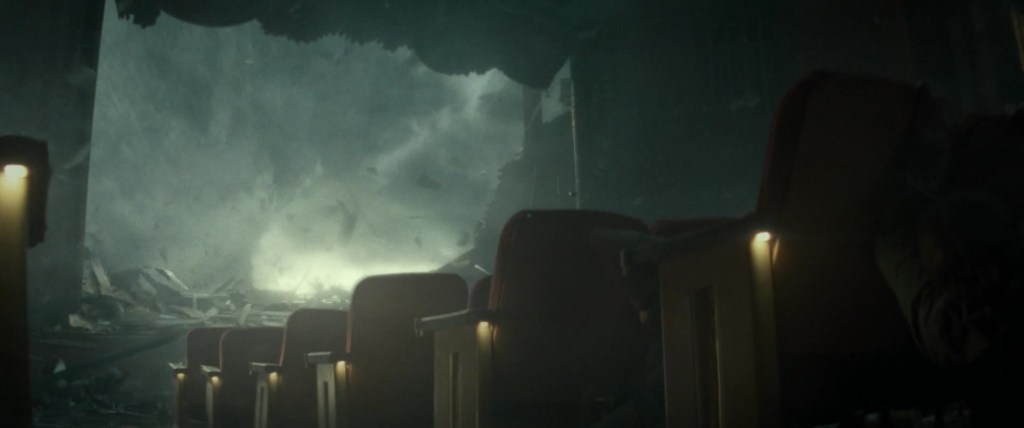
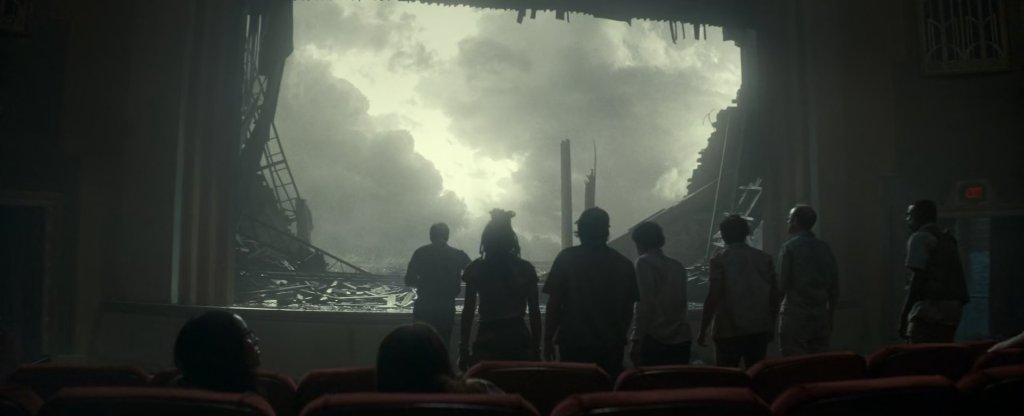
The finale takes place in an old movie house in the town of El Reno. There’s a flurry of kinetic energy throughout this last sequence, but I’m a sucker for movies with scenes inside of movie theaters. Citizens of El Reno take shelter at the theater as the film’s largest tornado yet barrels towards them. Playing on screen is James Whale’s 1931 film Frankenstein, a deliberate choice by Chung to connect his Universal Pictures sci-fi spectacle with the movie that started it all. As the winds rage on, the theater screen is sucked out of the building revealing a perfectly framed twister where the movie once was. One of my favorite shots of the year. Even after watching this three times, it still makes my stomach drop.
Listening to Chung and the team behind Twisters, it is clear that their primary reason for reenvisioning the original film is based out of a concern for a rapidly changing climate that is making tornado season longer and more destructive. It is an obvious connection to make as extreme weather events have become increasingly more common. The film is dotted with news broadcasts where weather people spout out lines about “the storm of the century” or “unprecedented amount of weather activity this season.” A chorus of warnings which fall on deaf ears, as the people of Oklahoma continue their day to day activities. When Kate returns to the family farm, her mother pleads with her to resume her research, emphasizing how it is now more important than ever.

“It’s funny, I keep seeing more and more tornadoes. And floods. And droughts. And the price of wheat and seed going up and up and up.”
If that didn’t convince you, the final act will, as the most aggressive twister in the entire film tears through an oil field, whipping up a cyclone of flames. A deadly, firestorm fueled by oil production is about as blunt of a global warming metaphor as you can get. Yet, the words “climate change” are not uttered even once during the film’s entire runtime. That is a deliberate choice. A cowardly one too.

I don’t think Twisters would be a better movie for having mentioned it, but it’s a decision that reeks of studio meddling. It’s clear that the movie Chung and company wanted to make conflicted with Universal’s profit margins. Twisters is set in a red state and about every day people in rural America, driving big trucks across empty plains, and blasting country music. In our age of heightened political polarization, this is a film that uniquely appeals to people on both sides of the aisle. Especially as conservative media has largely moved online and away from traditional means of distribution. I understand why the studio would hesitate to alienate a demographic that was once believed to have moved on past Hollywood. But the capitulation is evident in everything left unsaid. I admire Chung’s decision to use a legacy IP to fund a warning against the greatest crisis of our time. But it walks this line so carefully, with extreme caution not upset, that in the process Twisters ends up saying nothing at all.
 Reel Take
Leave a comment