
The American Society of Magical Negros is a fantasy satire about the difficulties of navigating white spaces as a black American. The film was written and directed by Kobi Libii and is his first feature debut. Libii developed the screenplay while working with Sundance’s Screenwriters and Directors Lab and the film later premiered at the festival in January 2024. Justice Smith stars as Aren, a young black man who is polite to a fault and struggles to stand up for himself. When we meet Aren, he is an artist who can’t seem to sell his work and lacks the confidence to stand by it. Frustrated, the gallery manager instructs Aren to make a sale with an art dealer at the event, but when approached the curator wrongfully assumes Aren is a waiter and hands him his dirty dishes. Defeated and humiliated, Aren laments to the event bartender Roger, played by David Alan Grier, about his inability to defend himself. After observing his innate talent for placating white people, Roger follows Aren out of the event.
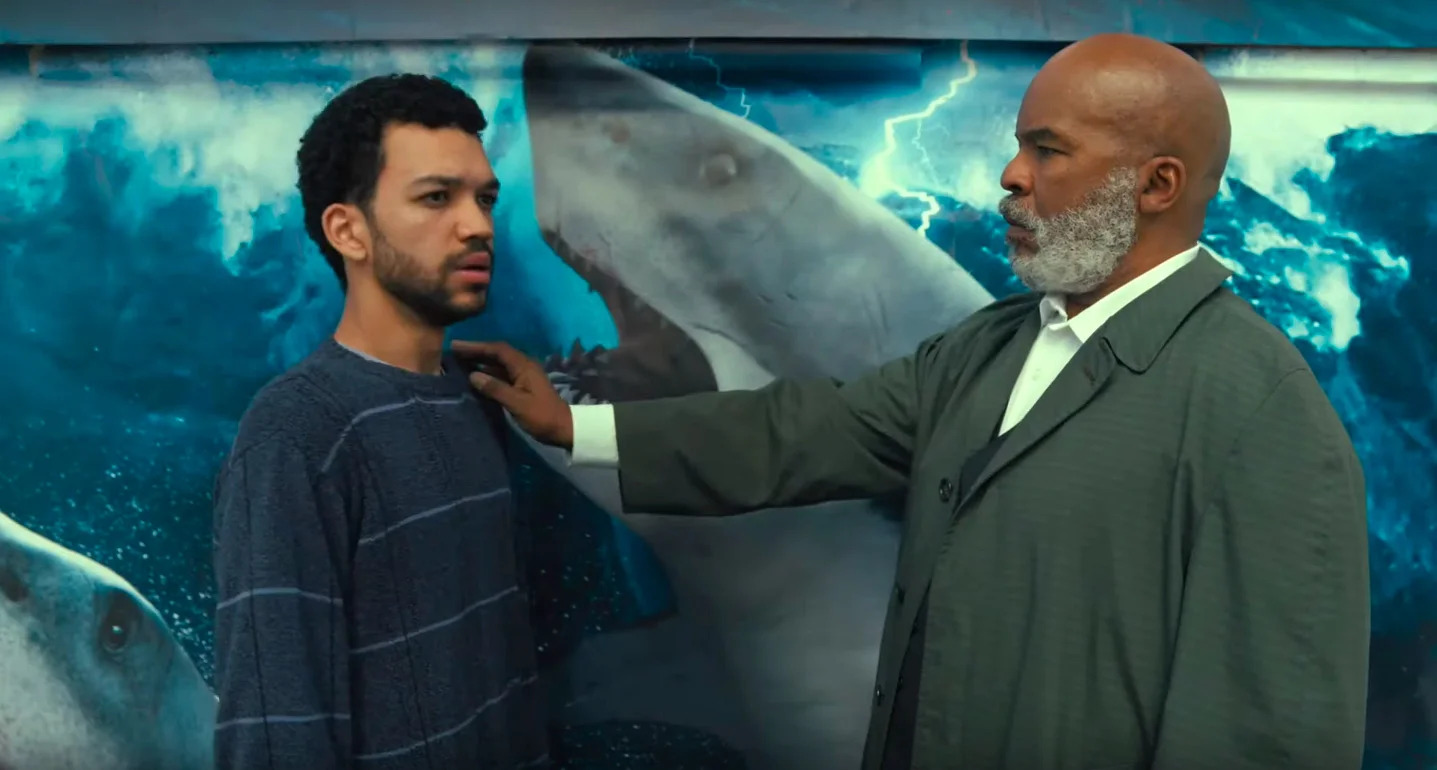
The story really kicks off when Aren is asked to assist an intoxicated white woman at an ATM. He holds the woman’s purse while she rummages through her belongings and two white men approach, assuming Aren is a threat. Just as things are about to turn violent, Roger steps in and uses his magic powers to return the purse and deescalate the men. He’s stunned and confused about the altercation, but Aren is grateful for the help. Roger reveals to Aren that he is a member of an organization known as “The American Society of Magical Negros”, which exists in part to keep black Americans safe by easing the fears and discomforts of white people through magic. Each member of the group is assigned to a specific white person, only men as far as the movie shows, with the express purpose of supporting their dreams unconditionally. This involves a few rules, but mainly the Society must never make their interactions with white people about themselves. Doing so will result in a mind wipe and immediate expulsion from the order as their magical powers are sustained entirely by placating white feelings and will fade away if this rule is not followed. Aren reluctantly agrees to start training with Roger, before receiving his first official assignment, an insecure and ambitious tech bro named Jason.

The film opens with the definition of “Magical Negro”, a film and television trope where a black supporting character exists for the sole purpose of aiding the white protagonist in their goals. This is sometimes expressed through literal magic, but is often represented by a vague mysticism where the character dispenses some sage advice before disappearing from the film. While learning at the Society, Aren is shown how to succeed in this role with examples that parody other films like Frank Darabont’s The Green Mile. It is clever to take this trope and subvert it by having the in-universe Society follow these rules while The American Society of Magical Negroes as a film has a black protagonist who learns to refute this role. There is conflict inherent to this clash that unfortunately the film doesn’t expand upon much after the initial observation.
It is disappointing because some of the best satire in this film comes from these moments where it acknowledges and speaks to the film canon that is almost entirely centered on white perspectives. However, the audience is never given a solid reason as to why members of the Society resign themselves to a life in a supporting role. We are not given any indication that they are allowed to use magic on themselves so the fear of losing their powers seems unfounded. The stated reason is that ever since black people were enslaved, the Society has worked year after year to protect them and extend their average life expectancy. Without their magic, the fear is that this effort would be stalled or worse reversed. The audience does not get to spend much time within the organization and as a result we are limited in our understanding of their work, their history, and the origins of their magic.

No one in the Society is a dissenting voice either, not even Aren who eventually musters up a timid rebuke of the group. This is a problem for a film that is simultaneously saying that this trope is harmful and prevents real Black Americans from being the protagonists of their own lives while also emphasizing the life and death stakes of acquiescing to white people’s emotions. I suppose both can be true, but the filmmaker seems more preoccupied with the latter and the former is simply a natural result of building a character arc for Aren. Sure he is the one who needs to change, but without another character offering the opposing viewpoint, this growth is unearned. The film attempts to address this by showing us early on another member who refused to go along with their client and is exiled as a result. She briefly expresses her frustration with having to agree with the client despite knowing he was incorrect before having her mind wiped. This works to set up stakes for Aren, but it does not offer any new insights into why the Society may actually be harmful to black people. So where did he gain this new perspective?
There’s some offensive implications to the ethos of the Society that the film completely overlooks. By highlighting the importance of maintaining polite relationships with white people as the primary means for black survival, the film inadvertently diminishes the efforts of countless civil rights activists who put their lives on the line to liberate black Americans and end Jim Crow era segregation. The leaders who we celebrate for this shift in American culture were not as concerned about white America’s feelings as any character in this film and yet they advanced the cause. The film’s emphasis on not centering the black experience is never fully critiqued and this seems like an easy way for Aren or another character to acknowledge that the Society is wrong in their beliefs. Ironically, the filmmaker’s own preoccupation with white audience’s reactions may have contributed to this muddled messaging.
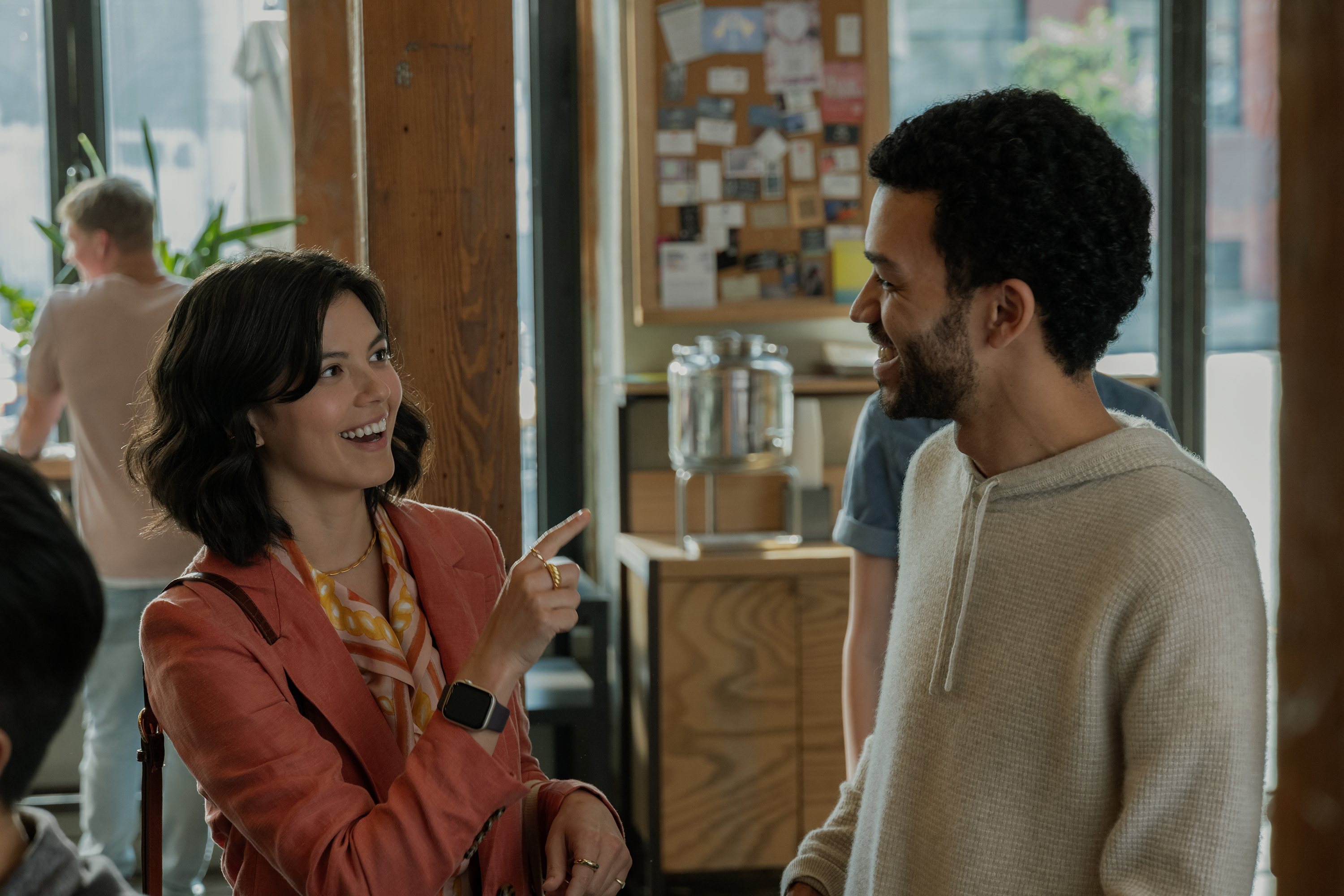
The American Society of Magical Negroes is the film’s title, yet so little of the film is actually about them. In fact, there are two competing films here. One that uses the Society and their mission as social satire and another that is a by the numbers romantic comedy. Aren’s first assignment is Jason, a self-assured and oblivious white man who works for the film’s Facebook equivalent, “MeetBox”. Aren is able to build a friendship with Jason, assisting him in the app’s rebrand, but trouble arises when they both develop a crush on their coworker Lizzie, played by newcomer An-Li Bogan. Smith and Bogan have an engaging on screen relationship, despite it derailing the movie’s story, and the moments they share were the highlight for me. Bogan is such a scene stealer in this, it appears to be her first feature role and I look forward to seeing what else she does next. When it becomes clear that Jason has feelings for her too, this takes over as the primary conflict of the film. Libii has trouble keeping both of these balls in the air and the tonal whiplash experienced by the audience makes for a disconnected viewing experience. It is neither a successful political satire nor a heartwarming love story because both storylines are impeded and contradicted by the other.
The American Society of Magical Negroes is an ambitious yet flawed exploration of race relations in America. Libii cleverly uses racist film tropes to highlight how this experience has been reflected back to audiences over the last century of filmmaking, but fails to make a coherent statement about it. The result is a bland and toothless critique that is not anywhere near as bold, provocative, or insightful as the filmmaker hoped it would be. I was left wondering who this film was made for. It is clearly aimed towards educating a white audience above all else, but I don’t think it is very effective at that. White people who choose to see this film, likely already agree with its premise and won’t gain a new perspective from it and the white people who probably need to see this, were never going to watch this movie anyways. The American Society of Magical Negroes is a half-baked, ideology driven film with a critique of racism that is so shallow it ends up contradicting its own message.

 Reel Take
Leave a comment