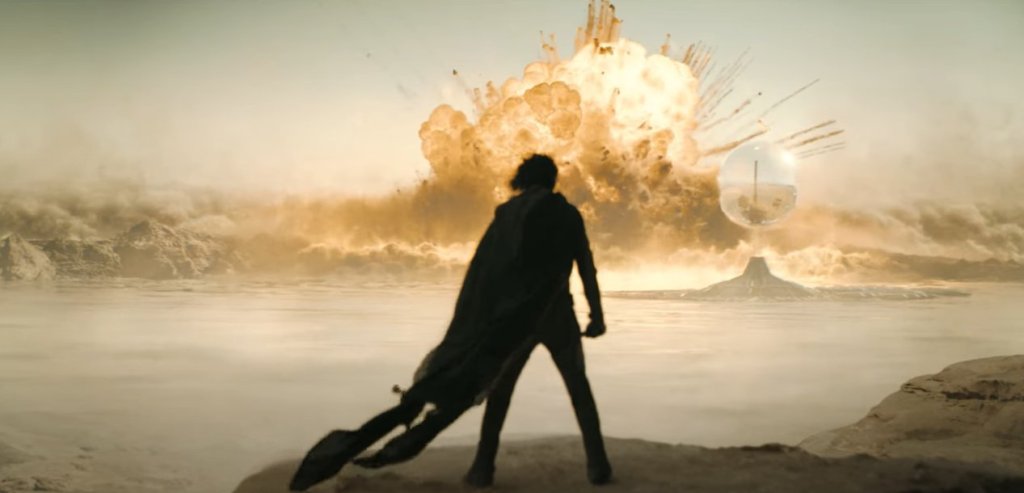
Dune: Part Two is a sci-fi epic about how one man’s reluctance to ascend to power causes a religious fervor with devastating consequences for everyone stationed on the desert planet of Arrakis. The film is directed by Denis Villeneuve, who is known for his spectacle driven sci-fi hits like Arrival, Blade Runner 2049, and of course Dune: Part One. Dune is an adaptation of Frank Herbert’s 1964 novel series of the same name. The film stars Timothee Chalamet as Paul Atreides, one of the last surviving members of his noble house who must rally the Fremen population of Arrakis in order to defeat the House Harkonnen and avenge his father.
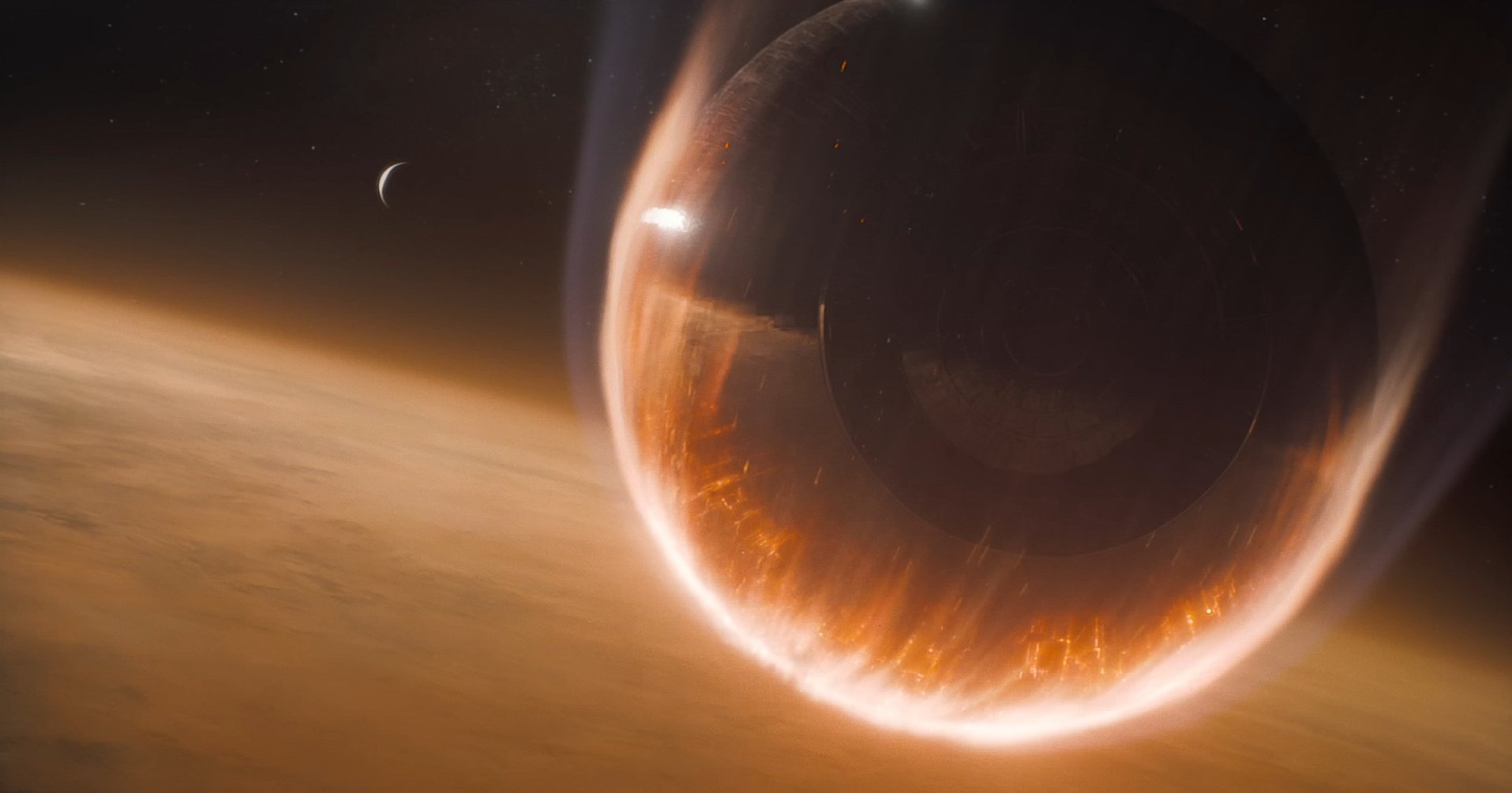
The first Dune film was released in October 2021 to box office and critical success. The film was nominated for Best Picture at the following year’s Academy Awards where it won eight Oscars including Best Achievement in Cinematography, Editing, Sound, Score, and Production Design. Dune opens as Paul Atreides’s father, Duke Leto, is reassigned by Emperor Shaddam IV to be stationed on the planet Arrakis. The desert world is highly valued due to a psychoactive resource, known as spice, a substance that increases sensory awareness and is vital to interstellar travel. However this move is a setup by the Emperor to destroy the House of Atreides. With the help of the House Harkonnen, Duke Leto is killed, forcing Paul and his mother, Lady Jessica to flee into the desert. Paul and Jessica have their lives spared by a mysterious religious organization known as the Bene Gesserit. They believe that Jessica will contribute to their lineage with a daughter who will give birth to their long-awaited messiah. A man who will possess supreme clairvoyance and guide humanity into the future. During their desert trek, Paul is exposed to spice and begins experiencing intense premonitions of a holy war fought in his name. Along the way, he finds the Fremen, the native population of Arrakis, and proves himself capable in battle. The film ends with Paul integrating himself into their tribe in order to fulfill his father’s goal of building peaceful relations with the Fremen.
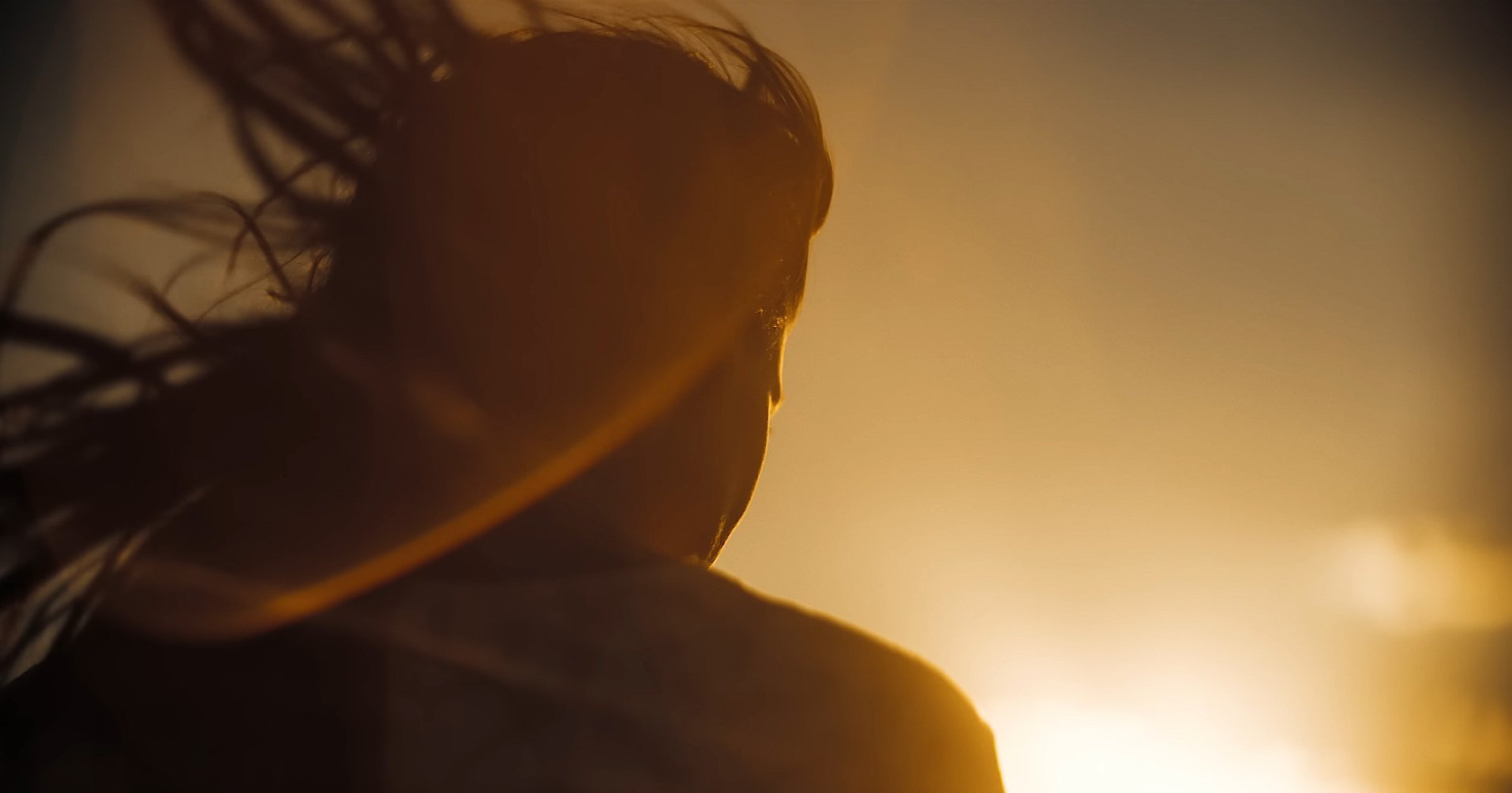
Dune: Part Two picks up shortly afterwards with many of the Fremen still suspicious of the two outsiders, despite Paul’s efforts to fight back the Harkonnen alongside them. Stilgar is a well meaning religious fanatic who believes Jessica and Paul are a part of a prophecy that states a mother and son from the outer world will be sent to help liberate the Fremen and bring peace to Arrakis. The Fremen’s religious leader, the Reverend Mother, is dying and Stilgar encourages Jessica to take her place. She reluctantly accepts and drinks from “The Water of Life”, a blue liquid that’s fatal for the psychically untrained, and assumes her role within their congregation. While under the influence of the poison, her unborn daughter is mentally awakened and begins communicating telepathically with Jessica about the Bene Gesserit’s plans. Paul is less convinced in the prophecy, mainly for fear of his visions becoming reality, and reassures the Fremen that he is not interested in leading them but rather fighting alongside them. A skeptical warrior named Chani, played by Zendaya, believes that the prophecy was created to control the Fremen. However, she is convinced by Paul’s reluctance to assume power and develops a respect for him that blossoms into romance. Paul must fight back against the encroaching Harkonnens who seek to eliminate the Fremens, all while avoiding the apocalyptic Holy War plaguing his nightmares.
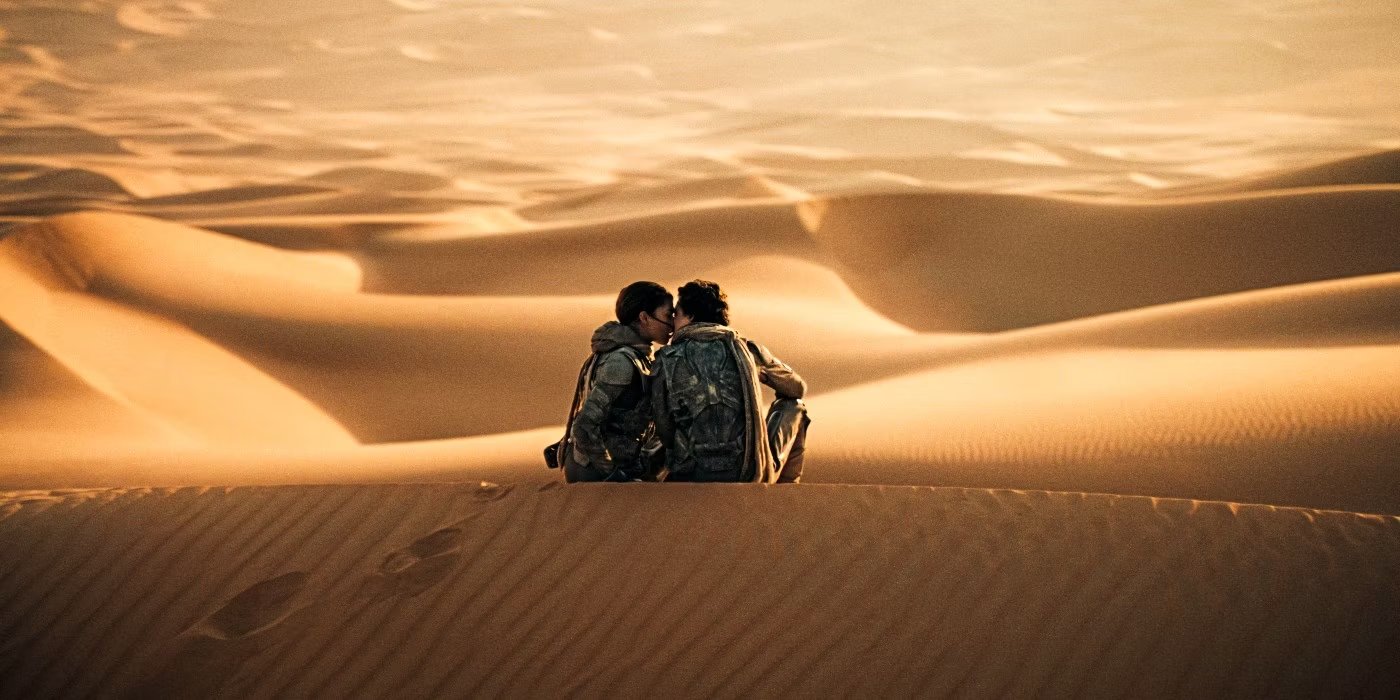
The world that Villeneuve has created for this film series is nothing short of breathtaking. The sheer scope and scale of it is impressive purely on its own, but he takes it a step further by making each detail of this universe specific and meaningful. Dune: Part One fell short in creating a sense of place that seemed real. The amount of track that had to be laid in order for the story to work, prevented the world building from speaking for itself. Here Arrakis is finally allowed to be the star of the film. The titular dunes are vast, sweeping for miles across the barren landscape. This emptiness serves to enhance the wonder and unknown dangers just on the other side of the sand hill. The whole film could’ve easily just been shots of Zendaya and Chalamet sliding through the desert (it nearly was) and I would’ve been fully engrossed in the grand beauty of these seemingly alien landscapes. These expansive shots feel real because they were actually filmed on location in Abu Dhabi and Jordan. In an era where almost every blockbuster resorts to computer generated worlds and filming on a backlot, Villeneuve cannot be praised enough for this decision. It is the extra level of care and passion in creating this film that pushes it beyond the typical franchise fare.
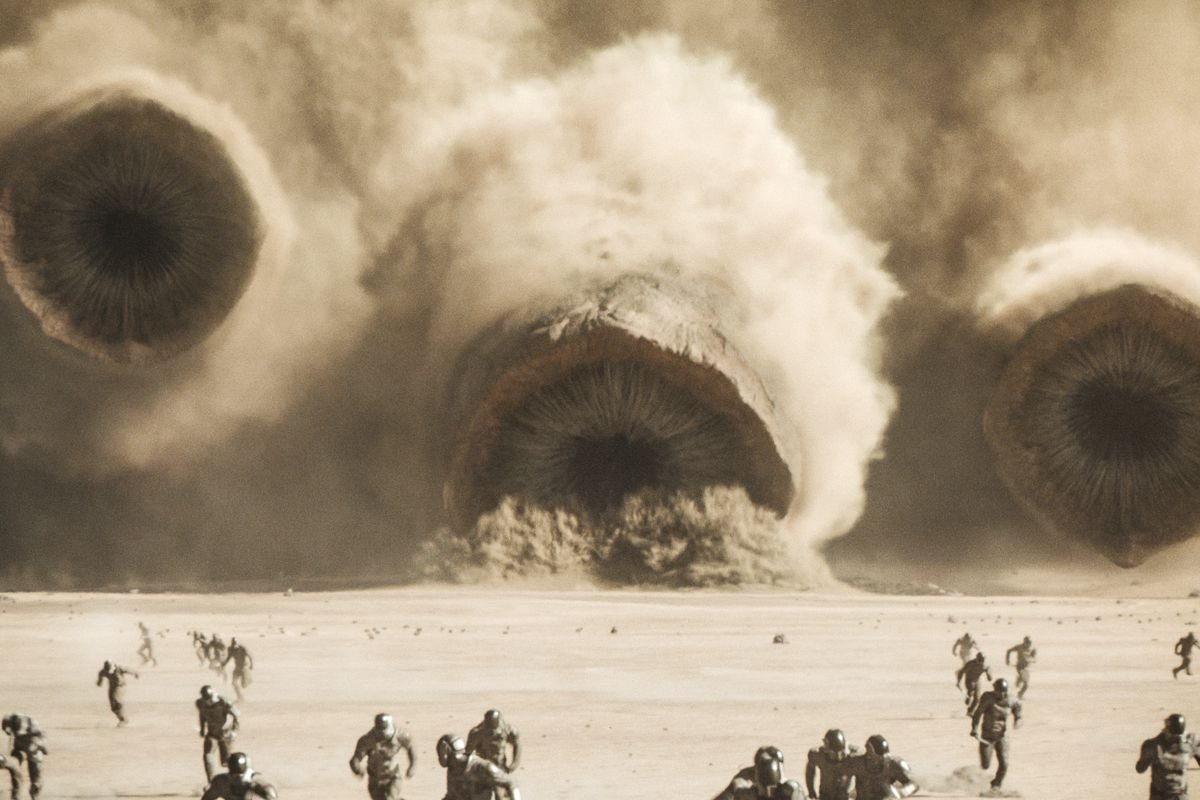
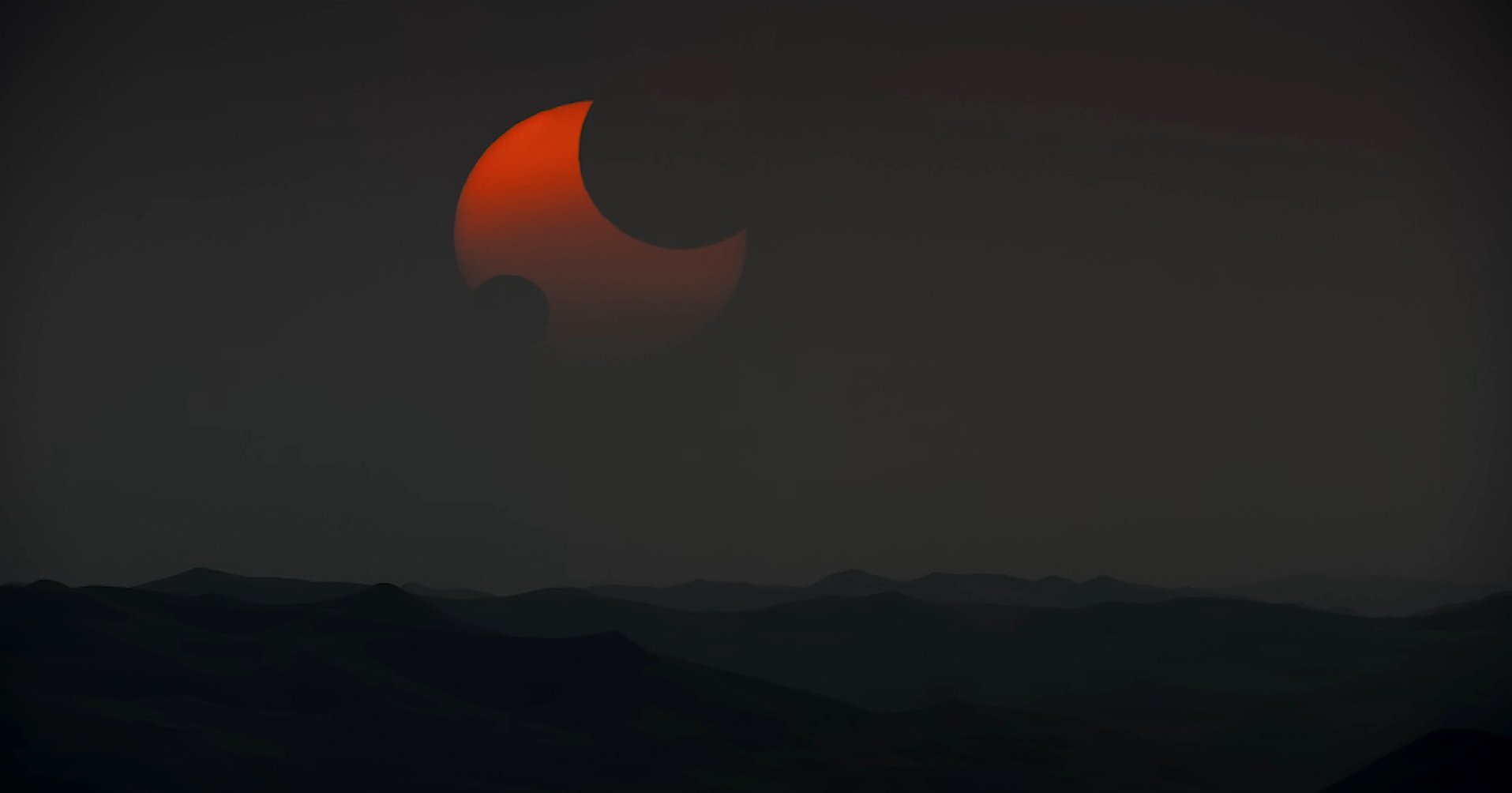
This is true for the overall production design of Dune: Part Two as well. Winding cavernous temples, hyper-techno cathedrals, and mesmerizing feats of future technology are perfectly blended together in one cohesive universe that is visually varied and makes careful distinctions between the aesthetics of the film’s many Houses, tribes, and cultures. Within seconds, the audience is able to recognize where we are in the universe and which group the scene is focused on. It is an incredibly impressive use of visual shorthand, preventing an endless scroll of locations and dates superimposed on screen. In a story as dense as this one, the visual storytelling efforts made here significantly aid the audience’s ability to follow along and retain new information.

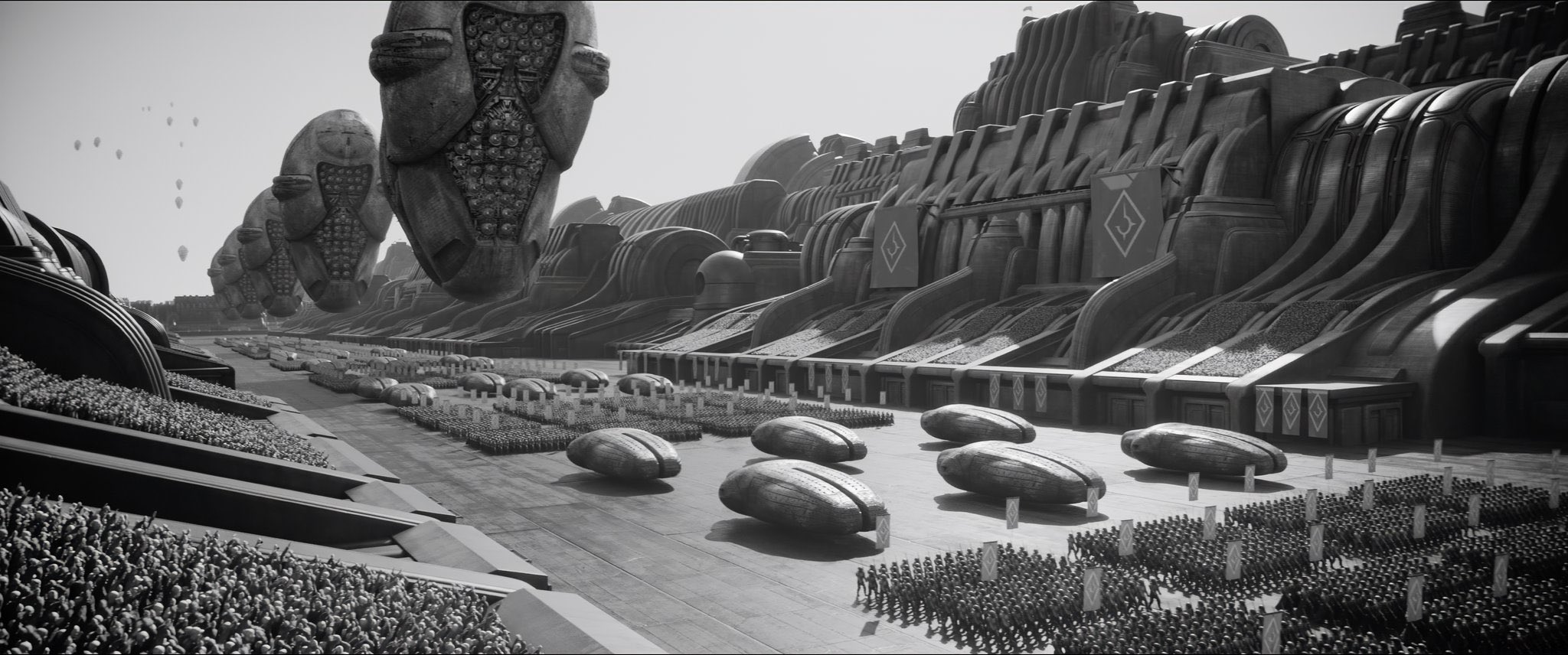
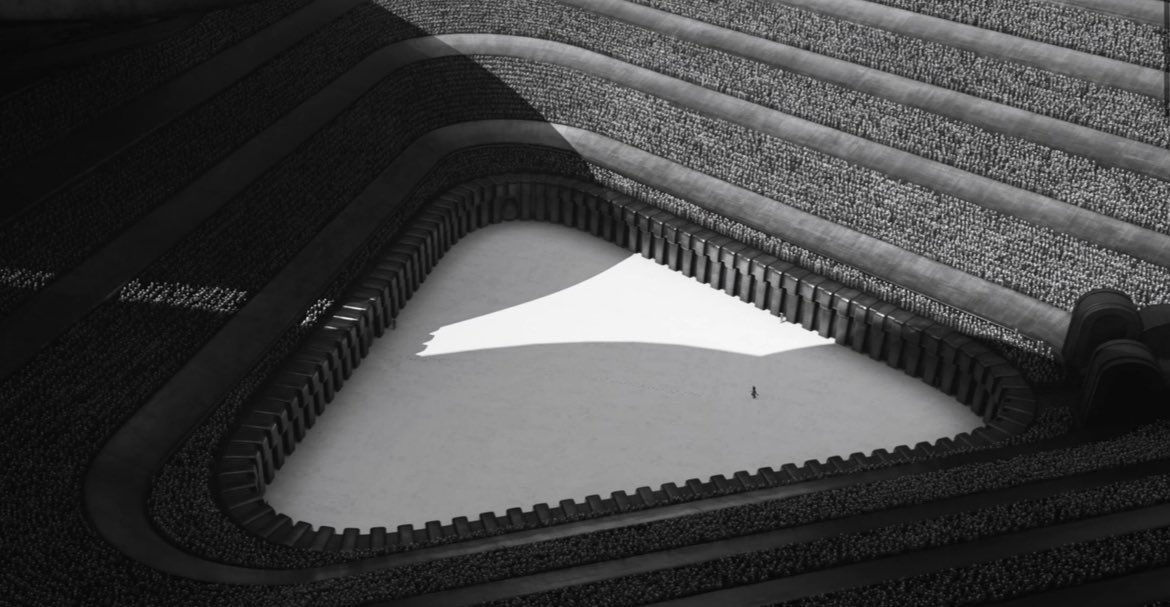
A stunning standout sequence happens when we are introduced to Feyd-Rautha, the nephew to Baron Harkonnen played by Austin Butler, as he prepares to battle in the gladiator arena on their home planet of Giedi Prime. This scene is entirely shot in black and white, creating a sharp distinction between the rich golden orange of Arrakis and the cool, overexposed light of Giedi Prime. The Harkonnen people possess stark white skin and deep black eyes that, without verbalizing it, is explained by the harsh lighting conditions of their planet. The monochromatic palette also reinforces ideas audiences already have about the Harkonnen. Having their planet be completely devoid of color and the natural world highlights their brutal disposition and fascist politics. This contrasts them even further with the Fremen people of Arrakis who regularly commune with nature and live alongside it, rather than seek to control it.
While Dune: Part Two is a significantly better movie than its predecessor, it is not without its issues. This is still an incredibly dense film. Although it doesn’t require you to read the novel to understand it, it does expect you to be somewhat familiar with the source material. Since Part One focused on laying much of the groundwork for Part Two, this film is afforded more opportunities for the audience to absorb the story. The plot is scaled back a bit here and centered primarily on Paul’s ascent to power amongst the Fremen. I do not envy the writer who was tasked with adapting this world to the screen, of which there have been several failed attempts. It is a seemingly impossible task and to their credit, these films are regarded as the best adaptations of the novel.
However, much of the film is dedicated to the various competing political factions all with their own motives, religious beliefs, and plans for Arrakis. This sort of thing works well in a novel as the politics of Dune are essential to its worldbuilding and understanding of where the story is headed overall. Here these character motivations and world details are muddled, convoluted, and distracting. Endless prophecies, magical liquids, civil war politics, psychoactive space travel, native rebellion, talking fetuses, atomic bombs, and giant worms- It becomes an absolute chore to keep track of all this information. I just want the film to speak for itself. No additional reading material or explainer video should be necessary once the credits have rolled.
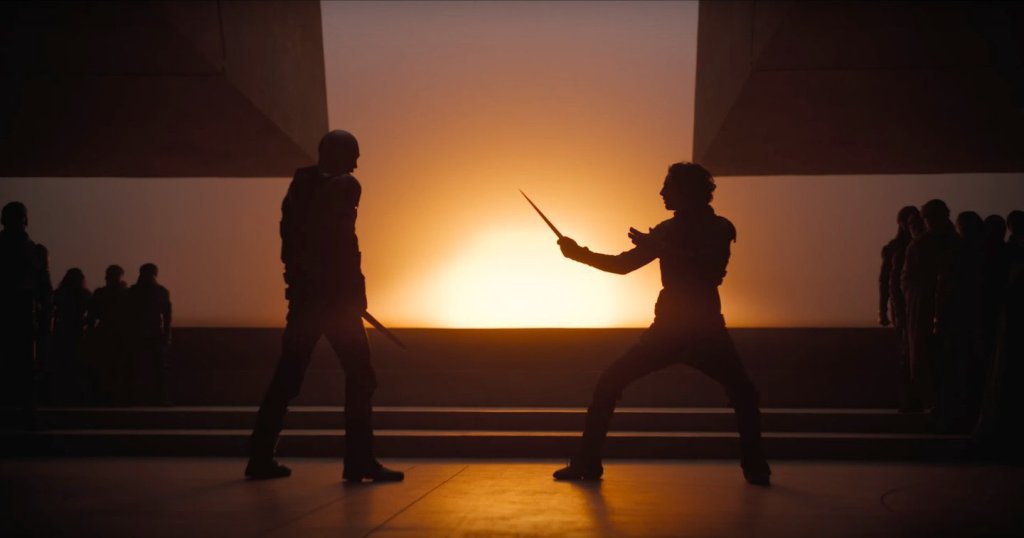
Dune: Part Two is a visually striking film, the kind that demands to be experienced on the largest screen possible. Its expansive world is enhanced by the IMAX format, allowing audiences to be whisked away to a faraway desert planet, fully immersed in the film. However flat characters and meandering plot lines prevent the film from resonating beyond simple spectacle. The rush and excitement of the first two hours is deflated by an anticlimactic fight scene and Paul’s acceptance of power. This is a moment that should feel glorious to Paul and devastating to Chani, irreparably changing their relationship, yet I felt nothing. Dune: Part Two has scale and grandeur in spades, but fails at developing an intimate emotional core between the two leads, resulting in character arcs that feel hollow and secondary to its larger world changing events. This is especially disappointing because the film frequently dips into moments of cinematic greatness, moments that make this one of the best sci-fi films of all time.
 Reel Take
Leave a comment