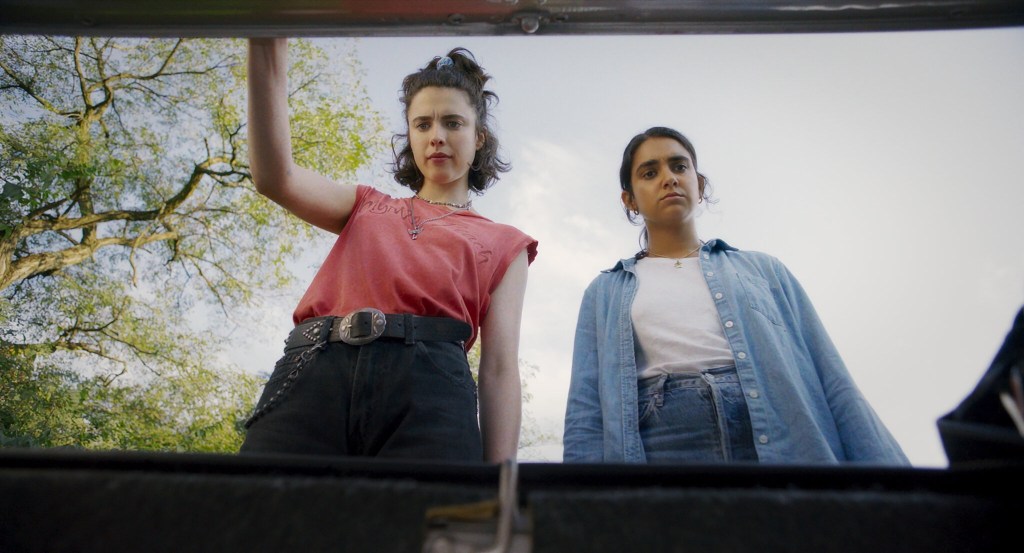
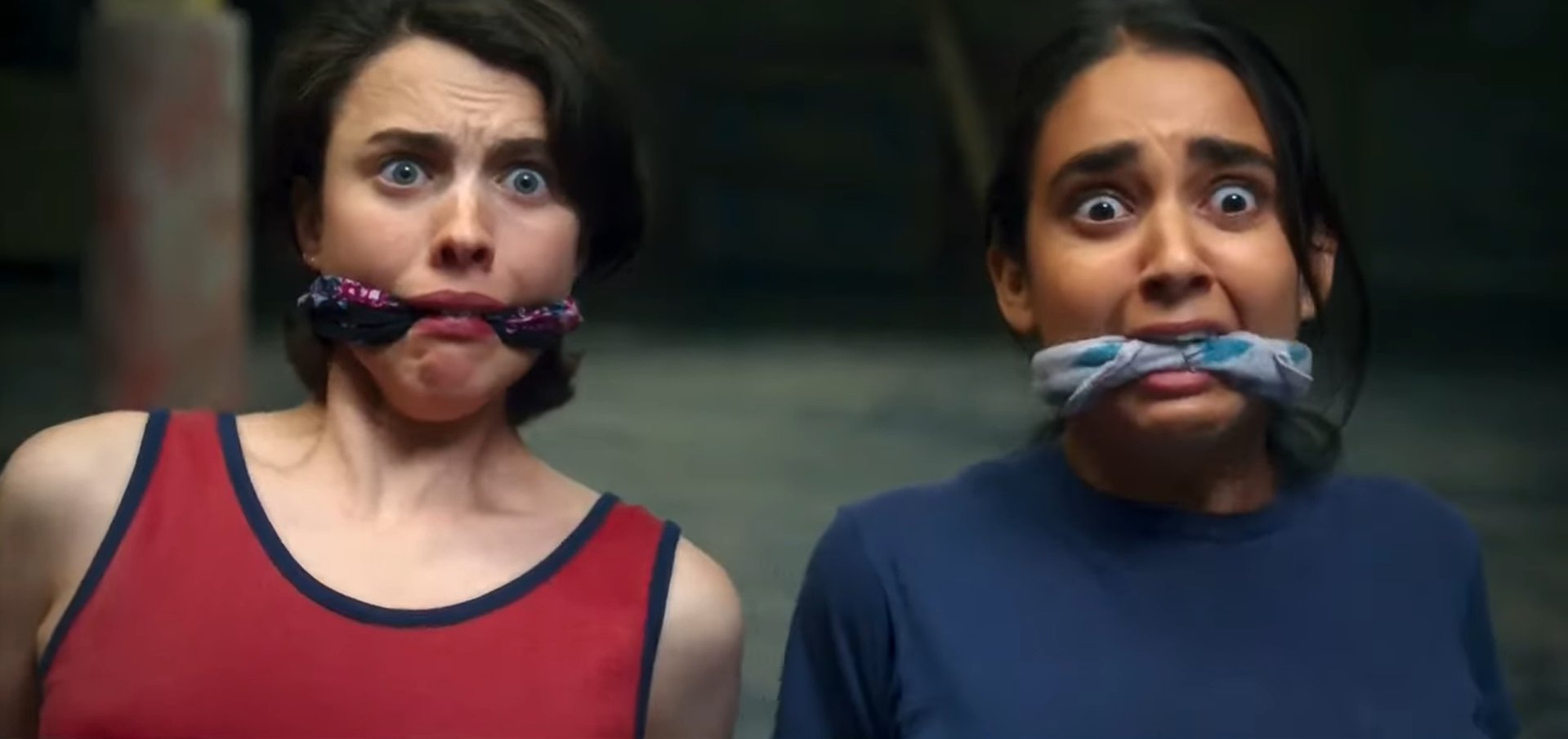
Drive-Away Dolls is a raunchy road trip comedy set in 1999 with a hint of 70s exploitation film flair. It is Ethan Coen’s first solo directed narrative feature which he co wrote alongside his wife Tricia Cooke. The Coen brothers officially ended their professional relationship after making 18 movies together. The Ballad of Buster Scruggs was released in 2018 for Netflix, marking the last film the pair made together. Critics and fans alike have been eagerly awaiting Ethan Coen’s solo debut since. Drive-Away Dolls stars Margaret Qualley as Jamie, a foul-mouthed, sexually liberated young woman who is in need of a change of pace after a rough breakup with girlfriend Sukie, played by Beanie Feldstein. Jamie jumps at the opportunity to join her uptight friend, Marian, played by Geraldine Viswanathan, on a trip to visit her grandmother in Florida. The two get a vehicle headed to Tallahassee from a local driveaway car service, without knowing the criminal contents in their trunk.

The film opens on Santos, Pedro Pascal, waiting at a bar with a mysterious suitcase in hand. He nervously scans the venue for threats before leaving in a hurry, only to be pursued by the bartender. He kills Santos in an alleyway, decapitates him, and transports his head in an iced hat box. The suitcase and hat box are carefully hidden in the trunk of a vehicle ready to be transported to Tallahassee. By coincidence, this is the very same car Jamie and Marian have picked up for their trip. When a group of hired goons, led by Chief, a criminally underused Colman Domingo, arrive at the driveaway service, they are surprised to learn their vehicle has been taken. A hot pursuit begins, with the girls blissfully unaware of the danger they’re in. While Marian wants to stick to the plan and deliver the car on time, Jamie encourages her to let loose a bit, stopping at various lesbian bars along the way. Hijinks ensue as the two bounce from situation to situation, all while the criminals get closer to retrieving their prized suitcase.

There’s a lot to love about this zany sex comedy. Mainly the film’s two leads Qualley and Viswanathan, who breathe so much life and energy into this haphazard script. Qualley nails her role as the overly confident and suave seductress with a dirty mouth. She is the driving force of the film, leading the two further and further into danger through her carefree attitude. Qualley is having an absolute blast in this role, which is evident on screen. Unafraid, bold, and over-the-top choices that don’t always pay off, but when they do it takes the humor and pace of Drive-Away Dolls to another level. Viswanathan in contrast is Qualley’s straight man. Irony aside, Marian is the level headed voice of reason throughout the story who unsuccessfully tries to keep them out of trouble. Viswanathan’s deadpan delivery adds texture to Marian’s no nonsense social skills and the two characters have endlessly entertaining banter as a result. Their onscreen relationship builds to a full on romance, which feels a bit rushed within the story, but is nevertheless believable due to their palpable chemistry. With both actresses’ stars on the rise, it is exciting to see where their careers go from here.
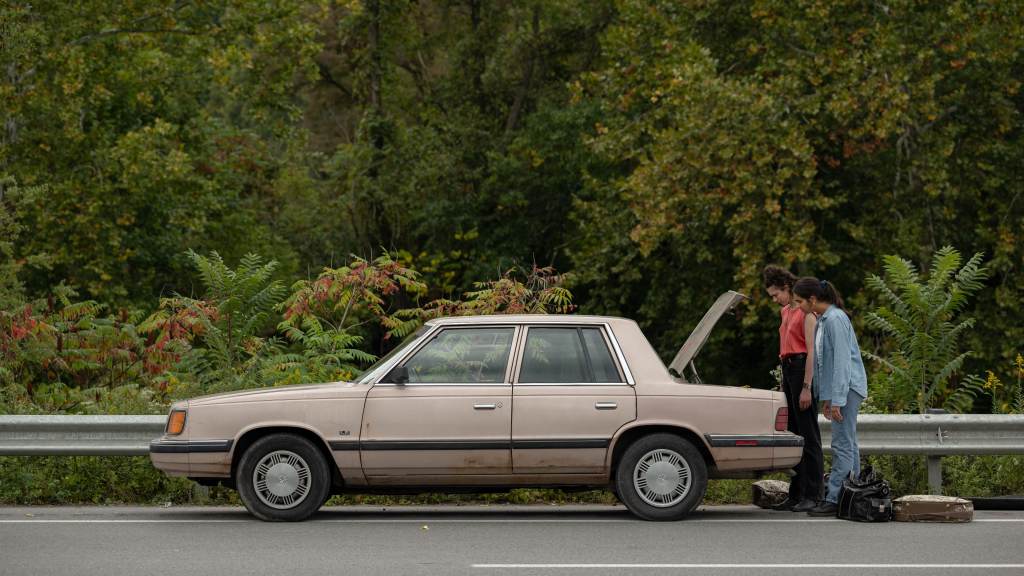
While the script is jam packed with jokes and larger than life characters, the actual story leaves a lot to be desired. On a surface level, the film follows a formulaic plot line that many movies, Coen’s included, have covered several times over. A cross country trip, an unlikely set of heroes, a case of mistaken property, and a pair of bumbling criminals struggling to keep up all feel like familiar elements within the genre. In an attempt to bring something new, Coen fuses these road comedy elements with his crime thriller set up to mixed results. The final product is a story that jumps from set piece to set piece without letting these moments build organically. It feels like two, sometimes three, different movies struggling for space within the film’s tight 84 minute runtime. There’s an odd couple buddy comedy, a lesbian romance, and a pulpy and satirical crime drama squeezed in here and none of these ideas have the room to thrive because of it.

The romance between Jamie and Marian, feels inevitable so it isn’t surprising that that’s where they end up. However it still doesn’t quite feel earned by the ending. Their friendship is a great source of conflict, especially for Marian, who is constantly put out by Jamie and made to feel less desirable because of her closed off nature. In an effort to get Marian to loosen up, Jamie offers to sleep with her, and their relationship develops from there. Marian quickly goes from resenting her friend for constantly trying to change who she is to suddenly head over heels. It’s symptomatic of the larger problem with the script where nothing is all that consequential. Everything that happens is simply because the film called for it, rather than the natural result of the character’s actions and relationships.

The story stalls out in the last half because the film’s darker thriller elements are entirely played for laughs as well. The contents of the suitcase, of which the audience patiently waits for the reveal, is simply a punchline. Pedro Pascal’s preserved severed head? Also a punchline. Matt Damon’s homophobic and possibly corrupt senator? You guessed it, another joke. His character, Senator Channel, is the mastermind behind the film’s central conspiracy and yet he too is a floundering idiot with a questionable backstory. These elements, in addition to how easily the criminals are dispatched, completely deflates any sense of danger or stakes. At no point in the film is the audience made to believe that Jamie and Marian are in any real danger. This would be fine if this were simply a light-hearted romp through America’s South. Yet Ethan Coen wants to keep the signature dark humor and exaggerated characters that made him and his brother household names in the industry, despite it feeling a bit out of place in Drive-Away Dolls.
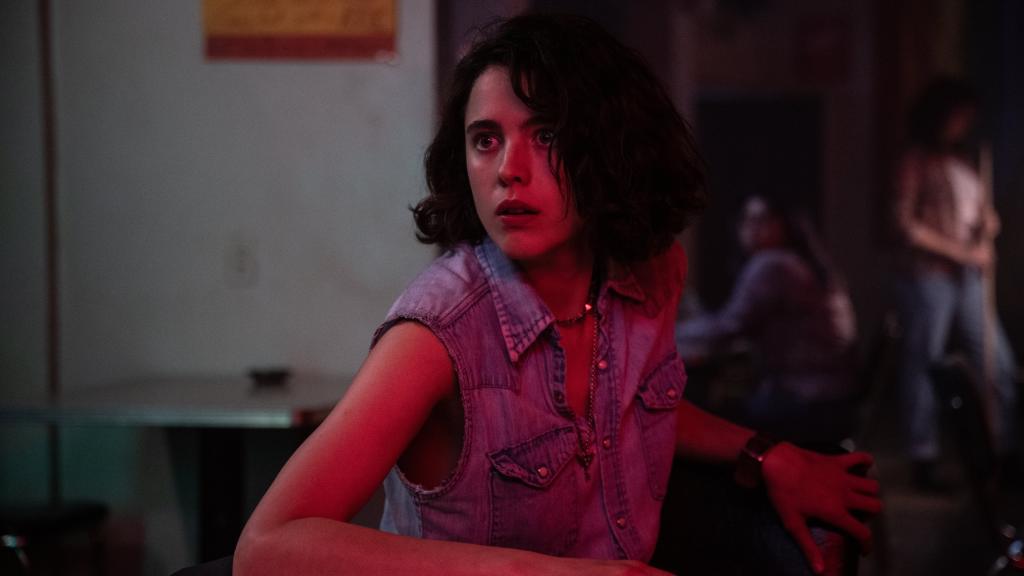
The film’s central message and theme are hard to pin down as well. The decision to have the two lead characters be lesbians is great for representation and is the primary source of the film’s strongest jokes and observations. While a homophobic Florida politician is unfortunately an all too familiar character in the year 2024, Drive-Away Dolls doesn’t have much to say about the danger of these types of politicians beyond “get a load of this moron”. I’m all for relentlessly mocking people like Damon’s character, but it does not have the bite I think Coen was aiming for and the criticism feels trite because of it. Perhaps because this film is set in 1999 and was first pitched in the early 2000s, it’s pro-gay commentary feels dated. It’s as if they are speaking to an audience that has not witnessed the gay rights movement in America over the last decade. If the goal was a film with gay characters that isn’t explicitly about “being gay” that would be one thing, but the film specifically decided to make the villain a homophobe. So what is it saying about the gay rights movement in America? I couldn’t tell you.
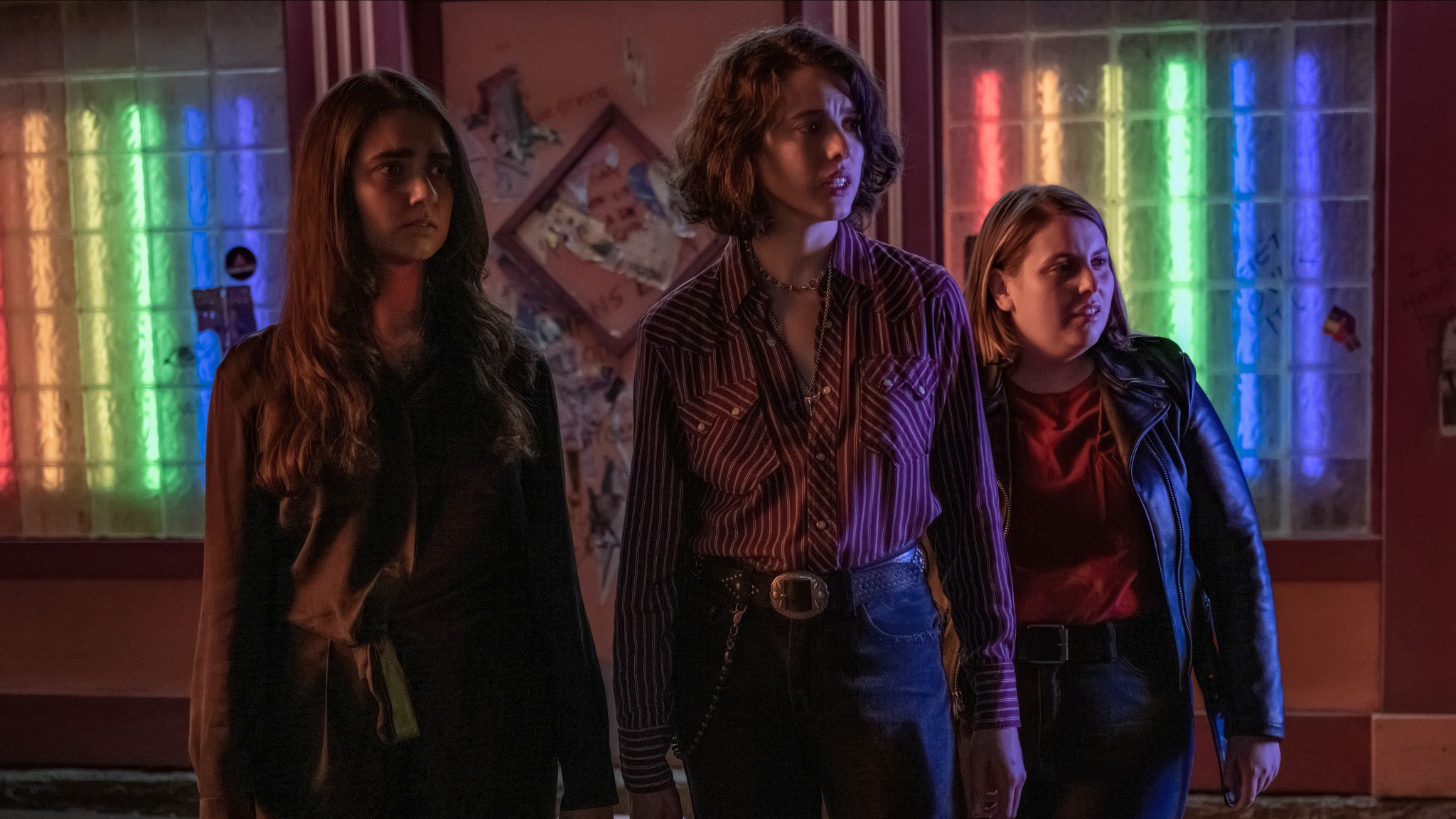
There’s so much potential for Drive-Away Dolls to become a modern gay classic, and very well might still become that. The film is a non-stop joyride with the sharp sense of humor and character observations we come to expect from a Coen movie. With two strong lead performances, the film stops just short of crashing and burning. However with its outlandish and competing plot lines, Drive-Away Dolls struggles to pick a lane.


 Reel Take
Leave a comment