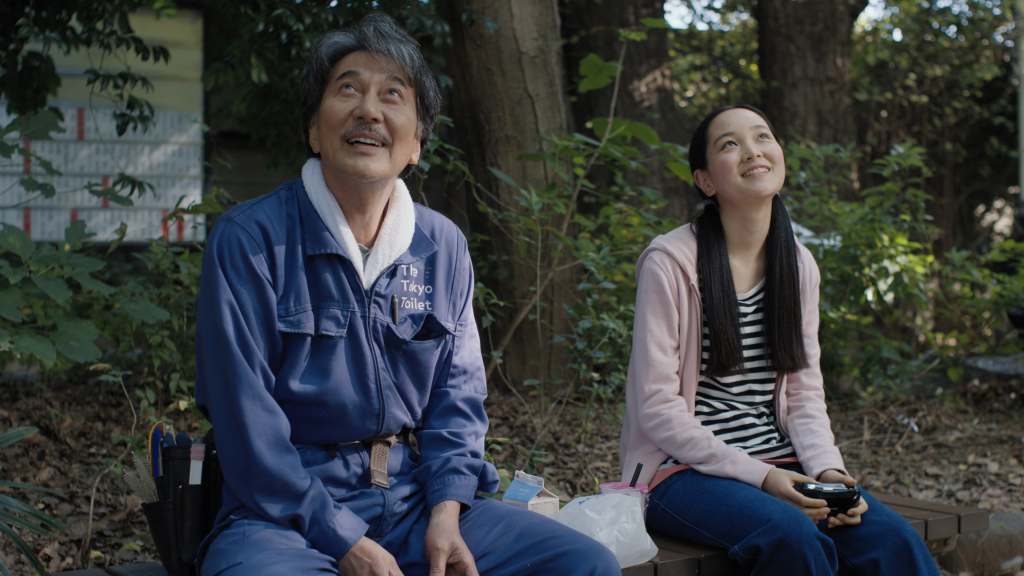
Perfect Days is a slice of life Japanese drama about a janitor who appreciates the subtle charm of the world around him, celebrating life’s small moments of joy every single day. The film is directed by German filmmaker, Wim Wenders, known for several Oscar-nominated documentaries like The Salt of the Earth and his feature, Paris, Texas which won the Palme d’Or and earned him Best Direction at the 1984 BAFTA awards. Perfect Days premiered at the 2023 Cannes Film Festival where it competed for the Palme d’Or and received the Prize of Ecumenical Jury as well as the Best Actor Award for star, Koji Yakusho. The film was nominated for Best International Feature at this year’s Academy Awards, marking the first time that a Japanese entry was not directed by a Japanese director.

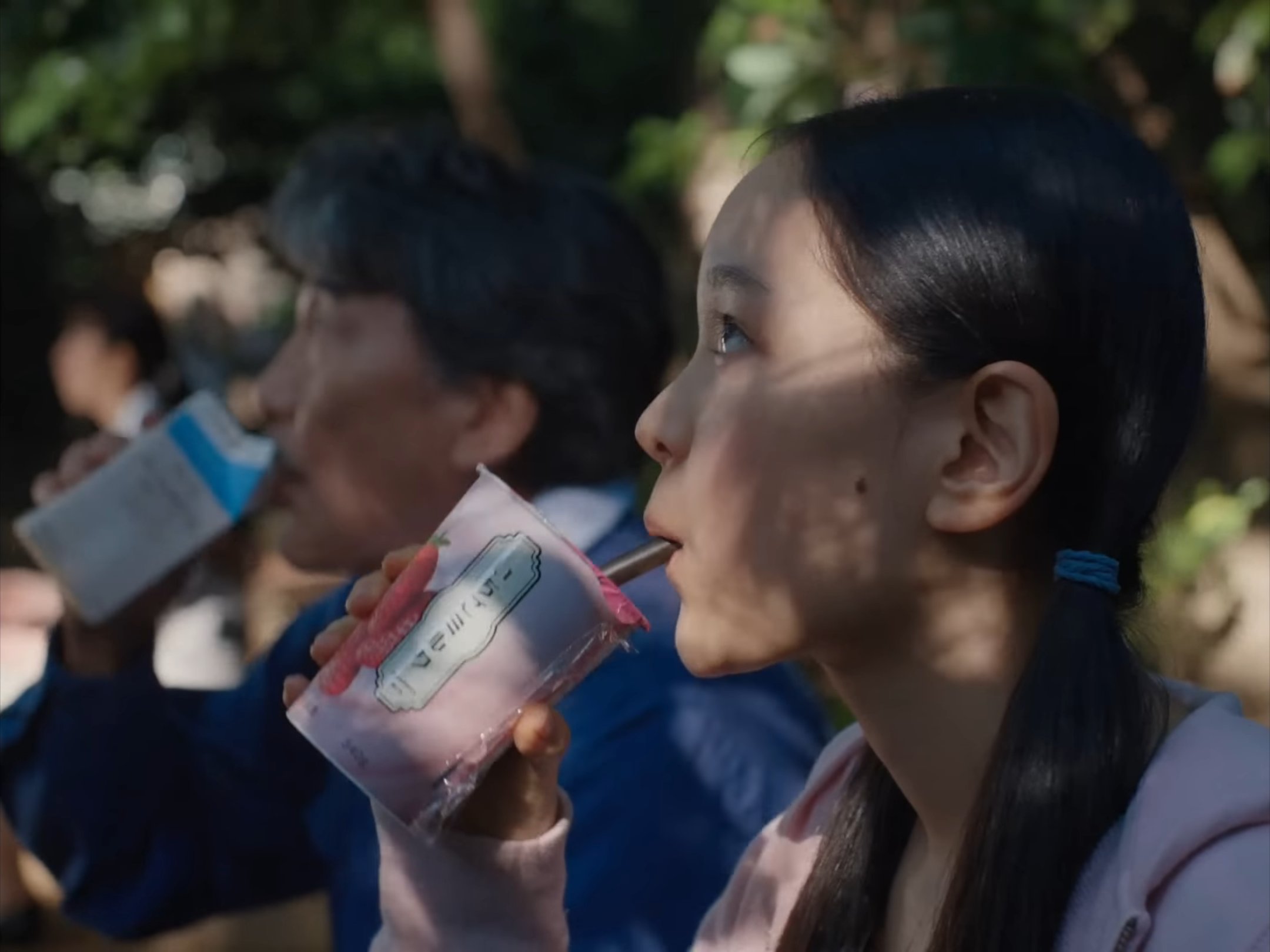
Koji Yakusho is Hirayama, a public toilet cleaner in Tokyo with a passion for reading novels, taking photographs, tending to his garden, and listening to music on tape cassettes. He is a methodical man who takes pride in his work, cleaning each restroom with the utmost precision. The film follows his daily rituals as he rises at dawn, completes his work, and finishes out the night at his favorite restaurant. Each day is nearly identical to the last, but Hirayama does not mind. There’s a quiet beauty to the world and he is more appreciative of it than most people around him. He notices the little things like how the light cascades down through the tree tops and captures them on his film camera, preserving these singular moments of peace forever.
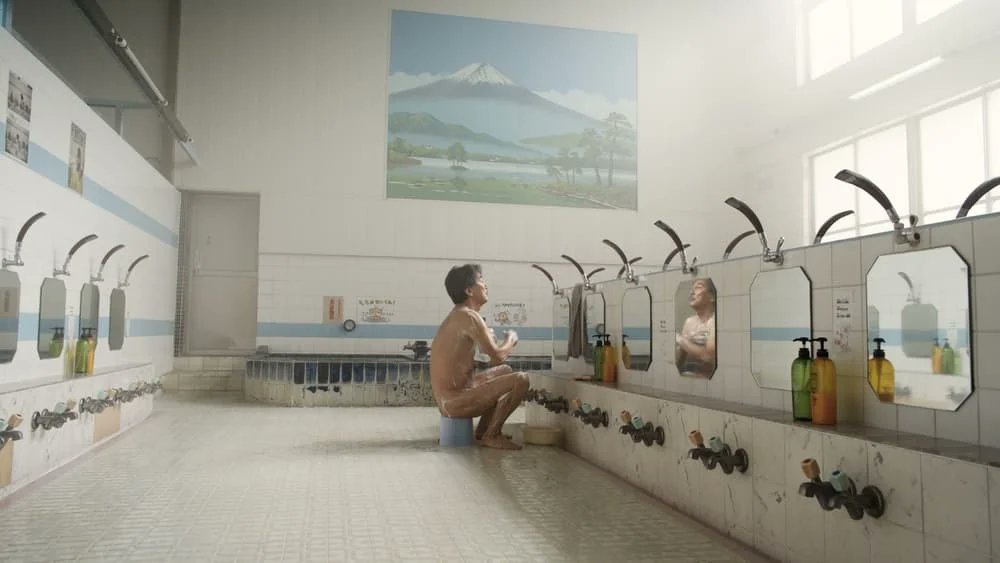
Hirayama is an analog man living in a digital world that has far outpaced him. The hustle of the big city is merely a backdrop to his rich inner life. He is not interested in the superficial pursuits of wealth and sex like his younger coworker, Takashi, who constantly teases him for taking their toilet cleaning too seriously. Hirayama’s ability to appreciate the life he has, leads to a far deeper sense of satisfaction. This is baffling to people like Takashi or his rich sister, Keiko who cannot imagine finding joy as a toilet cleaner living in a shabby apartment.

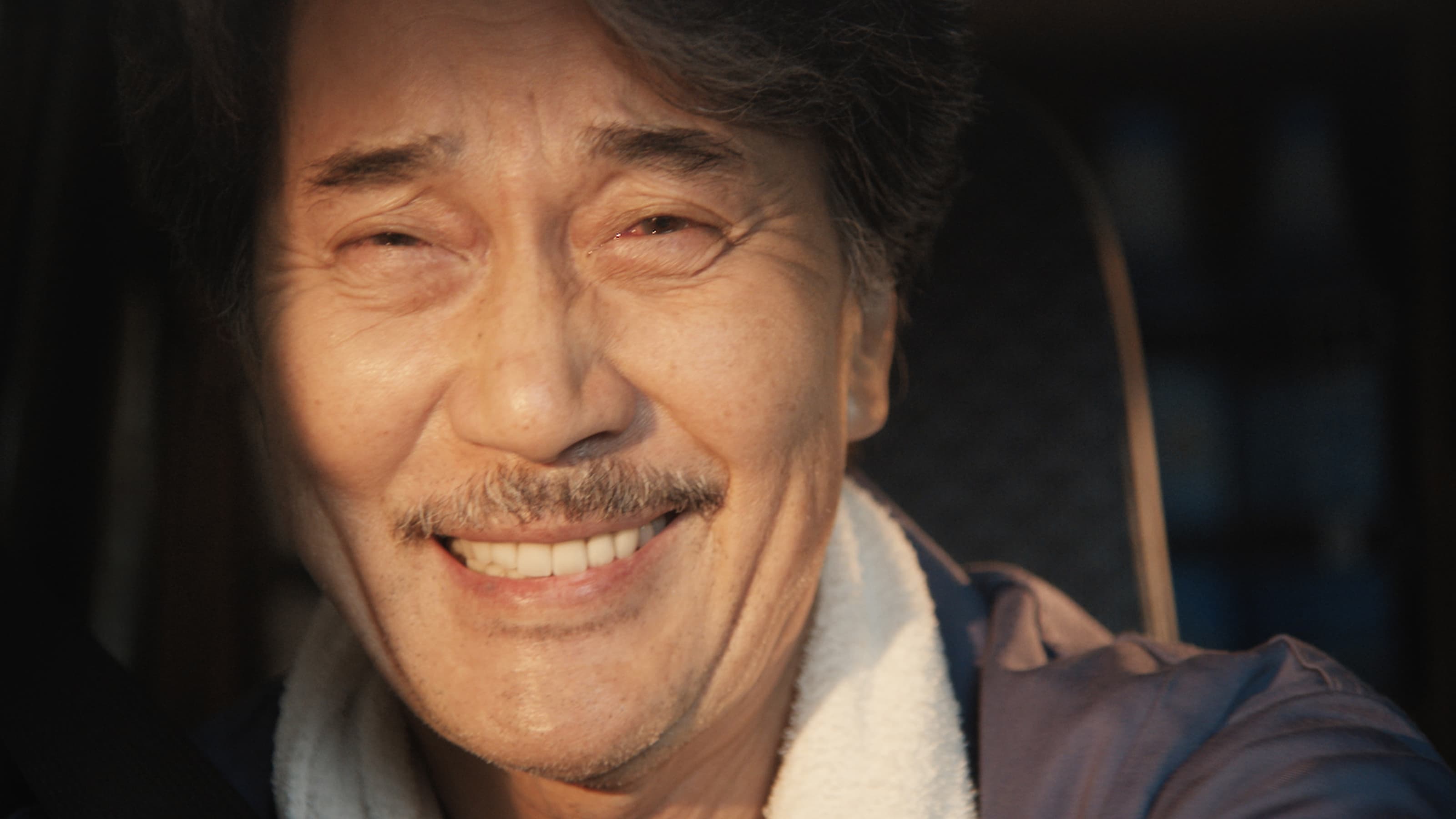
The mostly silent protagonist adds to this feeling of introspection, causing the audience to pay closer attention to Hirayama and the subtlety of his expressions. Yakusho gives a breathtaking performance almost entirely through his eyes, allowing us brief moments of understanding throughout the film. Rigid in his routine and guarded with his words, this is the only way the audience is let into Hirayama’s psyche. Perfect Days is not interested in hashing out the character’s entire biography. By the end of the film, we still don’t know why he lives alone, why he photographs and documents the trees in the park, what estranged him from his father and sister, and most centrally, why toilets? These unanswered questions add to the intrigue and poetry of it all, making Hirayama a surprisingly captivating character. The film closes with a long take on Hirayama’s face, a mixture of melancholy and elation overwhelms him. This final scene perfectly encapsulates this film’s fascination with the profound pain and beauty that exists in all of our day to day interactions. Yakusho’s Best Actor win at Cannes is well earned, going above and beyond in these final moments of the film, making for a stunning final shot as Nina Simone’s “Feeling Good” swells over the credits.
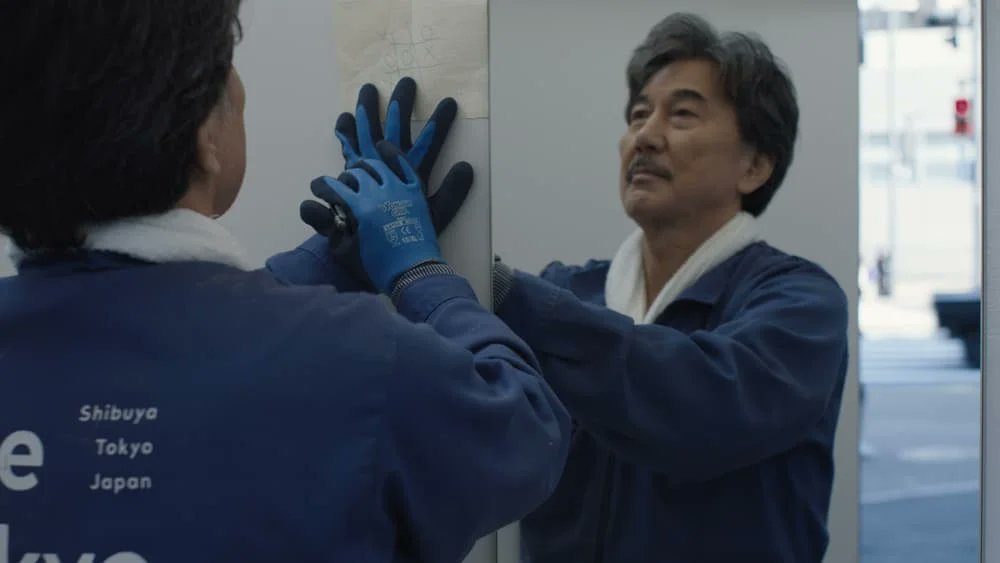
Tokyo’s many public toilets are the surprising star of Perfect Days. These elegantly designed facilities punctuate Hirayama’s daily routine and it is easy to understand why he is able to take so much pride in his work. They are marvels of modern design and support the film’s central appreciation of the mundane fixtures that make our contemporary life possible. These ordinary everyday objects are relegated to private use and often regarded with disgust. Yet, they are entirely necessary for a healthy and functioning society. Much like Hirayama himself, these toilets are taken for granted and go unnoticed, but without them daily life would be disrupted.

Perfect Days upends the established hierarchy of images on film by focusing on the menial. There are no high speed car chases or world ending events here and in its place is a janitor and his toilets. Work performed by those typically on the fringes of society goes largely unappreciated at best and looked down upon at worst. Wenders expertly elevates the public restrooms as objects of importance, just as deserving of the spotlight on film. He invites the audience to acknowledge how we ignore and undervalue people like Hirayama despite how much we rely on them.
Perfect Days breaks daily life down to its most compelling yet simple moments. The understated and powerful performance from Yakusho makes for an endlessly surprising and engaging viewing experience. One that does not overwhelm the audience with emotional cues, allowing the viewer to identify with Hirayama on their own terms and finding a deeper appreciation for their lives in the process. Wenders elevates the tedious and trivial to a level of importance rarely seen on film, and manages to do so without sacrificing the pace of the story and richness of his characters. Perfect Days is critical of the isolating and individualistic nature of modern society where meaning is derived through material gains and consumption. The film encourages us to find salvation from this alienating culture through simple pleasures, the act of creation, and the profound connections we make along the way.



 Reel Take
Leave a comment