
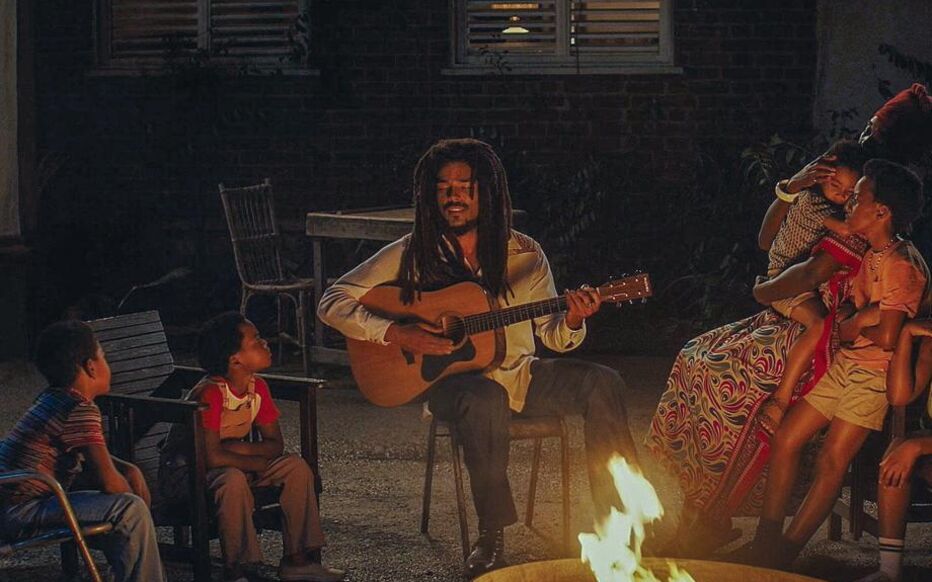
Bob Marley: One Love is a musical biopic about the reggae artist’s rise to superstardom and the people and political movements he inspired along the way. The film is directed by Reinaldo Marcus Green who previously directed King Richard, the biopic about Richard Williams, father and coach of Venus and Serena Williams. Green co-wrote the screenplay with a team of writers including Zach Baylin, the screenwriter of King Richard. Ziggy Marley serves as a producer on the film alongside Tuff Gong Pictures, the Marley family’s production company. Kingsley Ben-Adir stars as Bob Marley who during the height of political violence in 1977 Jamaica must flee the country for his own safety. While staying in London, Marley records his hit record Exodus and is launched into a life of fame and fortune. During his European tour, the civil unrest back home grows and Marley must make the difficult decision to return to Jamaica.
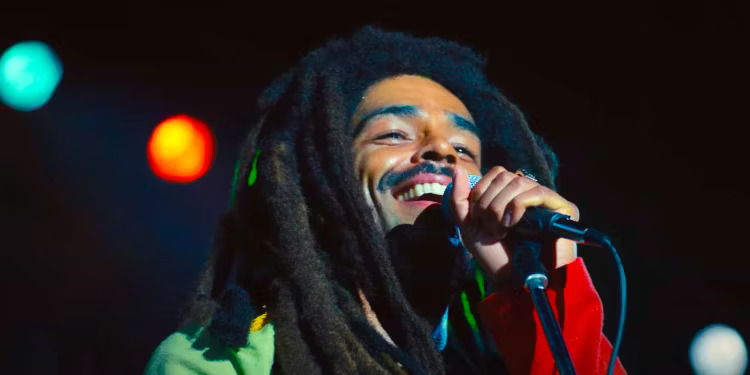
Ben-Adir breathes life into this pop culture icon who is often reduced to his most superficial characteristics. His mannerisms, especially while performing on stage, match the energy and joy Marley was able to bring to fans across the world. The voice occasionally teeters into impression or parody, but is ultimately a well intentioned and researched portrayal. There’s a deep inner world in Ben-Adir’s Marley that unfortunately the film is not too interested in exploring. Several flashback scenes highlight how Marley and wife Rita met and formed the Wailers. There’s a taste of a better film here, one that is more curious about Marley’s early years living under British colonial rule and how that affected his world view and art. We get hyper stylized, dreamlike sequences that show us this inner turmoil as Marley flees from the metaphorical fires engulfing his country. There’s glimpses of how it can all be traced back to Marley’s father, a British naval officer, who never recognized him as his son. But these moments do not amount to anything of significance, more like objective lines in his Wikipedia entry than something that actually informs the narrative.
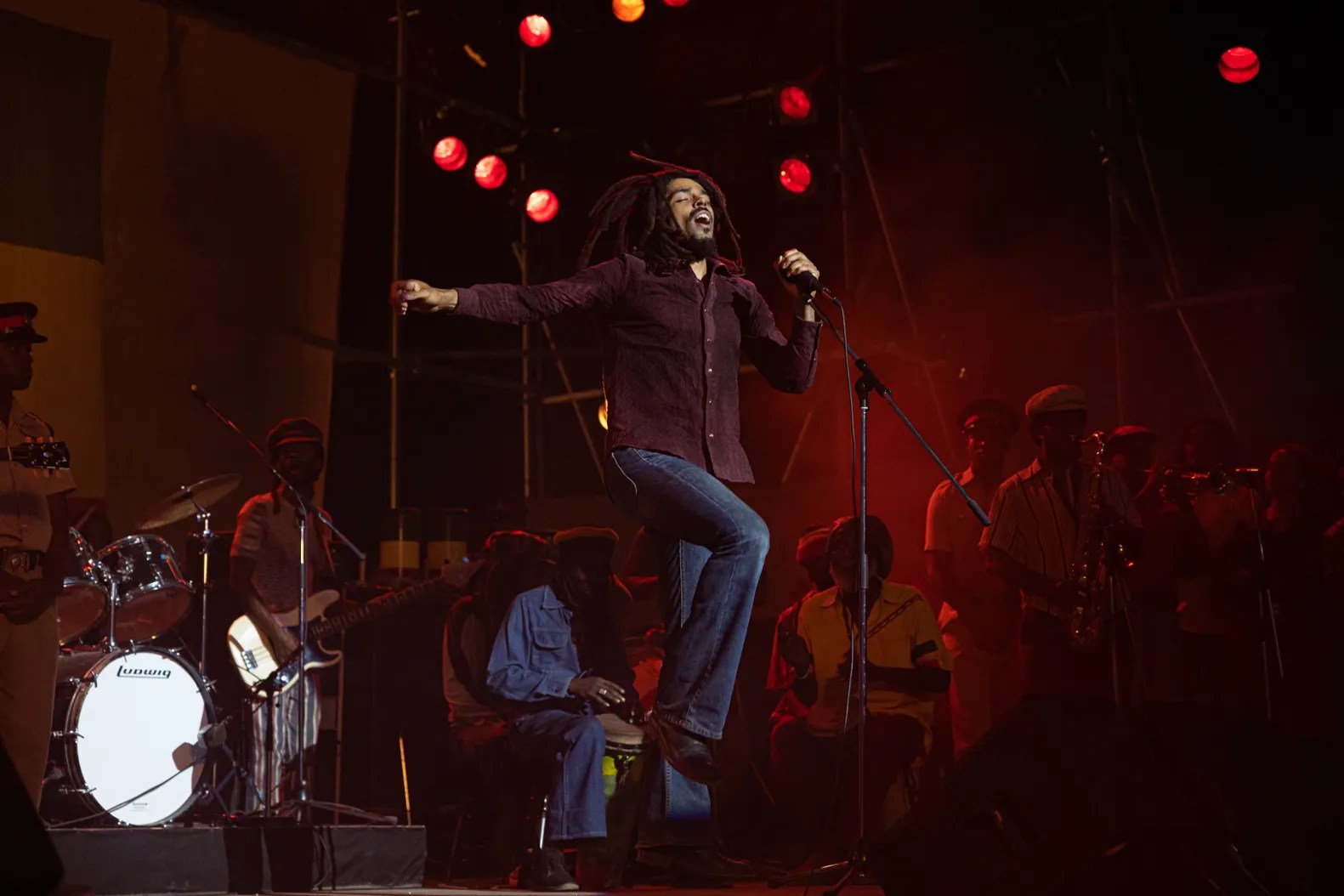
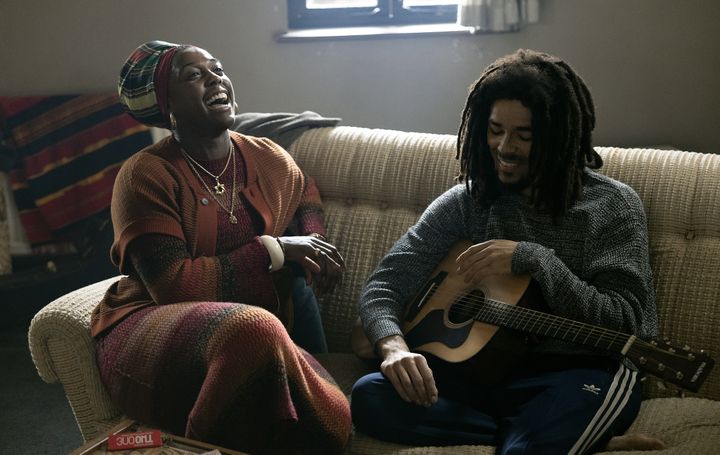
Throughout, he is conflicted about his place in the larger struggle for freedom. The guilt of abandoning his home country to perform (and make money) for his largely white, European fan base clearly eats at him and builds to his decision to return home. However, the onus is never placed on Marley himself and as a result the performance fails at being an introspective look into the life of the actual person. During the film’s major turning points, we get shades of complications to his character. There’s a tense argument with his wife, Rita over infidelity and the mindless pursuit of fame that ends right as it gets interesting and is never brought up again. Shortly after that, Marley loses his temper for the first and only time where he attacks his manager Don over pocketing extra cash from their tour bookings. Don fires back at him, pointing out that he took several bullets for him, yet Marley was the one elevated to martyr status. Marley loses his peaceful demeanor and the mythology of his stardom is finally called into question, making for the only truly exciting and compelling scene in the film. But as soon as the scene ends, these ideas are also entirely abandoned.
As a result, the character is entirely flat and merely reacts to the external pressures as they come rather than Marley being motivated by these complicated emotions. It is hard not to think this is done in part because the Marley family had significant creative control over this film. It is understandable for living family members to want to preserve the legacy of their loved ones, but what’s left is a completely sanitized story that mentions racial and political strife but merely as the backdrop of the story. The film insists Marley did not see himself as a political figure, which may be true, but for an artist most known for songs about injustice and freedom, this portrayal comes across as a safe brand decision too afraid to alienate potential audience members. Instead it chooses to focus on Marley as a person who made music “for the people” meaning everyone of all backgrounds in this case, not the people struggling for their human rights. Peace and “One Love” are empty catchphrases, completely devoid of any serious calls to action. Just vibes and loving your fellow man, which is fine for a dorm room poster, terrible for a piece of art that has an inherently political subject.
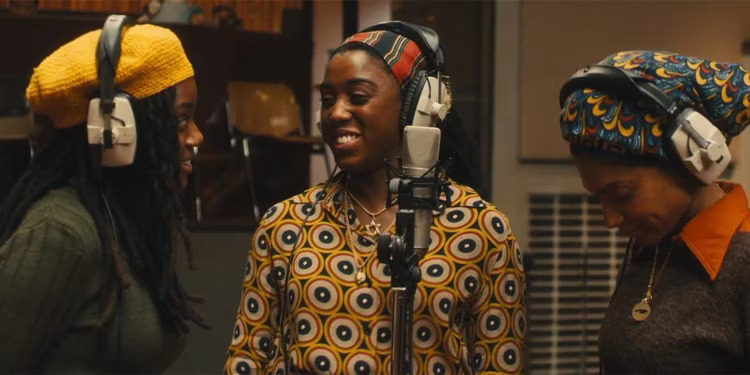
The saving grace of Bob Marley: One Love should be its soundtrack. The artist was an incredibly prolific songwriter, especially for someone who died tragically young, and his music is widely loved and celebrated across the world. Much of the music is hamfistedly shoved into pivotal moments in the script to underscore the narrative with mixed results. “I Shot the Sheriff” plays moments before Marley is shot, “No Woman, No Cry” performed after Rita and Marley’s confrontation, and “Exodus” coming into creation shortly after fleeing Jamaica, rinse and repeat. It causes significant pacing issues, the story is entirely strung together by expository scenes and their correlating songs, making for a slow viewing experience. The most egregious example is towards the end when Marley returns home and his shooter comes to him begging for forgiveness. Marley tells the young man that he harbors no vengeance, but redemption must come from within. Cut to Marley inexplicably writing “Redemption Song” moments later. Rita asks him how long he’s been writing that song and he responds, “Me whole life.” The film falls into the tired cliches and trappings of the musical biopic genre by mythologizing the song writing process. It ends up feeling more like Bob Marley’s Greatest Hits: The Movie. Even so, one would probably derive more enjoyment from streaming his music or watching Marley’s live performances on YouTube.

Bob Marley: One Love fails on every level to be a compelling biopic, an engaging musical, or an inspiring political story. It is uninterested in exploring anything deeper about who Bob Marley the artist, celebrity, political figure, or person was and ends up feeling soulless. The needle drops are designed to be nostalgic for fans, but don’t service the narrative in any meaningful way. Devoid of any significance or joy, the finished product struggles to incorporate Marley’s music in a way that’s inspiring or fun, which arguably should’ve been this film’s primary goal. It ends with real recorded footage of Bob Marley during the fateful One Love concert, which only made me wish I had watched a documentary on the same events instead. I left the theater without having learned anything about Bob Marley that couldn’t be gleaned from his pop culture signifiers, reduced to an image, a product, a brand. By deifying the messenger, Bob Marley: One Love bungles the message and results in an estate sanctioned film without any personality or perspective.


 Reel Take
Leave a comment