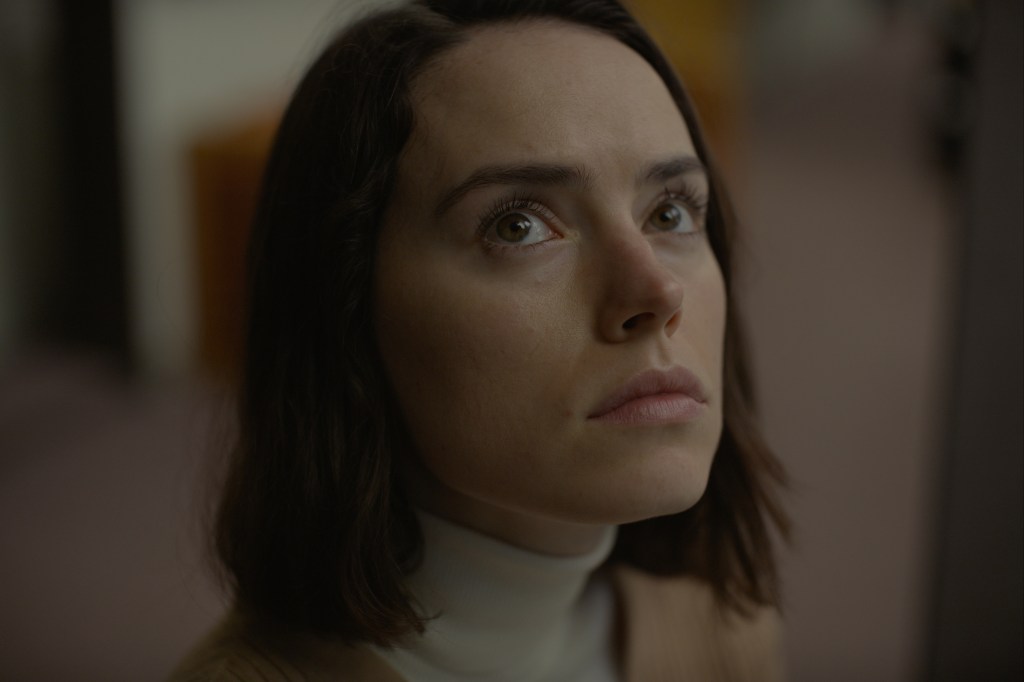
Sometimes I Think About Dying is a quirky romantic comedy about the quiet destruction that isolation causes, preventing us from fully experiencing everything the world has to offer. Rachel Lambert directed the film which premiered at Sundance Film Festival in 2023. It is adapted from the 2013 play, Killers by Kevin Armento who also co-wrote the screenplay. Sometimes I Think About Dying stars Daisy Ridley as Fran, a lonely office worker who has a tough time connecting with her peers, and spends much of her waking hours fantasizing about death. Her rigid worldview is upended when she meets Robert, a passionate man who can’t seem to sort out his romantic life. The two form an unlikely bond and help the other open themselves up to possibility and joy.
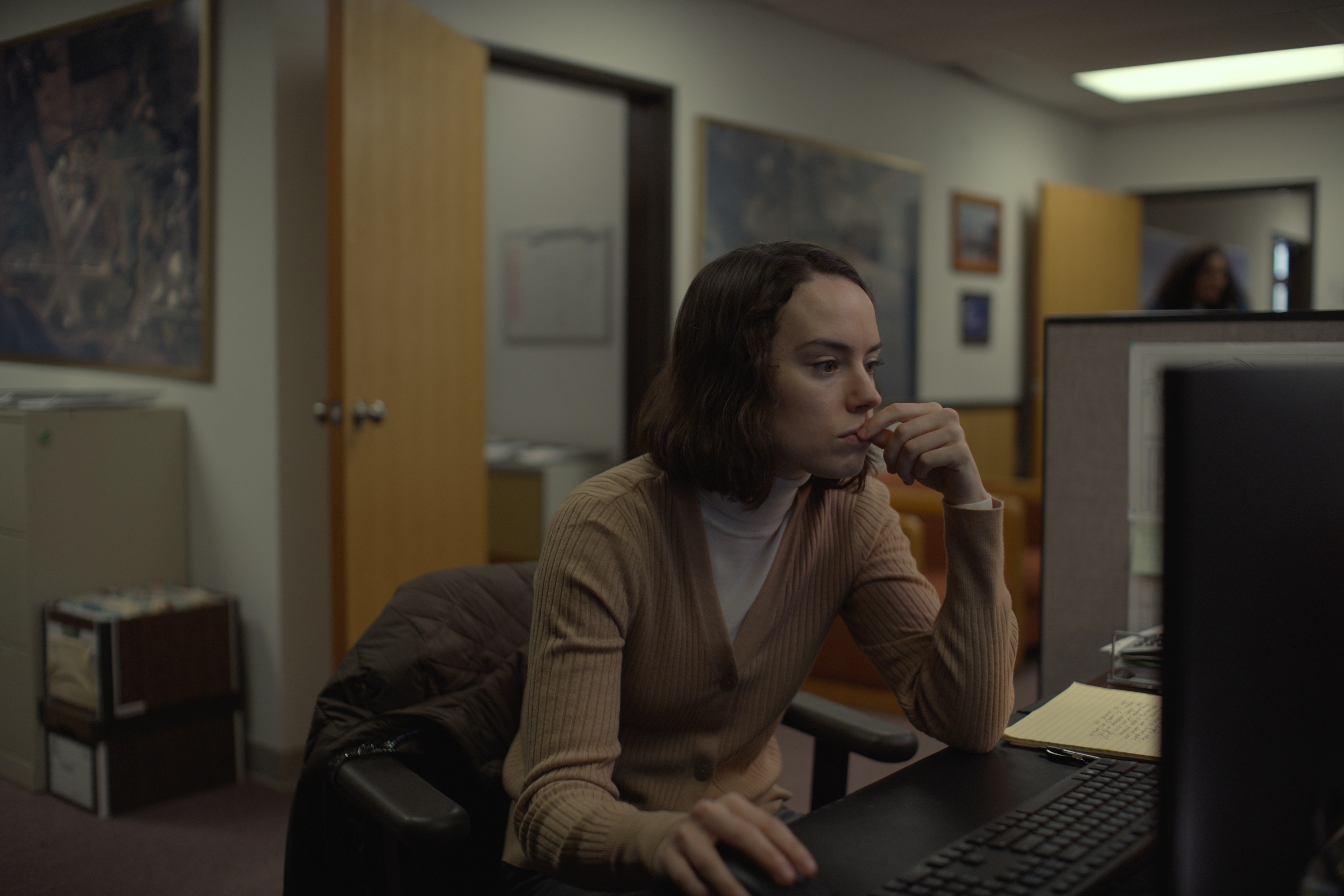
Ridley gives a powerful, yet understated performance in this film, relying mostly on the subtlest of facial expressions or body language to reveal how Fran is really feeling. She doesn’t speak much throughout the movie, but in doing so she actually says a lot about her character and her complex state of mind. It would be too simple to suggest that Fran is merely depressed and suicidal. The drama in this story does not come from an active fear that at any moment Fran is in danger of taking her own life… but she does think about it a lot.
This passive ideation, while not an immediate threat, slowly eats away at her ability to be present and knowable to others. This creates a significant amount of distance between Fran and her coworkers, seemingly the only people she regularly interacts with. She has no interest in their friendly, but shallow conversations and does her best to keep her head down most days. At the end of each night, she returns home to her cottage cheese and sudoku puzzles, ignoring any calls. This intimate character study is a major departure for Ridley who rose to prominence for her role as Rey in the latest Star Wars sequels. As a character, Fran could not be more opposite of the larger than life performance necessary for a major franchise and it is refreshing to see Ridley take a risk like this.
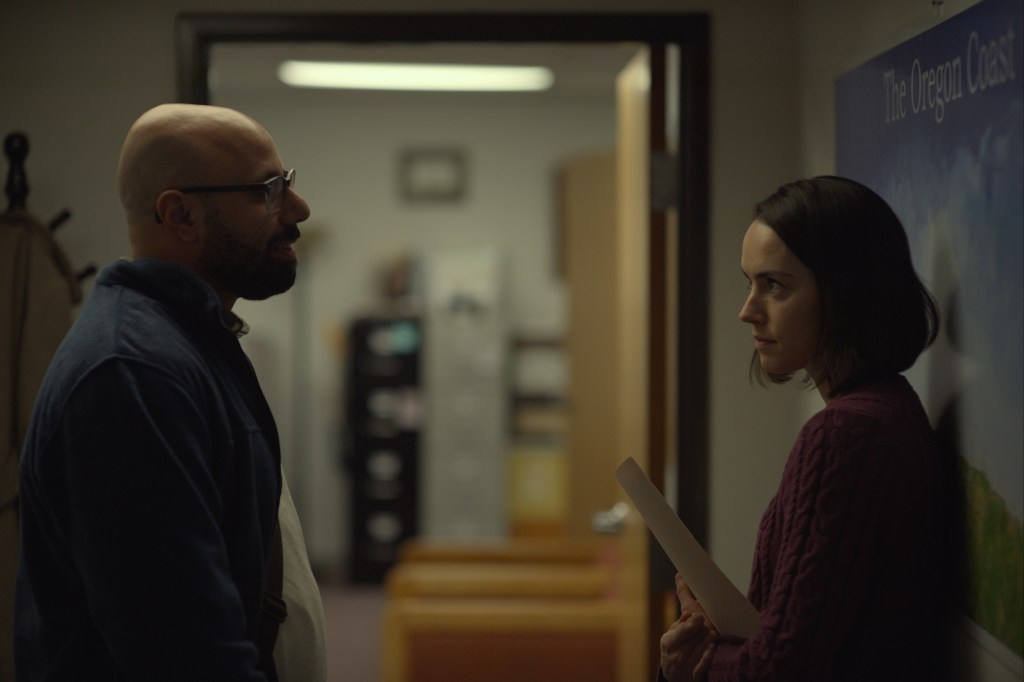
The film wears its theatrical origins proudly on its sleeve, while using the medium to visually express the more cerebral elements. The dialogue, particularly the lines spoken by Fran’s coworkers, excels at being lifelike and painfully cringe inducing. Characters ramble, go on tangents, say the wrong thing, and tease each other about the office donuts being “dangerous”. These conversations make up the bulk of the film’s observational humor, poking fun at these ridiculous pleasantries without it feeling too mean spirited. It works because Fran is an outsider, but by her own choice. Her coworkers are friendly and inviting, but she still has trouble relating to them. None of them are bad people deserving of being knocked down a peg, but Fran’s resentment for the ease in which they all seem to move through life prevents her from forming any meaningful connections.
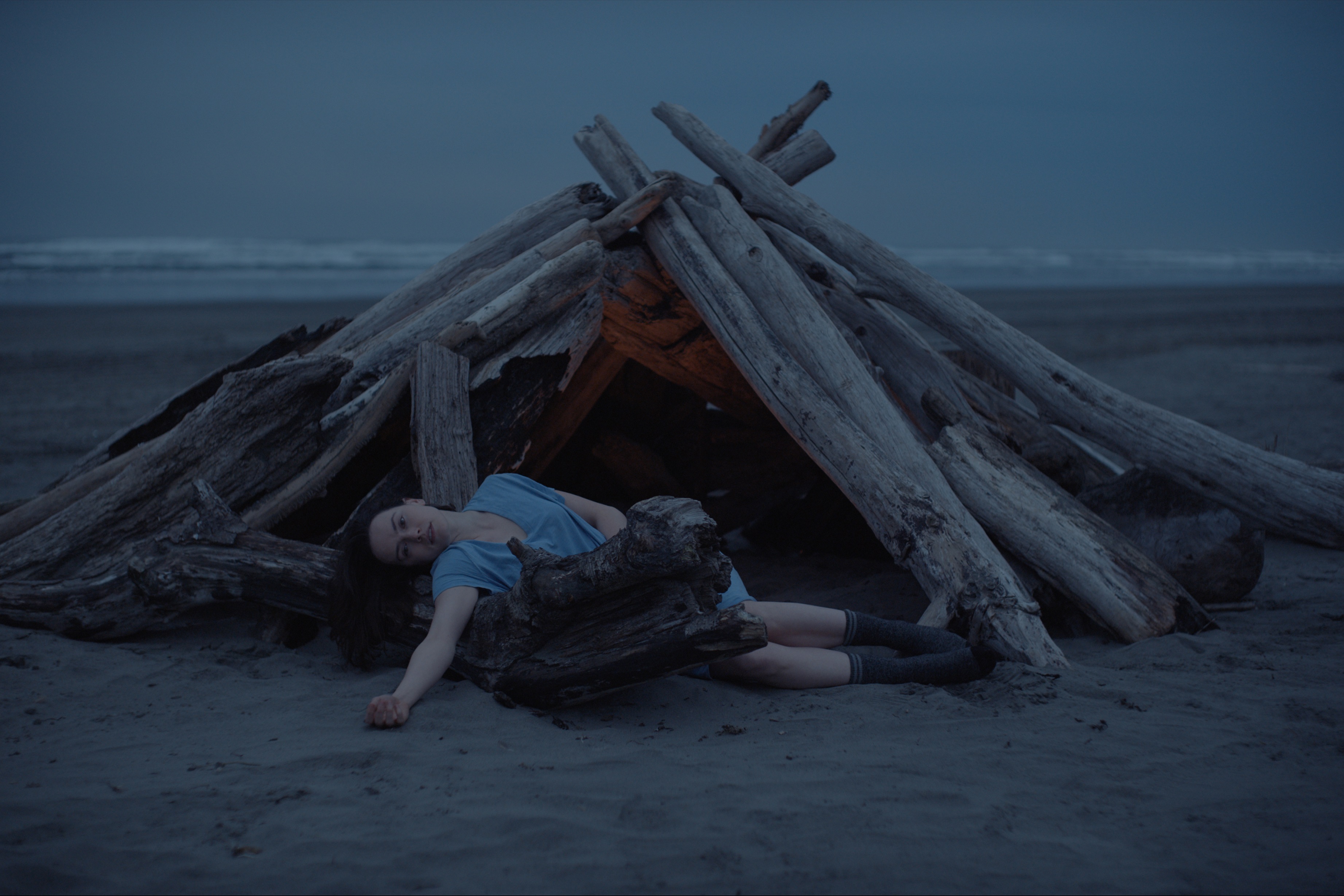
Sometimes I Think About Dying is expertly shot, capturing the bleak isolation of the Pacific Northwest. Fran imagines herself dead on the forest floor or in a bonfire by the beach, her corpse slowly returning to the land. There’s a melancholic sense of peace that’s present in how blue and hazy these scenes are shot. For a character like Fran who does not easily share her emotions, this allows the audience to get a better sense of what the character is going through. Early in the film, we see Fran staring out her office window at a crane slowly lifting. She imagines herself being hanged at her desk, lifting in time with the crane. We see her office flats rise above the carpet only to be brought back to reality.
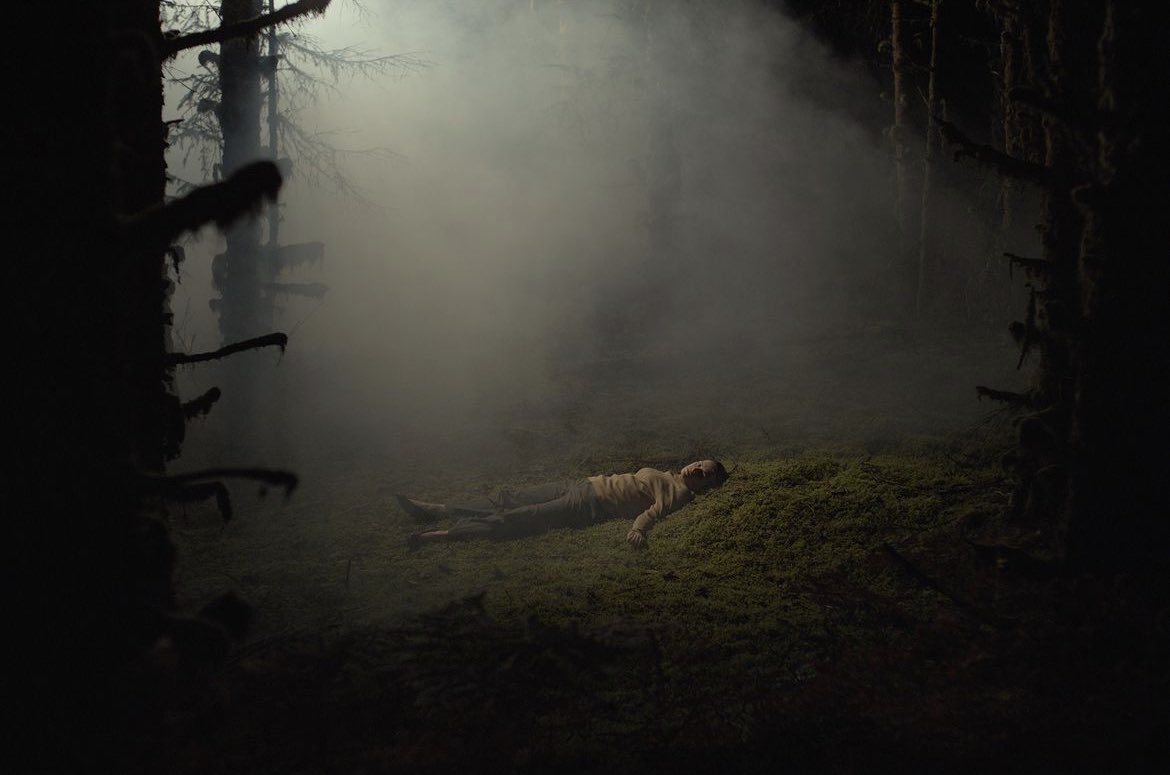
The film rarely confronts Fran’s suicidal feelings directly, but any time we are let inside her brain through these sequences, it is clear that these thoughts are all consuming. It is more effective to have these complicated emotions be understood visually for a number of reasons. First and foremost, in an effort to make the play more cinematic, these scenes offer a break from the rather drab office setting and add texture to an otherwise straightforward narrative. Second, although the audience spends the whole film with Fran, we still don’t fully understand what is causing her to feel this way. No information is offered up in terms of her childhood or history of trauma and mental illness, we as the audience are just as shut out as Robert and her coworkers. However, we are afforded glimpses into her state of mind through these internal scenes.
Finally, suicide and passive suicidal ideation are challenging subjects to neatly express and understand through film. Having Fran openly share her feelings to Robert or anyone else, would not accurately reflect the reality of people suffering with these dangerous thoughts. Depression is a quiet illness that feeds into Fran’s self-isolation, which in turn feeds into her depression, completing the feedback loop. This is all understood visually through Ridley’s performance and the film’s cinematography and editing to excellent effect.

Near the end of the film, Fran runs into her old coworker Carol, who recently celebrated her retirement with a cruise vacation alongside her husband. Carol tells Fran that she was unable to go on the trip because her husband suffered a stroke and she’s not sure how he will recover. She delivers a devastating monologue about how despite saving money her whole life and doing everything in the right way, she is surprised to find herself in this position. Carol warns Fran of the danger in waiting for the right time to go after what you want and how quickly time slips away when you are distracted by the mundane. The avoidance that comes from the fear of new experiences and being vulnerable with others causes harm and prevents one from savoring the moments in life that truly matter. Our connections with others, as difficult as they may be, are the life force that gives meaning to our existence. Isolation is an illness that sacrifices long term fulfillment for short term comfort, but in the end it will catch up with who you are. Sometimes I Think About Dying ends with the sentiment that you are not your job or your achievements or even your dreams. You are the summation of every human connection you’ve ever made and our power comes from our ability to let ourselves be known to others.

 Reel Take
Leave a comment