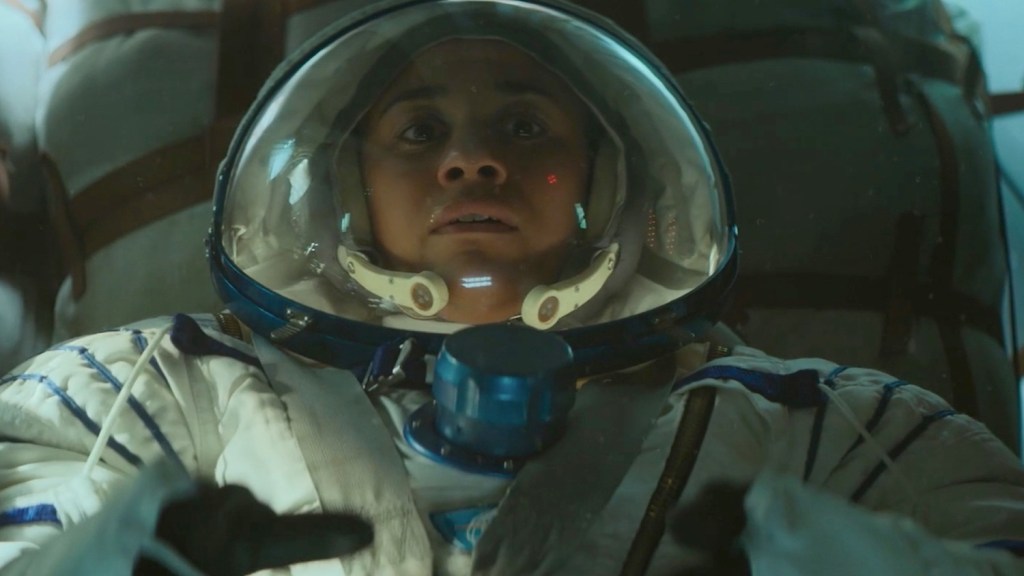
I.S.S. is a sci-fi thriller about the tenuous state of global politics and how quickly the pretense of civility is lost in moments of crisis. The movie is directed by Gabriela Cowperthwaite, who’s documentary Blackfish became a critical and cultural success, credited with forcing SeaWorld to end its orca breeding program. Nick Shafir wrote the screenplay for I.S.S., his first writing credit, which was included in 2020’s “Blacklist”, a list of the best unproduced scripts. The film stars Ariana DeBose as Dr. Kira Foster, a NASA trained scientist and the newest recruit to the International Space Station. While adjusting to life in orbit, Kira is the first to realize that something back on Earth has gone terribly wrong. Total nuclear war has engulfed the planet in flames and American leadership has instructed her team to secure control of the station, by any means necessary. This is no simple task as the Russians have received the same orders.
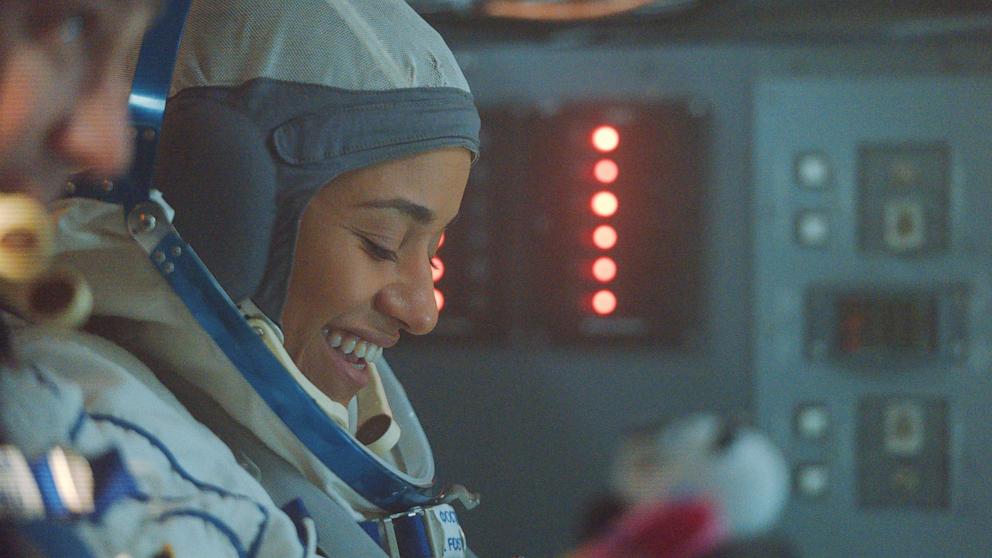
Before bearing witness to the apocalypse, Kira is introduced to her fellow scientists aboard the station. She joins two other Americans including Captain Gordon Barrett played by Chris Messina, and three Russian scientists. The whole crew gives Kira a warm welcome, each providing their own tips on how to adjust to zero gravity life. They are all working on various altruistic research projects, including a potential radiation sickness cure. On her first evening, they share songs and a few drinks, and it’s revealed that Gordon and one of the Russians, Weronika, are in a romantic relationship. This moment sets up the basic dynamics between each of the crew members and reemphasizes the team as a group of enlightened intellectuals, not restricted by the petty politics of Earth. Christian, an American scientist, tells Kira that there’s no mention of world conflicts allowed listing off Israel, Syria, and the “other one”, stopping short of saying Ukraine. This single piece of dialogue tells you everything you need to know about Christian as a character, but also the direction this story is headed. Despite their mutual politeness, there’s still that undercurrent of distrust and in Christian’s case perhaps it’s closer to distaste. Weronika takes Kira to the ship’s main viewing platform, describing the spiritual awakening many scientists experience when seeing the world without borders for the first time. It’s here that the movie really hits the audience over the head with its (inevitably ironic) aspirational and harmonious vision of humanity. Occurring right before the story sharply pivots into paranoia and murder.
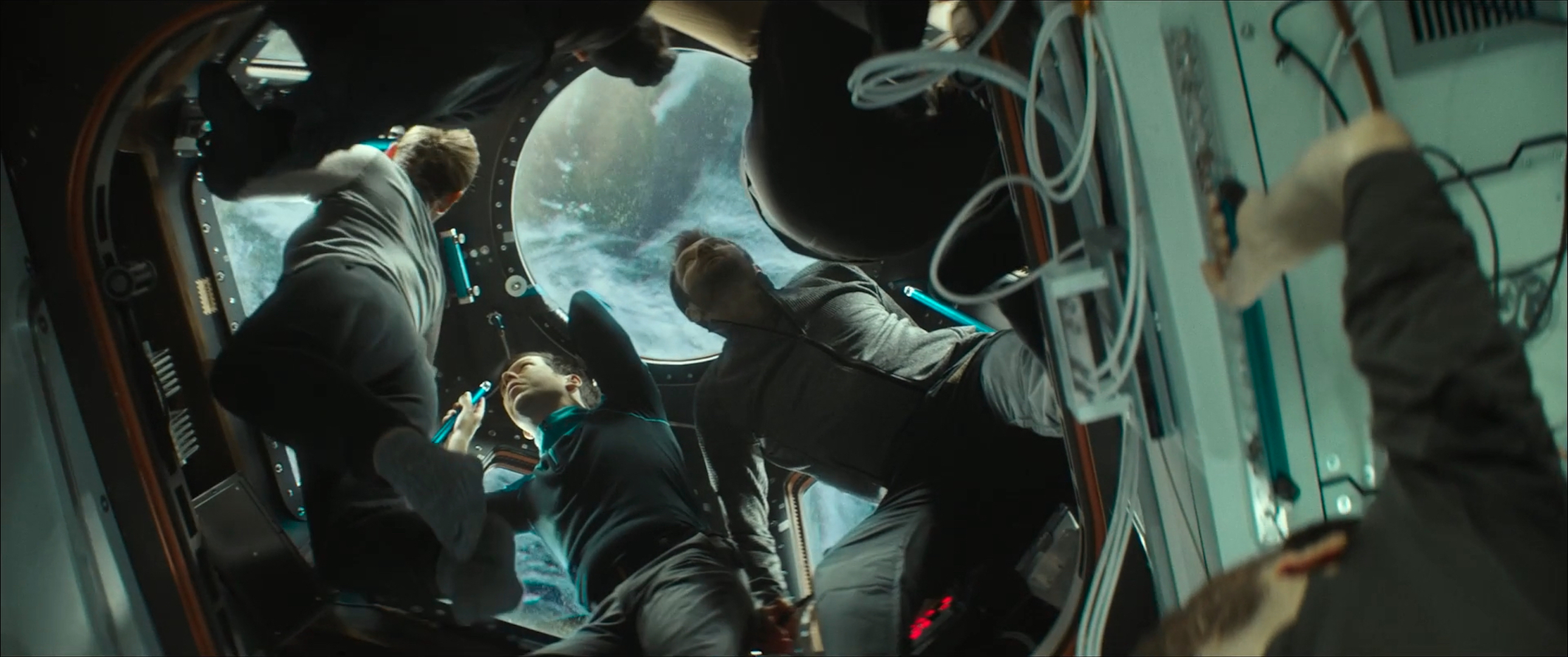
It’s an interesting premise reminiscent of classic Cold War thrillers and Twilight Zone allegories, that unfortunately begins to fall apart under the slightest bit of scrutiny. To start, it is hard to believe that given the apocalyptic conditions on Earth, a space station would be the primary concern of either government. Second, why does either crew feel compelled to follow these orders, given that there may not even be a USA or Russia to return home to? This is essentially the point the movie is trying to make, but would this team of intellectuals, who are ostensibly friends, be the type to simply follow orders? Especially by any means necessary?
With the way each character is presented, it is not believable how quickly they devolve to their base instincts, despite how compelling of a thought experiment it may be. Nicholai, the leader of the Russians, is quick to lead Gordon to an early demise by faking a downed radio on the outside of the station. He does this knowing that Weronika is in love with Gordon and forces a reluctant Alexey to assist him. The script needs a primary antagonist to give the suspense actual stakes, but his murderous turn feels unearned given everything we have seen up until this point. Nicholai attempts to cover his tracks by disconnecting Gordon and Kira’s radio connection, making it look like an accident. With suspicions already rising, this comes off as incredibly sloppy for an otherwise competent leader. This is even more the case for Gordon, who knowingly risks his own life to repair the radio despite suspecting that the Russians received similar orders. The biggest issue the movie suffers from is its characters behaving in service of the plot and theme leading to inconsistent motivations and flat arcs.

I.S.S.’s single setting should really work towards Cowperthwaite’s favor in constructing suspenseful sequences. The claustrophobic nature of the station, the vast abyss of space, and the backdrop of a planet on fire are all ripe for driving tension and fear within the audience. This setting is not entirely unique and has been done to excellent (and horrifying) effect in films like Gravity and Alien. The film’s political commentary intellectualizes an otherwise primal and emotionally driven narrative to its own detriment. It comes across at times that Cowperthwaite is afraid that the audience isn’t going to understand how the Cold War tensions are relevant to today’s global politics, with how much is over-explained well into the story. Every time we get emotionally invested in the horror of Kira’s situation, the movie stalls out to debate who she can trust. It’s disappointing that such an engaging and suspenseful premise does not deliver the thrills it promised. It feels like the film would work better if it was tightened up to the length of a Black Mirror episode, a quick in and out romp in space that ends before it has time to trip itself up in the details. I.S.S. is a film that poses compelling questions about humanity’s penchant for destruction, but does not have the gas to sustain the thrills throughout the movie’s runtime.



 Reel Take
Leave a comment