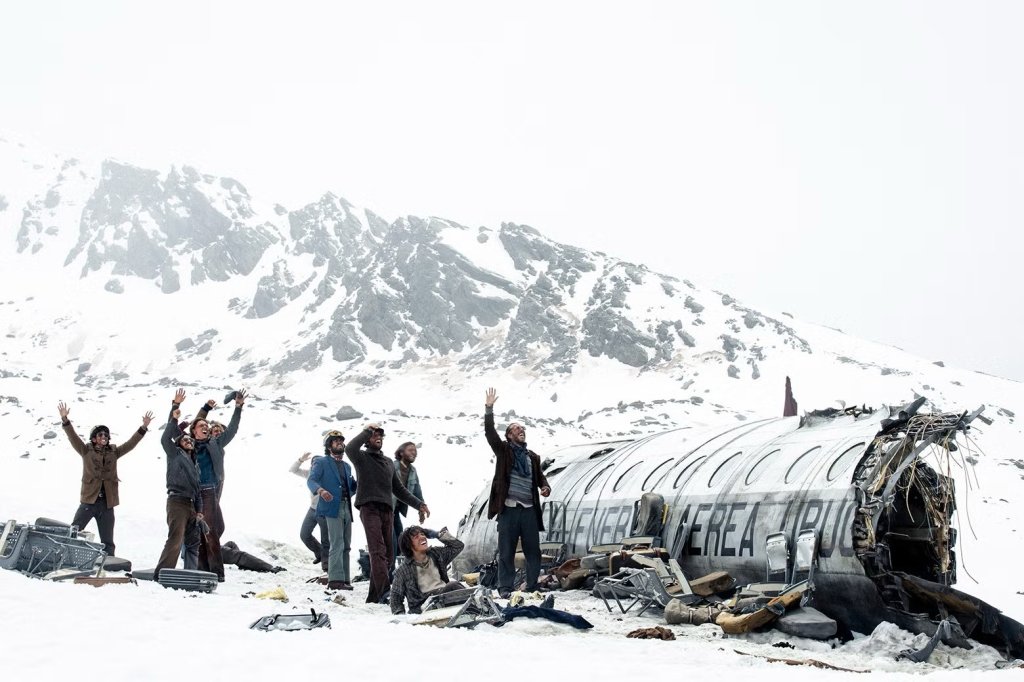
Society of the Snow is a harrowing tale of survival and the tenacity of the human spirit. Directed by J.A. Bayona, this thriller is an adaptation of Pablo Vierci’s book by the same name. The story is based on the infamous 1972 Andes Flight Disaster, where 45 individuals, including 19 members of a Uruguayan rugby team, crash landed in a remote portion of the Andes Mountains. After the initial impact, the remaining survivors struggled against the frigid elements, resorting to cannibalism to stay alive. Two team members set out on a courageous journey, hiking for 10 days over the steep mountain range. Once they arrived in Chile, they finally found help and the remaining 16 survivors were rescued from the crash site. Society of the Snow was written using those survivors’ perspectives, their retellings directly inspire the events of the film.
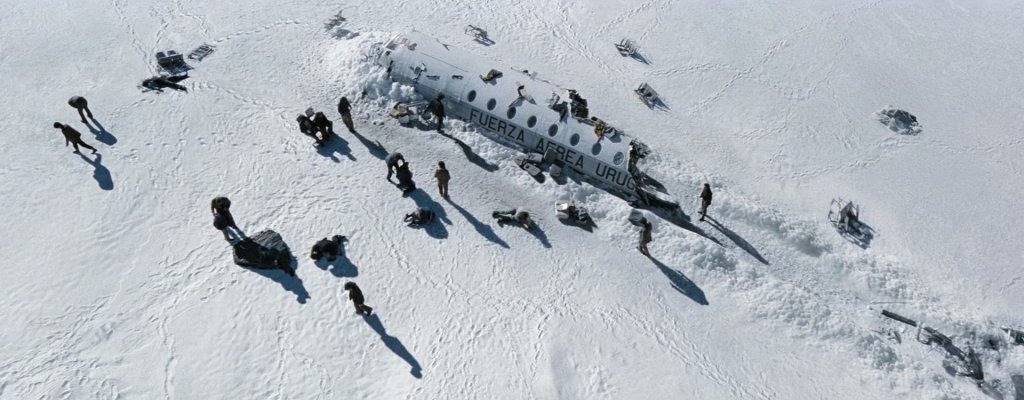
This film is not for the faint of heart as it does not shy away from the gruesome details of their experience. Among the ensemble, Numa Turcatti, played by Enzo Vogrincic, is our primary protagonist, a 24 year old law student who’s convinced by his friend Pancho to join the rugby team on their trip. Numa reluctantly agrees, seeing it as an opportunity to spend time with his best friend before graduating college. Shortly after being introduced to the main cast, we are ready for take off. The film wastes no time getting to the plane crash, dropping these boys out of the sky mere moments after learning their names. This sequence is panic-inducing as the plane is torn apart, individuals are hurled into the air, and those who remain buckled in are crushed under seats and luggage.

Initially, I found the pacing a bit jarring, wishing I could have more time with these characters as students before they became survivors. The passengers who died during the crash, receive the most violent and unceremonious deaths out of any of the victims. I don’t fault the film for being true to life, but in the chaos of it all, it was difficult to identify these individuals therefore making their deaths less emotionally impactful. To remedy this, the film keeps an active on screen log any time one of the passengers passes away. This almost works for me, at the very least it is a way to pay respects to the real victim. But with so many casualties in this tragedy, I certainly understand the challenge of including background details on each of the 45 passengers. To their credit, I think the filmmakers do the best they can to orient each of them in relation to one another.

Once the dust settles, Numa emerges relatively unscathed and takes it upon himself to lead the survivors in the early days following the crash. He and his team members gather all available food items into one suitcase and construct a device that utilizes the snow as a freshwater source. Any optimism sprung from their early ingenuity is dwarfed by the towering snow capped mountains surrounding them on all sides. The film does an excellent job at showing the vast, frozen wasteland that they have found themselves in. Without any animals to hunt or even a single tree branch for firewood, the survivors might as well be on the surface of the moon. The journey over the mountain’s edge would be perilous even if they had the right gear or knew which direction is the shortest to civilization. The ever present danger of the weather alone weighs heavily on the team as they slowly succumb to the subzero temperatures. Society of the Snow steadily continues to raise the stakes as the group’s desperation grows. Rations run out and after six days without food, the survivors make their most difficult decision yet.

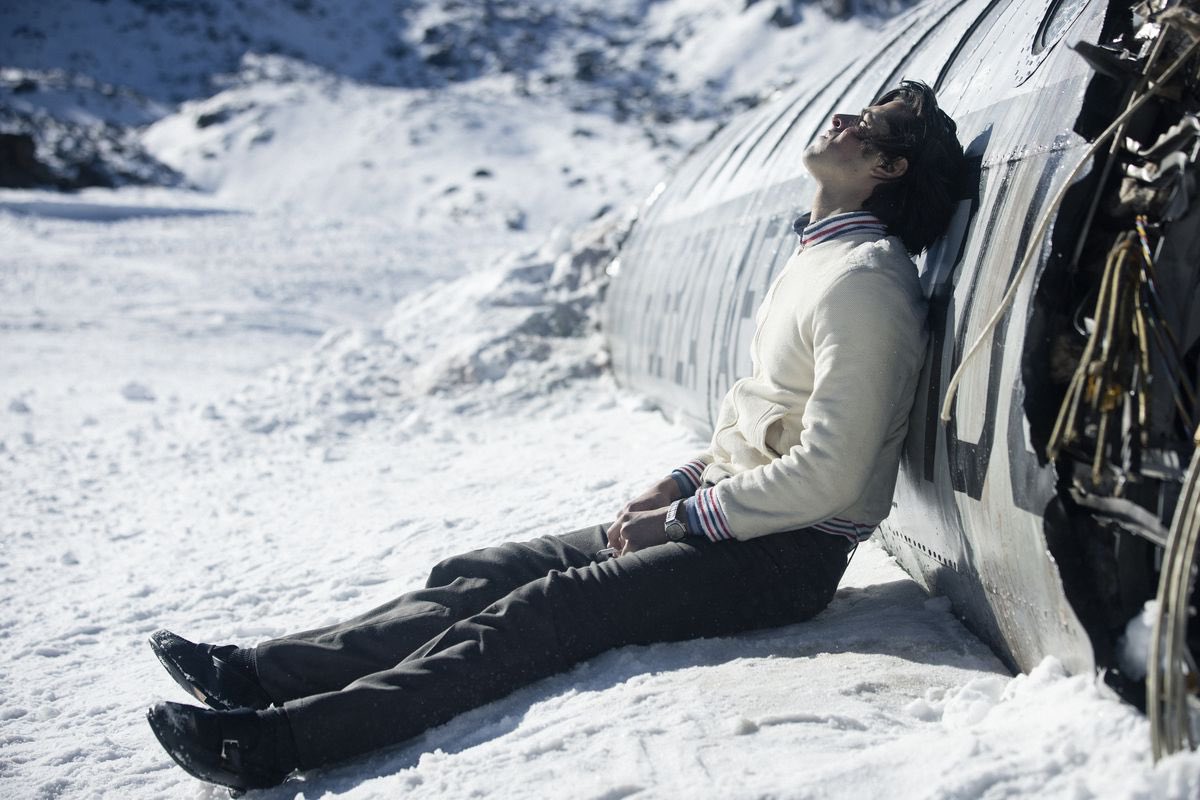
Cannibalism is a taboo within film that is usually relegated to the horror genre, used for shock value or often in offensive caricatures of native people a la Cannibal Holocaust. It is clear that Bayona is aware of these depictions by how sensitively he approaches the subject. Some of the members of Flight 571 are more pragmatic than others, knowing this is their only chance for survival, while others are deeply conflicted about the moral consequences of their actions. Numa more so than most, refuses to participate, letting his body wither away as a result. His initial refusal is backed by his concern that none of the passengers who died consented to their bodies being used for consumption. However, this only inspires the other boys to announce their consent in the event of their deaths. There’s an ever-present fear that God, or the people back home, will judge them for their actions prompting many to preemptively beg for forgiveness. Despite it being the only hope for their survival, Numa cannot as easily shake the societal norms preventing him from staying alive.
There’s an absolutely chilling scene where in a moment of relaxation, one of the boys starts taking photos of the crew. Between smiling and laughing, one of them notices a picked clean rib cage in full view and quickly covers it with a seat cushion. The director never casts judgment on their decision, however the shame they feel about it is an undeniably important aspect of the story. The depiction of cannibalism in Society of the Snow is not gratuitous simply for the sake of disgusting the audience, nor is it treated like a salacious piece of true crime horror. The subject is handled with an abundance of empathy for the survivors who did what they had to do to keep each other alive.
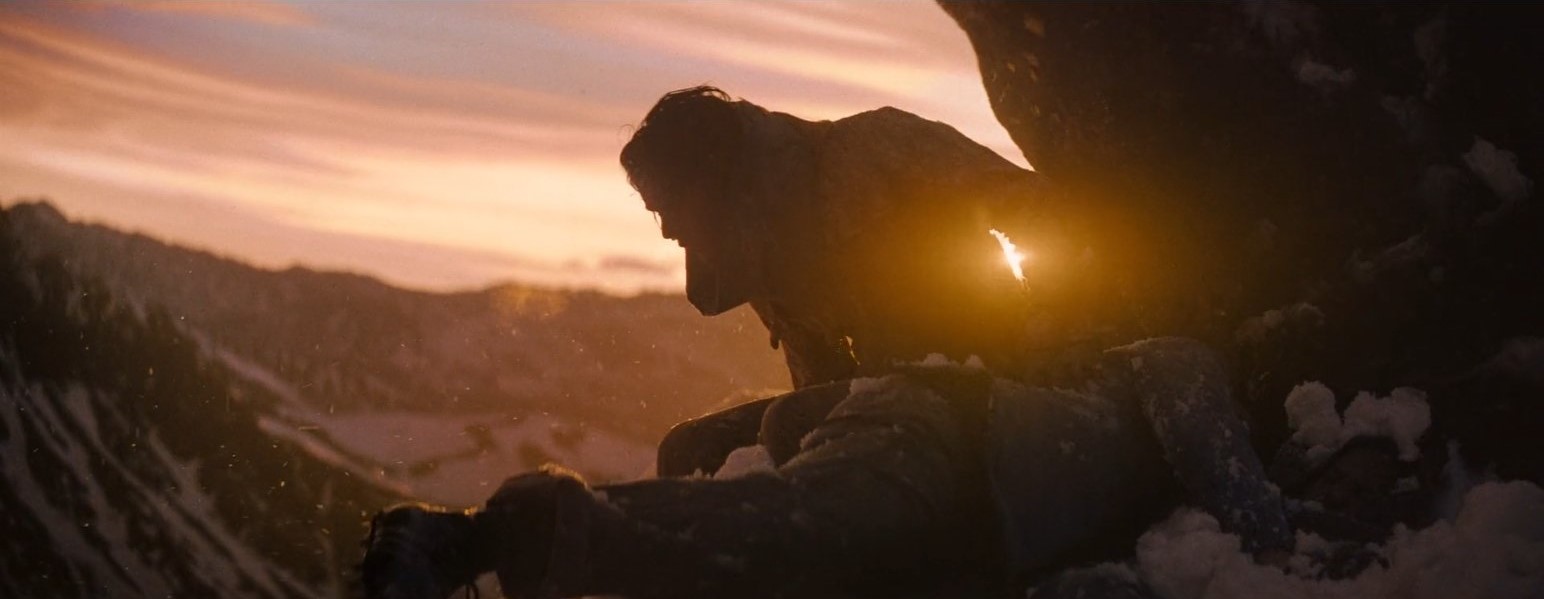
Society of the Snow uses religious imagery throughout to grapple with what makes something a miracle. With an infection taking hold, Numa knows his days are numbered. In a surprising change of heart, he offers up his body as sustenance which allows the remaining survivors to stay alive long enough to be rescued. This act of Christ-like sacrifice saves his friends from certain death, as they literally eat his body like the eucharist. What was once a taboo is heightened as the ultimate act of love, an act permitted by God himself. Miracle in the Andes is a nonfiction account of the same events written by two of the survivors, Nando Parrado and Vince Rause. The title has become shorthand for the disaster, reframing the events as an inspirational story about a group who survived against all odds. While the film mostly agrees with that assessment, it does so with some hesitation. While making their recovery, the survivors struggle to make sense of why they were spared when so many lives were lost along the way. How can what happened to them be considered a miracle when 29 innocent lives were taken? Society of the Snow recognizes the strength and bravery of those who survived, but by centering Numa’s story, the film celebrates the unsung heroes, giving voice to all the victims of this terrible tragedy.




 Reel Take
Leave a comment