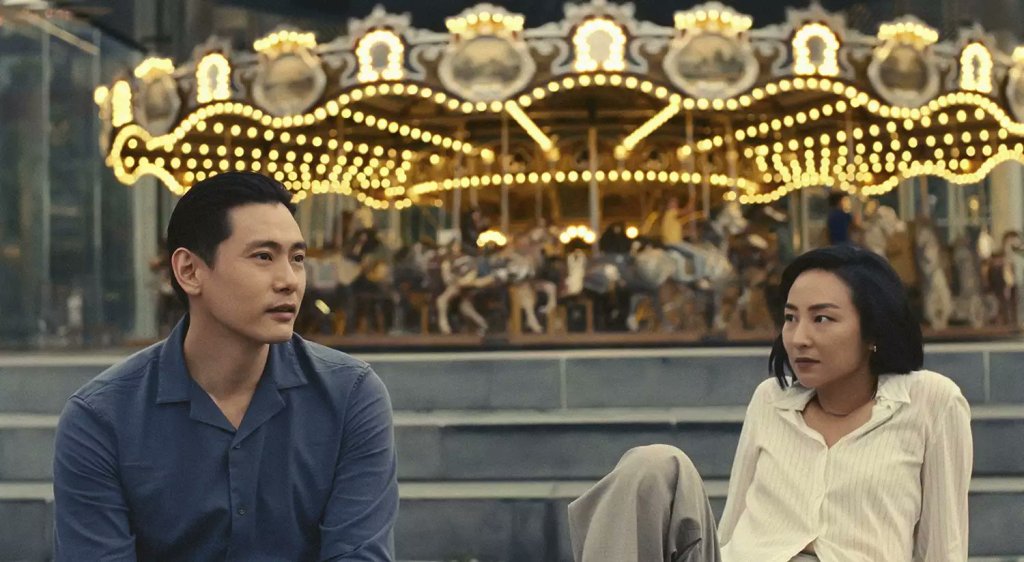
Past Lives is a heartfelt examination on the nature of fate and how the connections we make with one another shape our destiny. Celine Song delivers a touching, thoughtful, and partially autobiographical directorial debut which premiered at Sundance earlier this year. The film follows Nora Moon, played by Greta Lee, an ambitious playwright with dreams big enough for multiple lifetimes. When Nora is twelve years old, her family makes the decision to immigrate from Seoul to Toronto, leaving behind her home and childhood crush Hae Sung, played by Teo Yoo. Twelve years pass and Nora has made a life for herself in New York City, well on her way to becoming a professional writer, when she learns that Hae Sung has been looking for her online. The two reconnect over Skype from opposite ends of the world, falling for each other despite Nora’s resistance towards reconnecting with her Korean culture. Before leaving for an artist’s residency, Nora decided to cut off communication with Hae Sung to focus on her writing and new life in New York.

While at her residency, Nora meets fellow writer Arthur, played by John Magaro, and the two immediately hit it off. She introduces Arthur to the Korean concept of ”In-Yun” meaning fate, specifically a fateful meeting between two people who shared a previous life together. Nora writes off the concept as just the way Korean people seduce one another. This shows how eager Nora is to distance herself from her culture, that she doesn’t quite believe in predetermination, and ultimately how she has justified her decision to stop speaking to Hae Sung. Arthur and Nora fall for one another over the course of the retreat. The two marry, securing Nora’s citizenship status, and her dream life in New York City.

The concept of fated encounters is at the core of Past Lives, driving the two leads together and apart over the course of the film. Hae Sung believes the two were meant for one another and Nora feels it too, but denies herself that life in favor of the one she’s made in New York. Twelve years pass since they last spoke and Hae Sung flies to see Nora in person for the first time since they were children. Lee and Yoo have undeniable chemistry, the overwhelming history these two are able to portray with just a subtle expression is both heartwarming and painful. Nora is undeniably charmed by Hae Sung’s bold gesture, and despite his denial, she knows in her heart he came to see her. Song’s clever in the way she subverts the audience’s expectations for what happens next between the pair. In a typical romance, the star-crossed lovers would run away together, leaving the mismatched, and usually horrible, partner in the dust. Instead Nora is never unfaithful to Arthur and although insecure about their obvious attraction, he is a trusting and supportive husband.

Magaro does an excellent job building empathy for Arthur. He delivers a heart wrenching monologue about his fear of not living up to Nora’s immigrant dreams. He laments that he will never have the shared cultural history she has with Hae Sung and eventually stating that if their lives were a romance story, he “would be the evil white American husband standing in the way of destiny.” A not so subtle wink to the camera from Song that lets the audience know this story is not a trope filled romantic romp, and instead something more painful and more real. Arthur goes on to question if their relationship is merely coincidental, that any other writer could have shown up that day and swept Nora off her feet. She pushes back on this, pragmatic as always, and reaffirms that this is the life she chose and she is actively living it with him. To which Arthur asks, “Are you happy with it?”
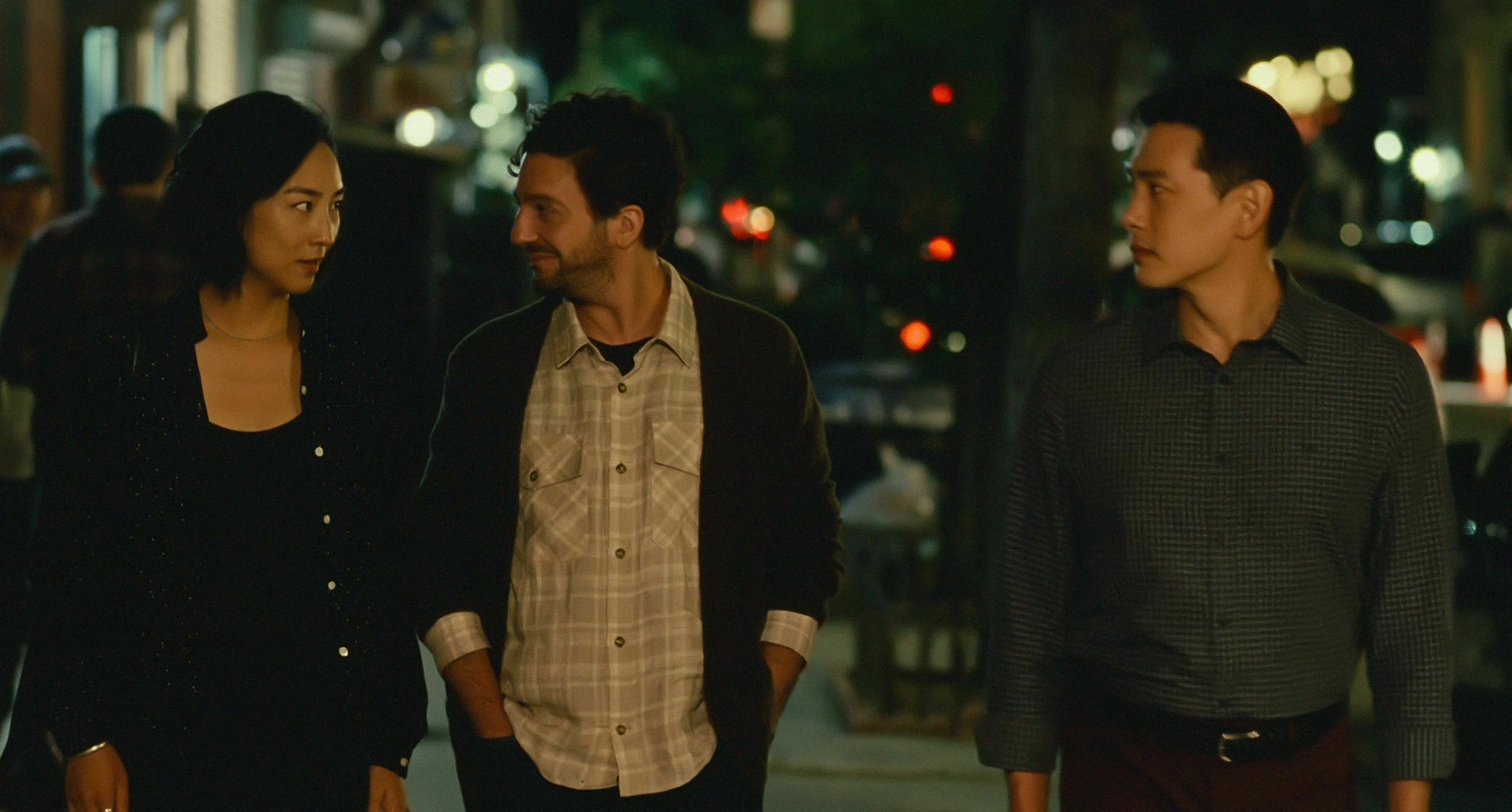
Hae Sung and Nora share one final evening with one another before he flies back to Seoul. For the first time, Hae Sung is entirely honest about his feelings for Nora, longing for what their life could have been like had she never left Korea. In these final scenes, Yoo delivers a devastating realization as Hae Sung, really capturing the depth of his hurt and the mourning for lost time. Ultimately, he accepts that the person he loves could never be with him and learns to let go of the past. Nora was always destined for something beyond the life he could’ve had with her in Korea. Past Lives ends on a bittersweet note, with the understanding that the relationships we form with one another are lasting and powerful. That even in our growth, the stories and people of our past still shape who we are and how we move through the world. We must actively choose to build and fall in love with our own lives. And since we cannot live every infinite possibility, we must make peace with and find joy in the decisions that led us to today.



 Reel Take
Leave a comment